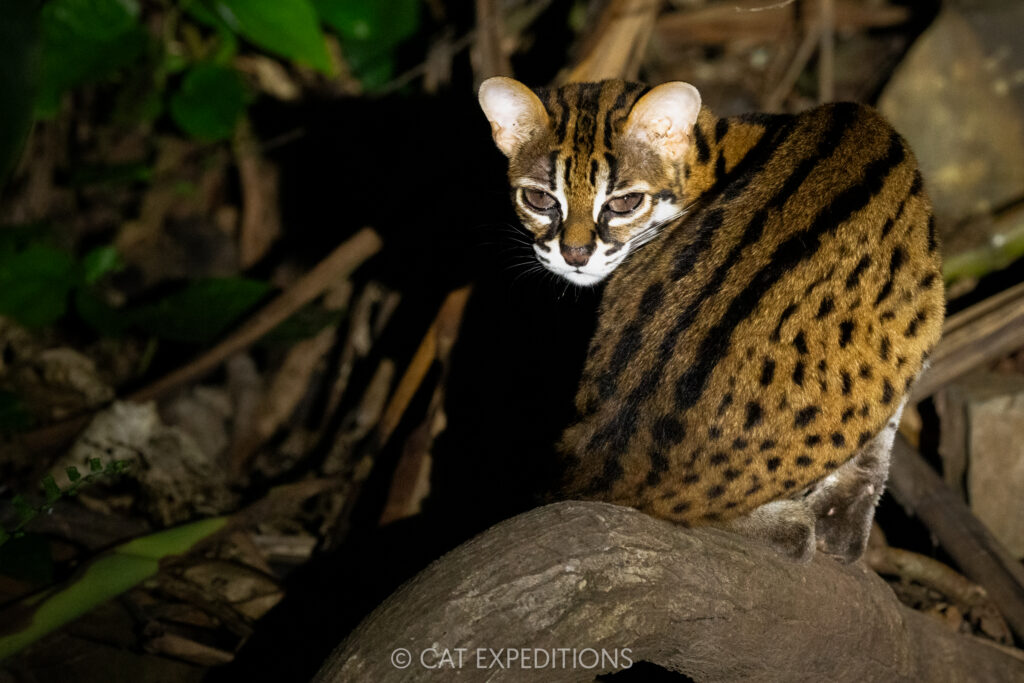
We visited Borneo for our annual Cats of Borneo photo tour, twice this year. This is the trip report for the first of the two trips. It always feels incredible to be in this incredibly diverse place in the world. We saw one species of wild cat in Borneo, with a possible, but not confirmed sighting of a flat-headed cat. This was a trip filled with a lot of unseasonal, heavy rains — causing us to shift schedules and even loose out on some safari drives. It was also a tough trip for finding cats – normally, Sunda leopard cats are dimes a dozen, on this trip we only saw four leopard cats in total. Sometimes trips are tough, and that is simply the reality. We still want to always write a trip report to provide the reality of what happened! Read the rest of our Cats of Borneo Photo Tour 2025 Trip One Report to get all the details.
Highlights of the 2025 Cats of Borneo Photo Tour
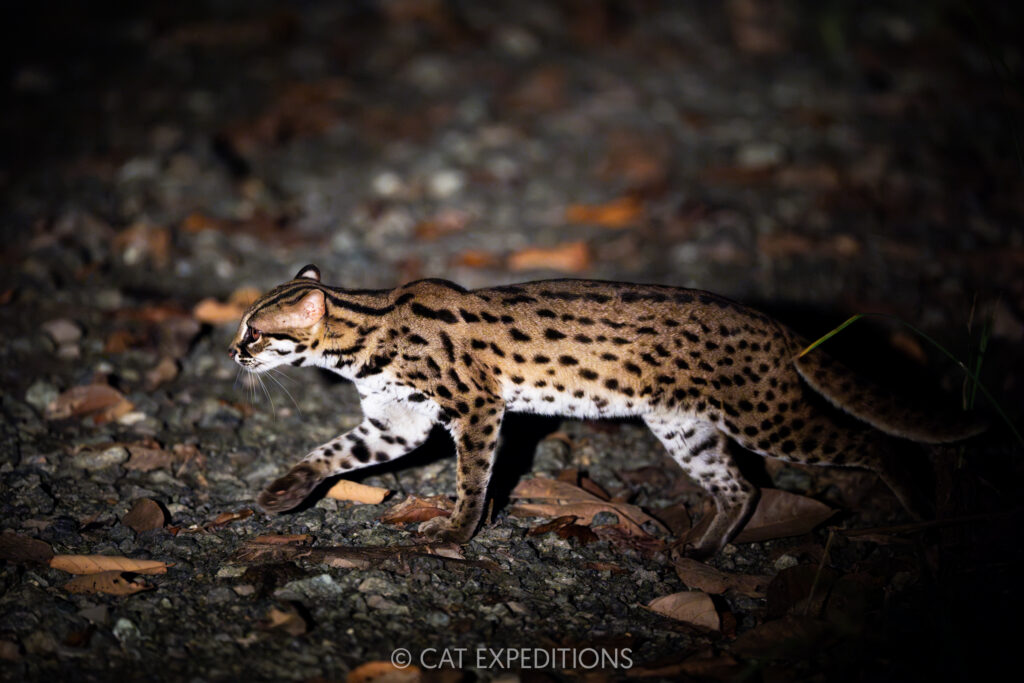
Sunda Leopard Cat: Though we had relatively few sightings of Sunda leopard cats, we had a really nice sighting of a cat as it was hunting along the forest floor right below the buildings at Danum Valley Rainforest Lodge.
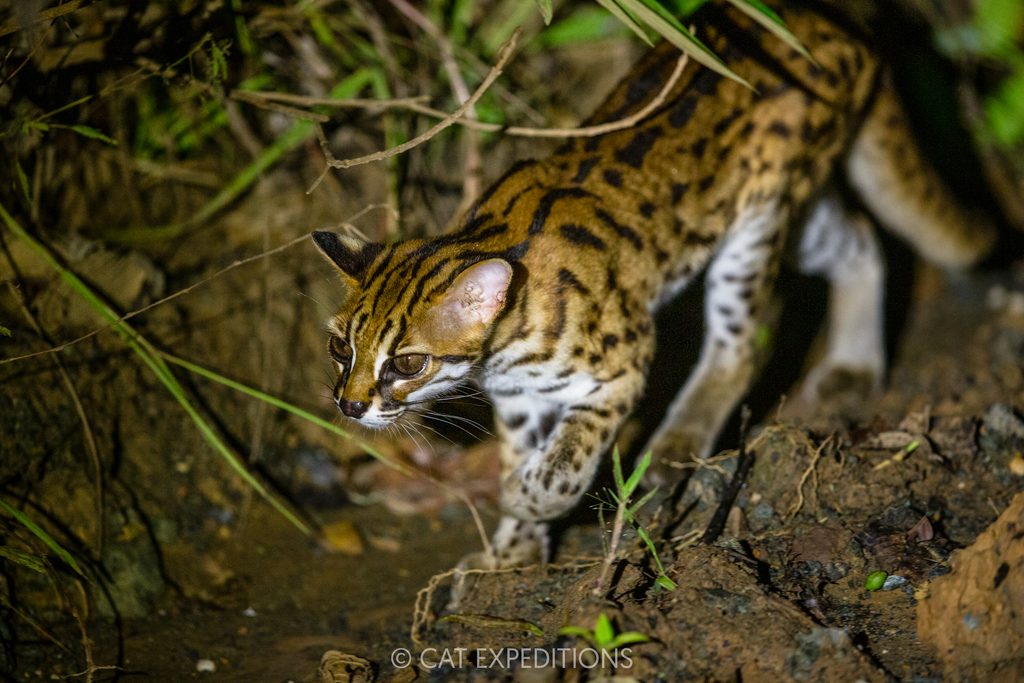
Flat-headed Cat: Though no one was able to snap off a photo before the cat disappeared into the thickets both our local guide and I were sure it was the elusive flat-headed cat.
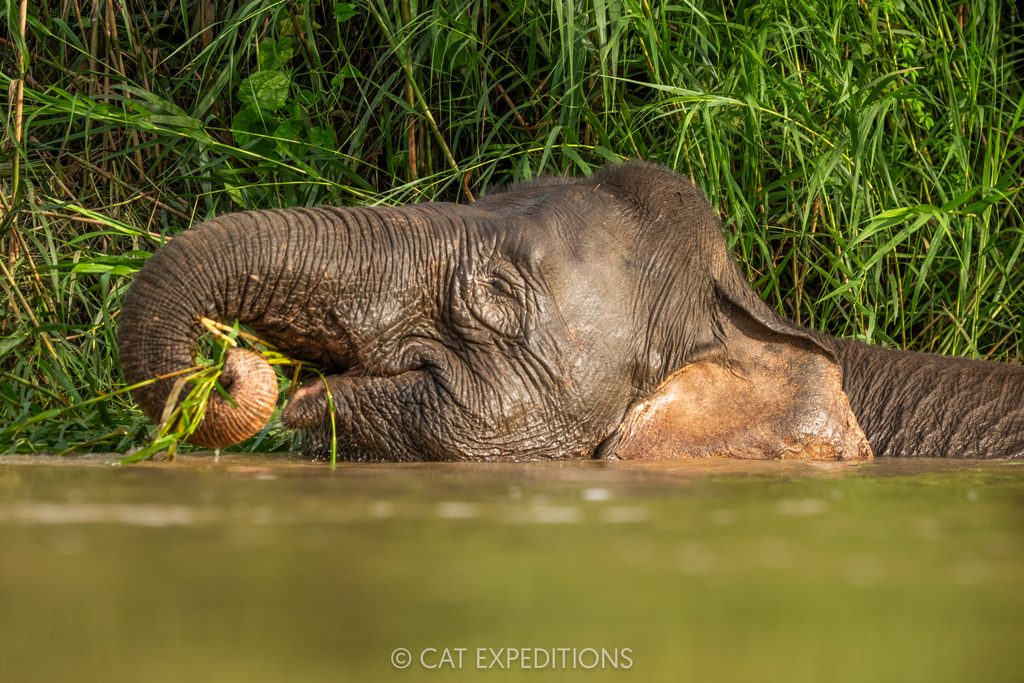
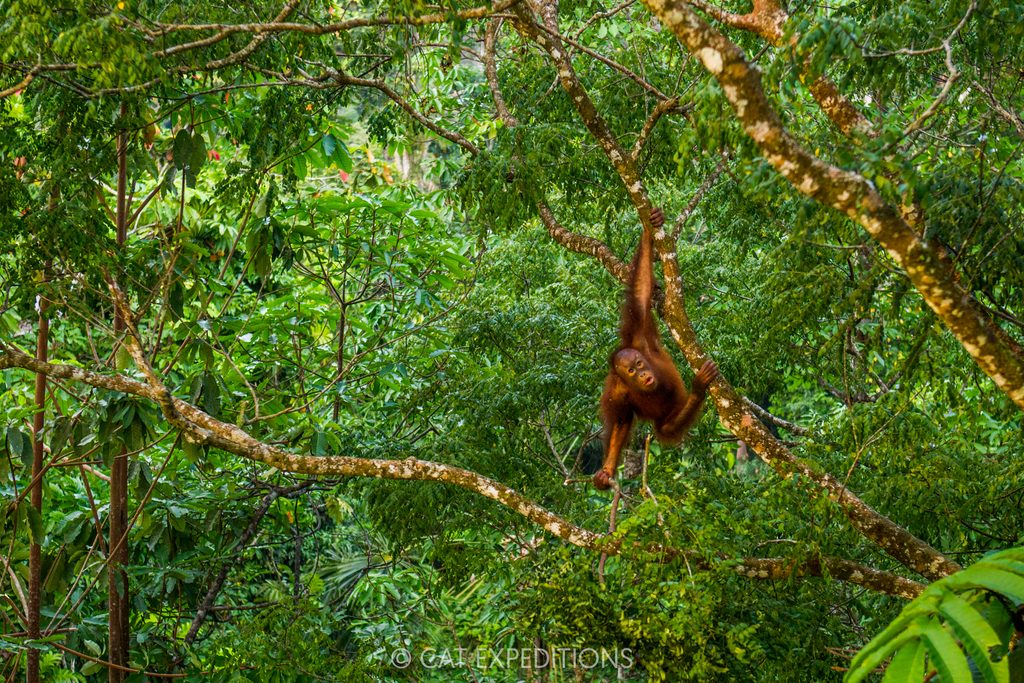
Mammals: We saw 33 different species of mammals. Some of the highlights included five orangutan, including a mother and baby at eye level, Malay Porcupines, Banded Civet, and an extended sighting of Borneo Pygmy Elephants on the river.
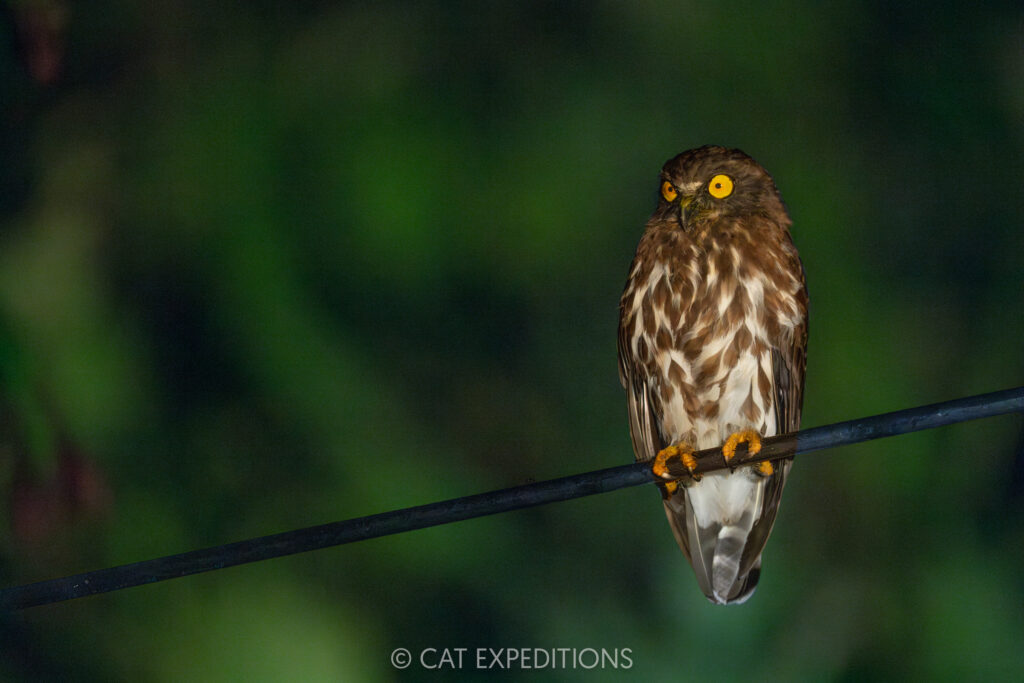
Birds: We saw 46 different bird species, including five species of owl. The Brown Boobook we found in Danum valley was a definite highlight!
Detailed Cats of Borneo Trip Summary 2025
Day 1: To kick off our Bornean adventure, we jumped straight into one of our favorite rituals—a night walk at the Rainforest Discovery Center in Sepilok. It’s always full of possibility, but this time… it delivered in a way that’s hard to put into words.
Right next to the trail, at eye level, we found a mother orangutan with her baby.
Not high up in the canopy, not distant—but right there with us. We stood there for over an hour, completely absorbed, watching them feed, move, and interact as they slowly made their way through the forest. It felt intimate, unfiltered—one of those encounters that stays with you long after it’s over.
The afternoon and evening were packed with life: pig-tailed macaques moving through the trees, a beautifully camouflaged Bornean pit viper, a giant red flying squirrel gliding through the darkness, tree crabs clinging to trunks, scorpions glowing under UV light, and even a tarantula tucked away in its burrow.
It was one of those days where the forest seems to open up and show you everything.
An unforgettable start to the tour.
Day 2: At sunrise, we walked back to the Rainforest Discovery Center for a daytime view of the canopy. The forest welcomed us immediately.
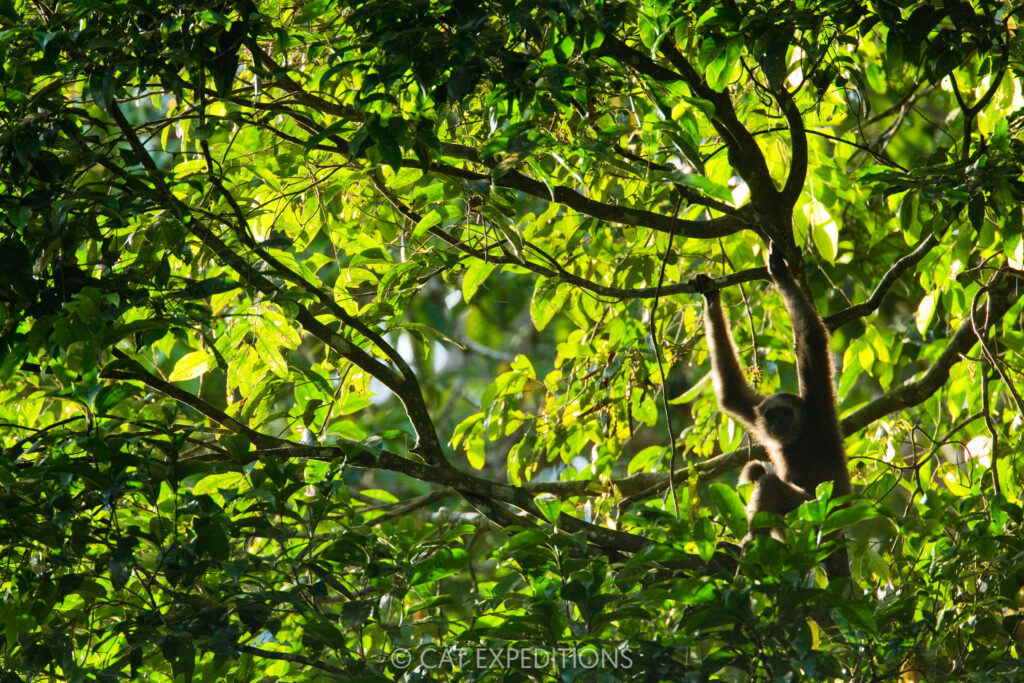
Almost as soon as we walked in, two Bornean gibbons came swinging down through the trees, their movements impossibly graceful as they crossed the canopy. And in the distance, echoing through the forest, we could hear the mesmerizing calls of others further away.
We spent some time exploring the canopy walkway, suspended high above the forest floor. Though the wildlife activity up there was quieter than we had hoped, simply being immersed in the upper layers of the rainforest was spectacular in itself. Eventually, we made our way back onto the trails, slowly scanning every movement and sound around us.
One of the highlights was a gorgeous red-naped trogon, sitting quietly in the understory, glowing with color against the deep greens of the forest. Later, from the tower, we searched the canopy for more birdlife and were rewarded with a fantastic white-bellied woodpecker, along with multiple rufous woodpeckers moving through the trees.
The mammals kept things lively as well. We had views of Black Flying Squirrel, and Red Giant Flying Squirrel, but the highlights were Maroon leaf monkeys we watched as they fed in a tree right next to the tower.
After making our journey to Deramakot Forest Reserve, we settled into our rooms and had dinner, but got totally rained out by a massive thunderstorm that evening. We went to bed, anxiously awaiting the next day.
Day 3: As usual, our nocturnal schedule began in Deramakot. After lunch, we all managed to get some afternoon rest in preparation for our first full night out; drives begin at 7:00p and last until roughly 3:00a, depending on what we would find.
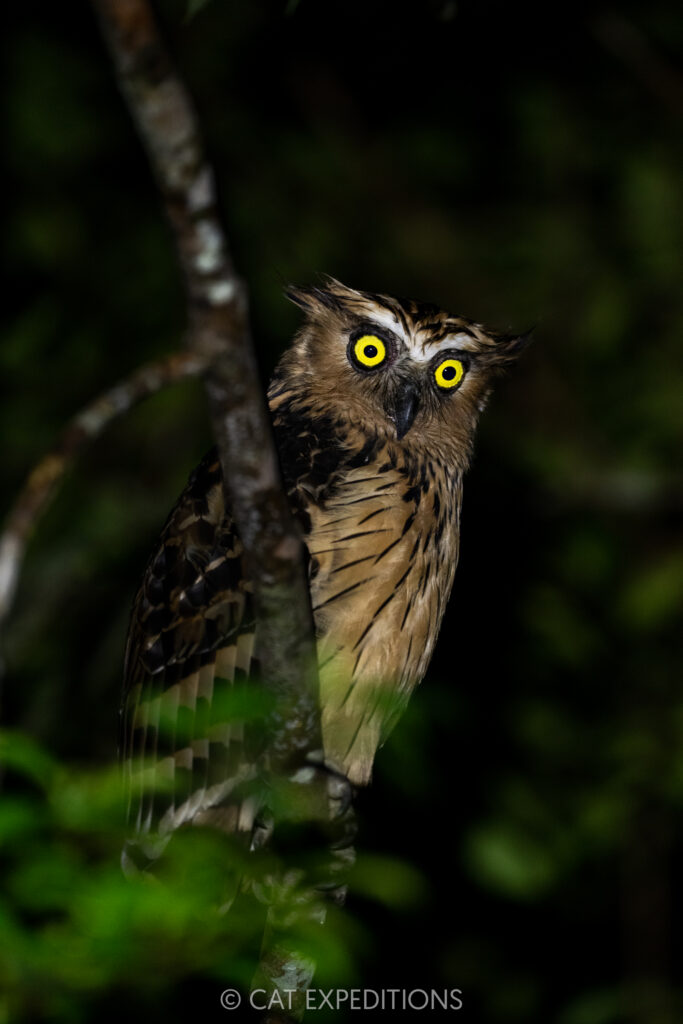
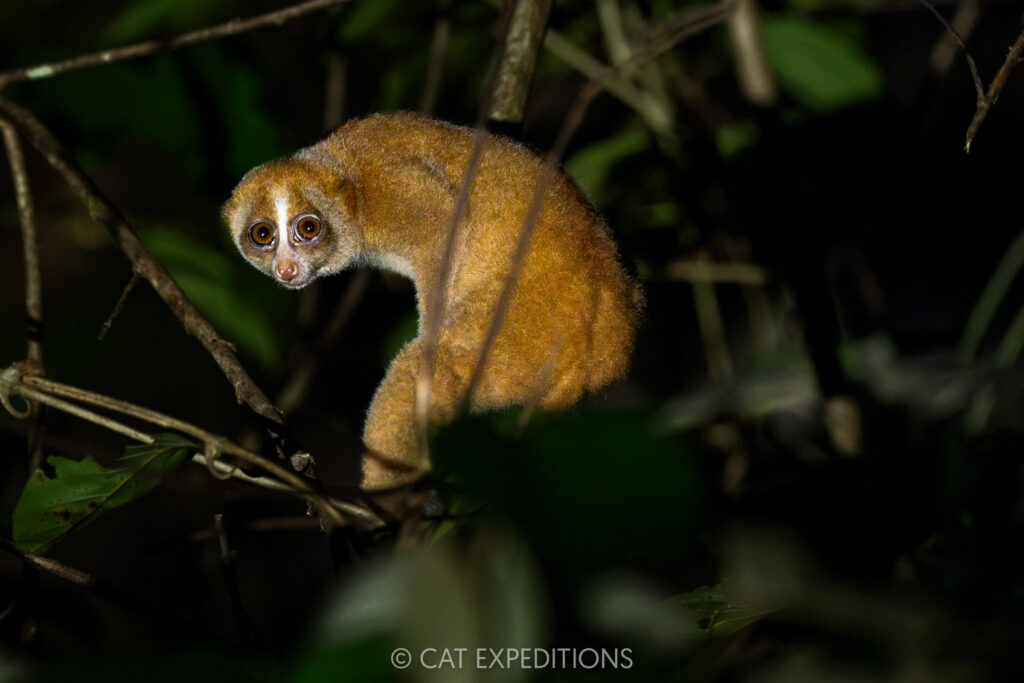
The evening drive started off with an unexpected sighting of a reticulated python swimming across a small river, followed by a mating pair of slow lorises which may, or may not have had a third onlooking loris. We then stumbled upon a Buffy-fish Owl sitting next to the road, which is a bit unusual, but it was probably hunting for frogs.
Then, our first Sunda leopard cat! As is often typical, the cat was walking on the road away from us. We watched for a little while, before it ducked into the forest. We drove past and waited, but it didn’t emerge again. Still, we were happy to have seen our first cat!
Lots of civets and frogs filled the rest of the night, but the highlight was seeing Borneo Pygmy Elephants, which we don’t tend to do very often in Deramakot. We saw three individuals as they sauntered down the road, which was magical!
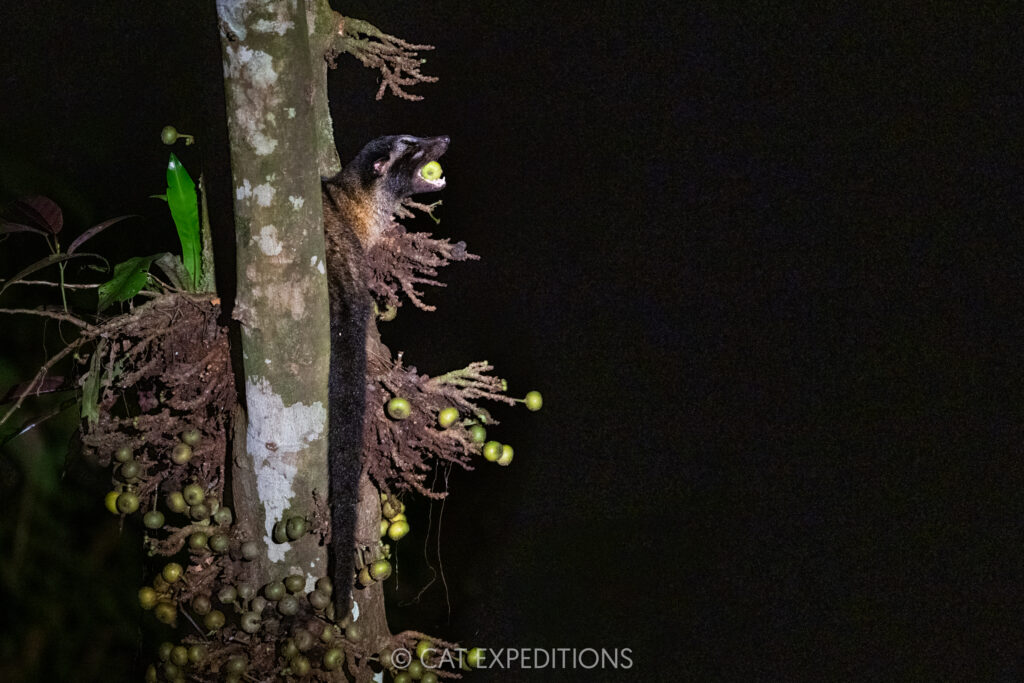
Day 4: Our night started off with a fantastic viewing of an island palm civet as it ate figs right at eye level and was not in the least bit bothered by our presence. We watched it for over twenty minutes as the sighting was just so fabulous.
Soon after, we saw our second Sunda leopard cat, but this one was even more shy than the first, quickly disappearing into the thick vegetation. We kept an eye on it via our thermal camera, but it didn’t want to come back out, and only went further into the forest.
The night’s highlights were the two Hose’s pygmy flying squirrels we found, or maybe even more Mike, our spotter’s reaction to seeing them. These pygmy squirrels are very hard to find, partially because they are so small, but most importantly, they were extremely cute. The pair hung around for a while and we watched one glide across the road, near us. It is incredible how many species have developed gliding as a means of transportation in Borneo!
Day 5: We were quickly settling into the new nocturnal routine, we would sleep into the late morning, waking up in time for lunch, and then head back to sleep until later in the afternoon. The always surprisingly delicious bagged coffee would help us all stay alert at night.
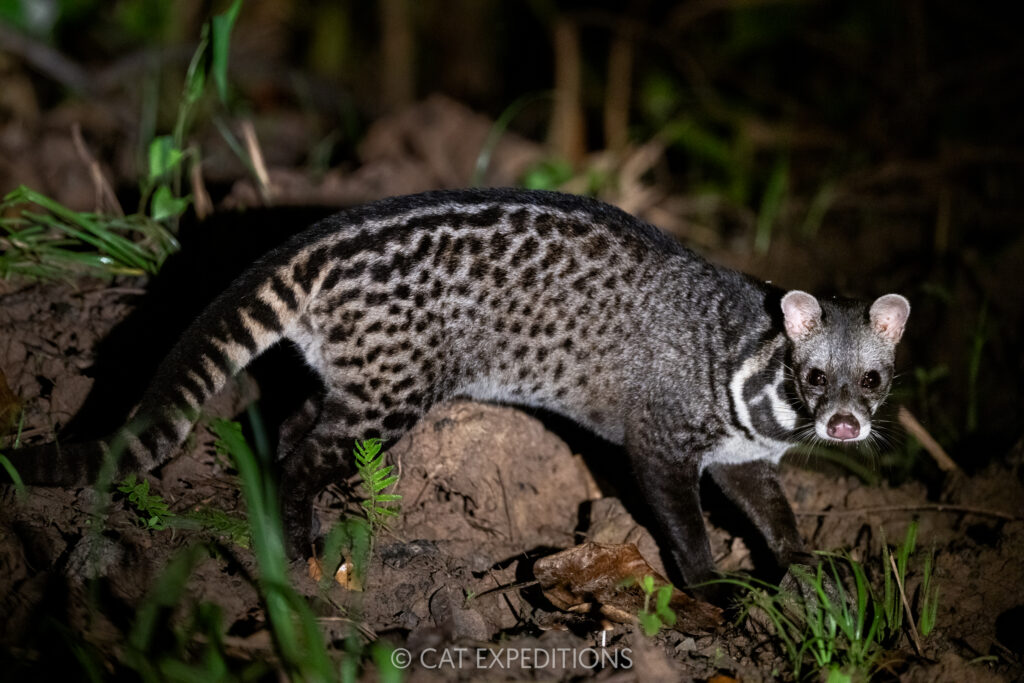
Our third night drive was continuously lit up by lightning in the distance, something we kept an eye on, in case we needed to quickly put on our rain gear. Argus pheasant calls provided the fantastic background sounds to our night search. The best mammal we encountered as a fantastic malay civet, which hung around for a while as it was foraging extensively along the road. Watching this mammal closely showed how much it relies on its nose to find potential food. It would keep its head down continuously, nose close to the ground, waiting for a scent.
There were the usual civet suspects along the road, and we had some really nice sightings of some herps including: a beautiful large female Bornean keeled pit viper, a harlequin tree frog, and mating dark-eared tree frogs.
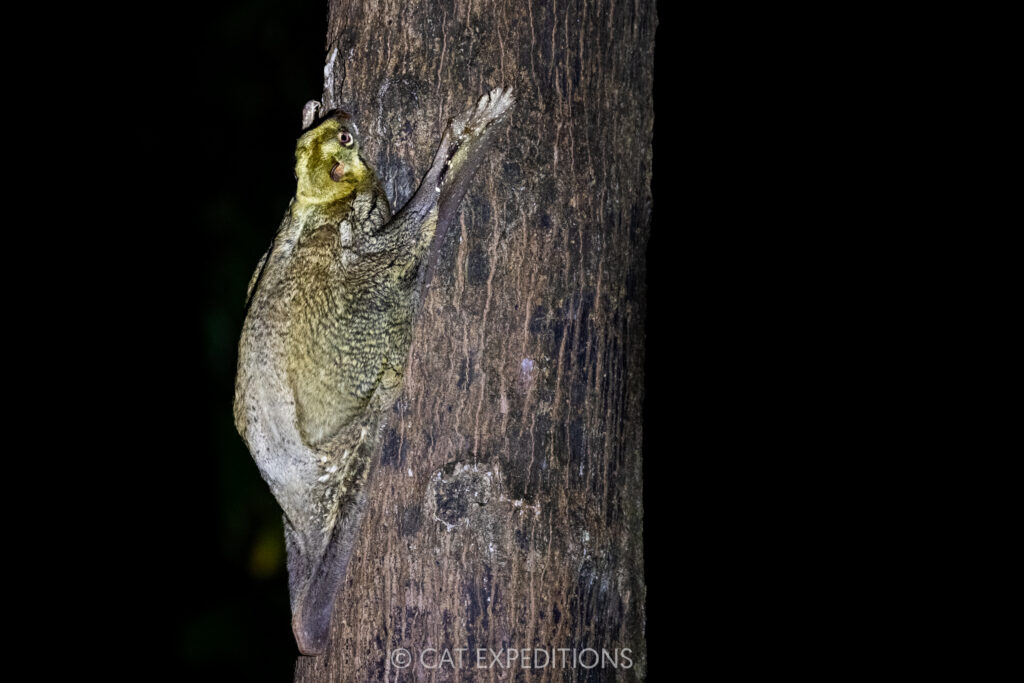
Day 6: We finally found our first colugo, that rather unique looking mammal that is also called a flying lemur. A bit of a misnomer since they aren’t lemurs, nor do they fly (they glide). Colugos are so unique they belong to their own taxonomic order. And there are only two species of them. As a comparison, rodents are also their own order but there are over two thousand species of rodents. Colugos are so cool and so well camouflaged when they hang against a tree trunk — they are always a special treat to see.
Later on in the night we saw a Pen-tailed treeshrew, another extremely elusive mammal and one our local guide Mike is always beyond excited to see.
The rains quickly moved in and we sought shelter for over an hour before having to call it a night, getting absolutely soaked on the way back to the lodge (even with stellar rain gear).
Day 7: We decided to start the drive in the late afternoon to see what diurnal mammals we could spot along the road that we knew so well from the night. It’s always amazing how differently you perceive things when its dark out compared to in bright sunlight. We found some Bornean gibbons, maroon leaf monkeys and we even had a sunset sighting of a Sunda leopard cat, but it was tucked extremely well into a bush and saying we glimpsed it would be overstating it.
The night drive wasn’t much of a night drive, we got totally rained out and had to call it before ever getting a change to go out. Instead we made plans to go out early the next morning for a different perspective.
Day 8: With a super early departure from the lodge at 3:30am we wanted to try for the last remaining activity of the nocturnal animals, before they went to bed and the day shift made an appearance. The night part of the morning was quiet, with three Bornean striped palm civets making the only appearance.
As dawn turned into the morning, we had a nice viewing of a Blue-throated bee eater, and a pair of rhinoceros hornbills, which are such charismatic birds with their uniquely shaped bills.
As the night drive began, we had another nice sighting of a Malay civet, and a palm civet on the road, before seeing our first Sunda skunk. It was a great view of this out of place mammal and we were all excited to have seen it.
We found some more malay civets before out second colugo, which we admired with our usual excitement. Then came a slow loris, slowly making its way up a branch. These animals never seem in a hurry, and always look half confused. We finished off the night with a Binturong, which was the highlight of our last day in Deramakot!
Day 9: This was our transfer day, leaving the dense jungle of Deramakot, to go to the more open Kinabantangan river. The transfer takes half the day, but the change in in scenery is always welcome. Plus, the river is where we really target flat-headed cat (with a chance of Sunda Clouded Leopard).
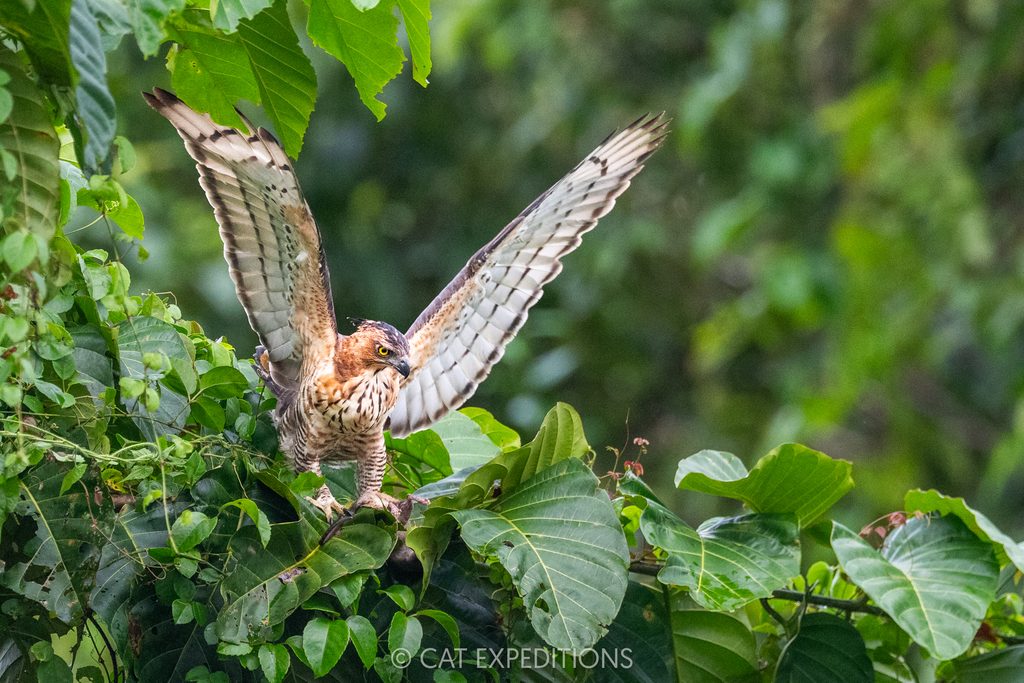
After lunch, we headed out on our first afternoon boat safari. For our afternoon boat safaris, our main targets along the Kinabatangan River are primates and birds. The first sighting was an incredible one as we watched a Changeable Hawk-Eagle catch and then kill a large rat, 20 yards up a tree.
To finish off the afternoon, we had nice viewings of Proboscis monkeys and long-tailed amcaques.
After our delicious dinner back at the lodge, we got ready for our night boat safari. These night safaris aren’t like the other night boat drives where sleeping kingfishers get blasted with spotlights (something we strongly disagree with) but where we look for nocturnal cats — specifically the flat-headed cat, and if we are super lucky the Sunda clouded leopard.
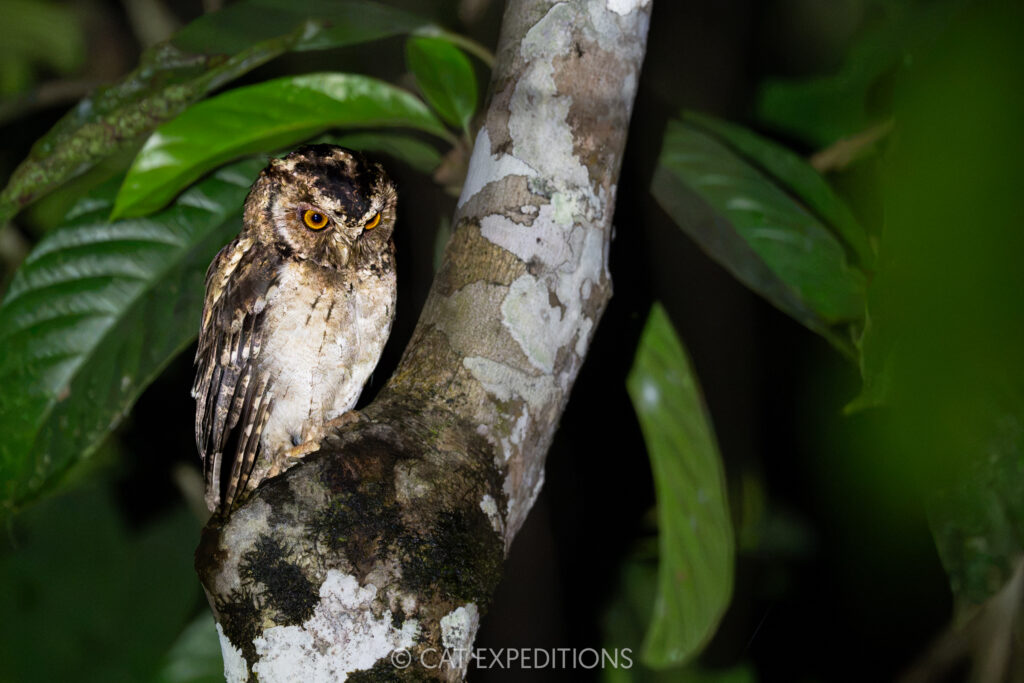
We didn’t see a cat, but a huge 3.5 meter crocodile made sure we were still all awake, simply be being there at night — which was just in time for us to see a beautiful scops owl.
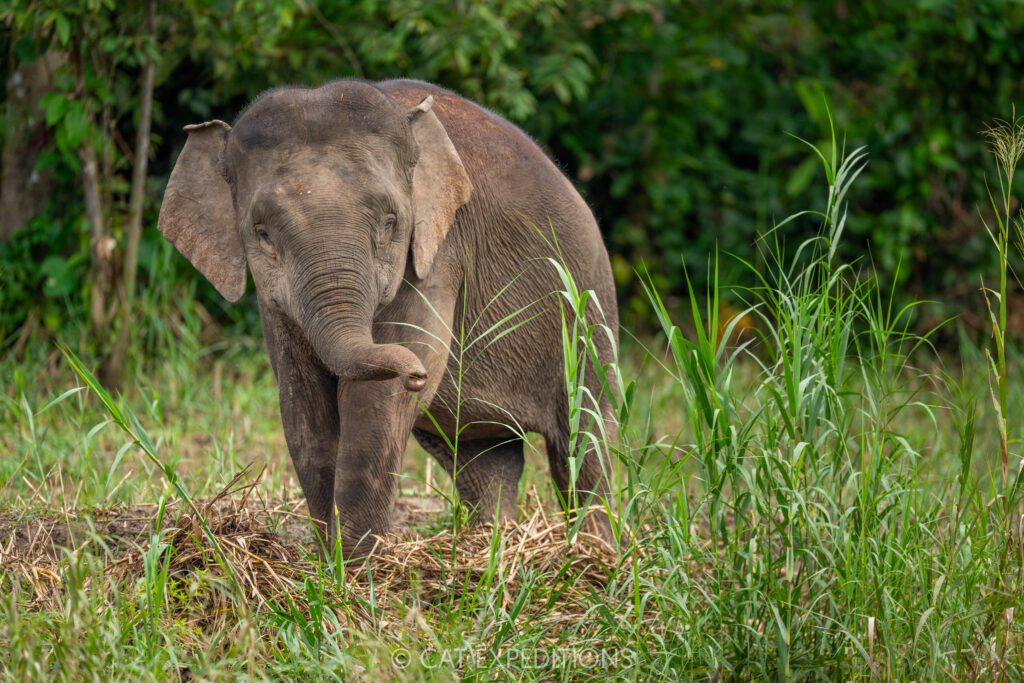
Day 10: After a restful morning with a delicious mango filled breakfast, and equally scrumptious lunch, we made got back on the river for our afternoon boat safari. Our main target was elephants — we had gotten word they weren’t too far up river. So after about a 45 minute boat ride, we were excited to encounter a large herd! This subspecies of Asiatic elephant is smaller than its mainland cousin, earning itself the common name of Pygmy elephant. The herd was scattered along the river. Some individuals were bathing, others feeding along the edge, others tucked into the secondary rainforest a few yards from shore.
We enjoyed dinner, talking about all the interesting elephant bevhavior we were lucky enough to observe, before reading ourself for another night boat safari. The night started quite slow, with a couple of sightings of Sambar deer (rather unusual along the river), but picked up in excitment when we found a Slow Loris licking a branch for about twenty minutes. We could never quite figure out what exactly it was licking off of the branch, but for a normally shy species, we had some wonderful views of it.
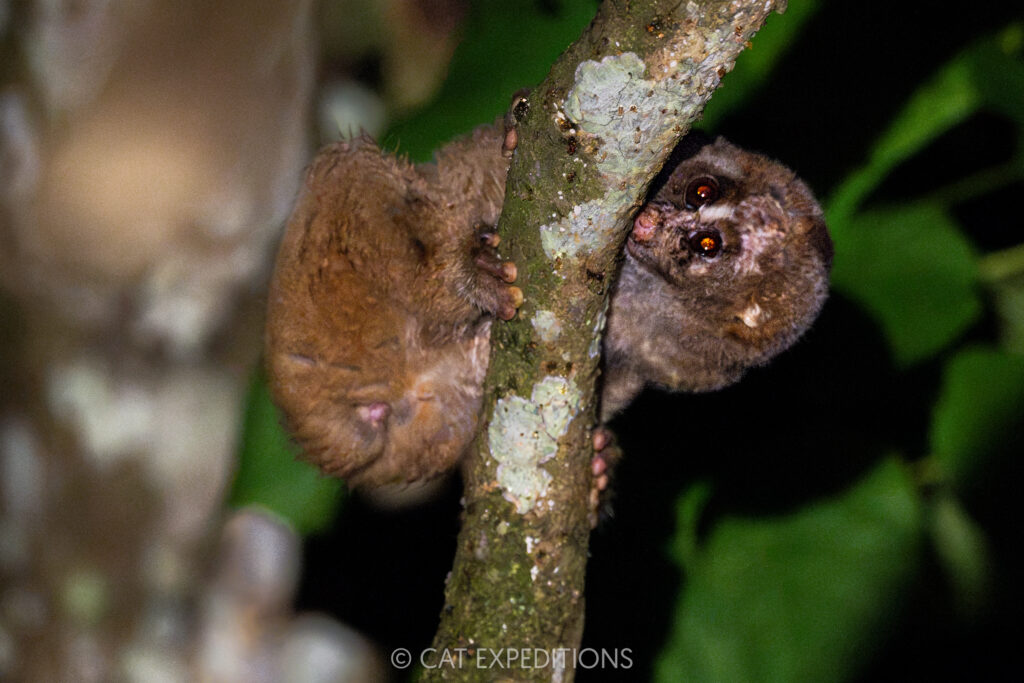
When we were about ready to call it for the night, as we made our way back to the lodge, both Mike, via spotlight, and myself, via thermal, spotted a definite cat along the rivers edge. We turned the boat around and slowly approached. Both Mike and I had good looks at the small cat, and we both felt confident it was a flat-headed cat. We sadly never got close enough for our guests to get any images, before the cat retreated into thick vegetation. We waited around a while, but it never reemerged.
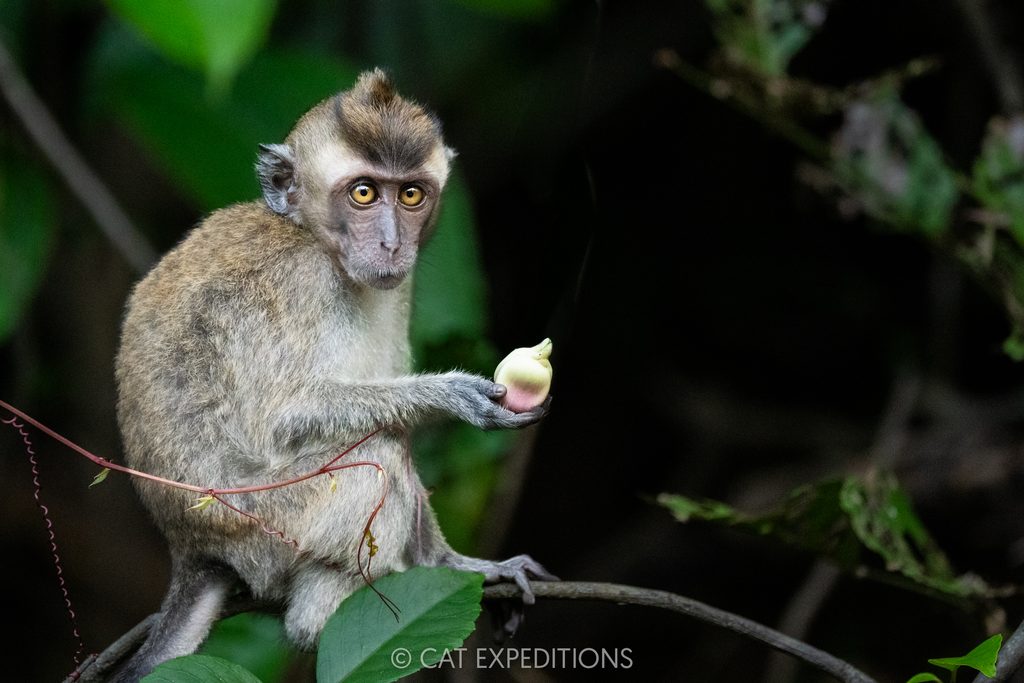
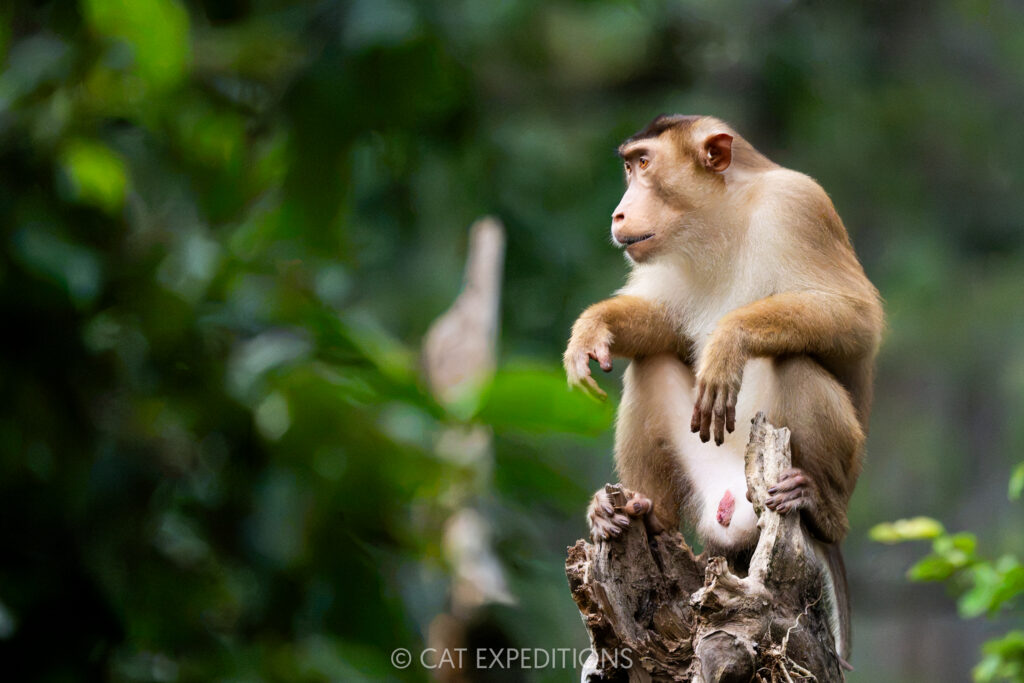
Day 11: The afternoon boat drive was filled with wildlife. We had fantastic views of Long-tailed Macaques, Proboscis monkeys, and Pig-tailed macaques, all of which were feeding along the rivers edge. We cherished these moments as we observed lots of fun behavior amongst the monkeys.
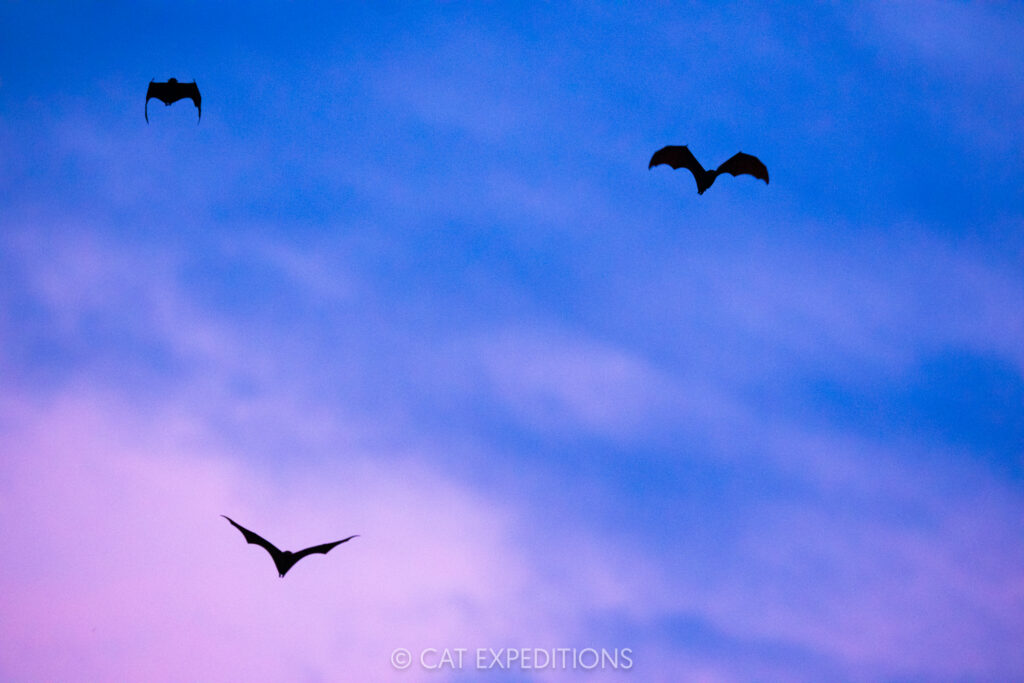
As we made our way back to the lodge, with the light fading into dusk, we watched as Large Flying Foxes flew overhead, making their way from their roosting trees to their nightly feeding grounds.
Shortly after starting our night boat safari, we hit a tremendously huge thunderstorm and turned around for safety reasons. We hoped the rain would stop, allowing us to return to the river to continue our search for cats, but it rained continuously throughout the night. It was disappointing to finish our time on the river by being rained out, but we kept our spirits up with what we may see at our final destination: Danum Valley Conservation Area.
Day 12: After our four hour journey from the river to the beautiful Borneo Rainforest Lodge, in the middle of Danum Valley, we enjoyed the large diversity of food options for lunch. Our local guide informed us of a fruiting tree nearby so our afternoon plan was to scope it out, hoping for hornbills or orangutans to show up. These fruiting trees are generally gold mines for wildlife, as they draw in all kinds of bird and mammal life, since they are ordained with thousands of yummy fruits the animals want to eat. The forest proved us wrong however, and we only saw a few passerine birds stop by. We condoled ourselves with the scrumptious dinner options back at the lodge.
Right after dinner we were getting ready to go on our night drive when we spotted a Sunda leopard cat right at the lodge, hunting below the boardwalks and chalets. Taking advantage of the situation we followed the cat for as long as we could. It was our best sighting of a leopard cat for the entirety of the trip (sorry, no photos from our end as we were occupied ensuring our cats saw the cat and keeping an eye on it!)
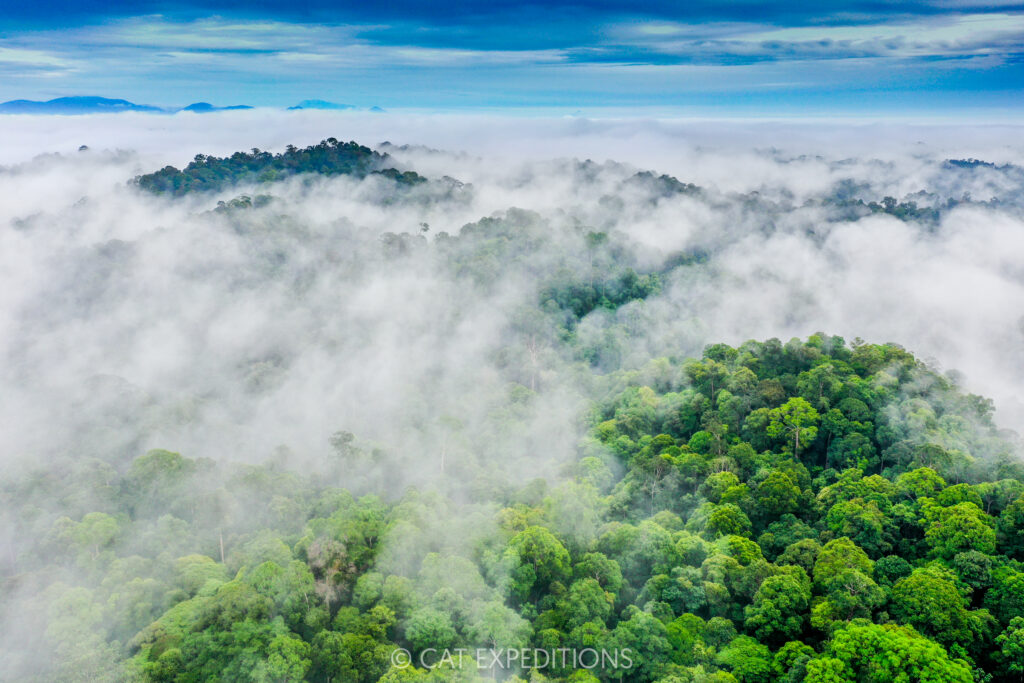
Day 13: For our sunrise activity we go to the canopy walkway, a stunning network of suspension bridges high in the canopy of the tropical rainforest. Its always such a treat to see animals high in the trees, at eye level.
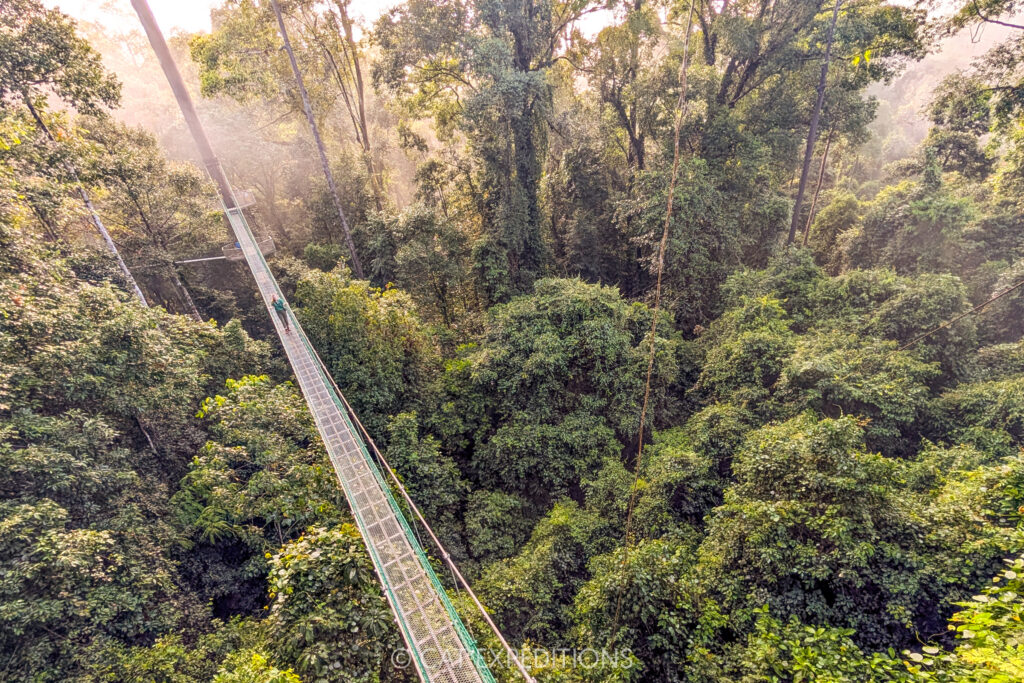
We could see an orangutan in the distance, but it was quite obscured by branches. We waited and waited for it to move, but when it did, it stayed really hidden and we never got a clean view.
On our way back to the lodge, as we walked through the forest, we were trying to find another obscured orangutan, which too had moved. While we were intently looking upwards a mouse deer shot out of the thickets and ran right past us, giving us all a proper fright, followed by laughter about getting scared by one of the world’s smallest deer.
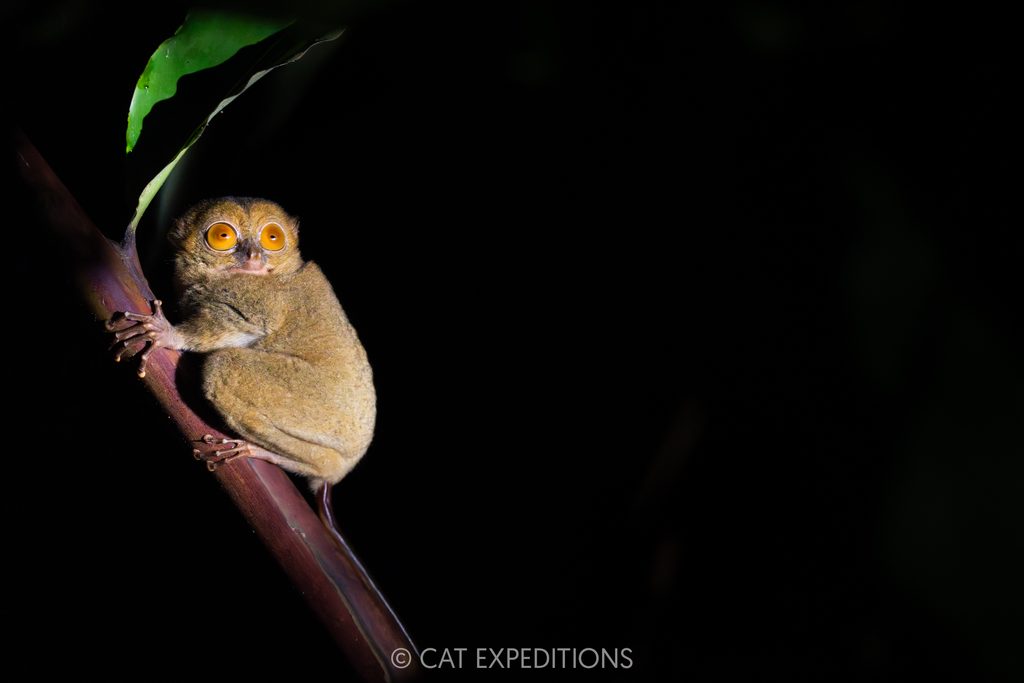
For our night drive, we utilized the lodge’s new, custom build night safari vehicle. It didn’t take long before we found our first animal, a very tolerant Western Tarsier. We got out of the vehicles, and utilized different light angles to get fantastic photos of this very difficult to photograph (well) species.
The non-photographic highlight of the night was spotting a Bornean banteng, a first for any of our Cats of Borneo tours. This endemic bovid (cattle like animal) is extremely endangered with current wild estimates placing the population in Sabah at fewer than 500 individuals. We never had a clean view of the female, but it was absolutely incredible to see such a rate animal. Hopefully continued conservation efforts will grow the population.
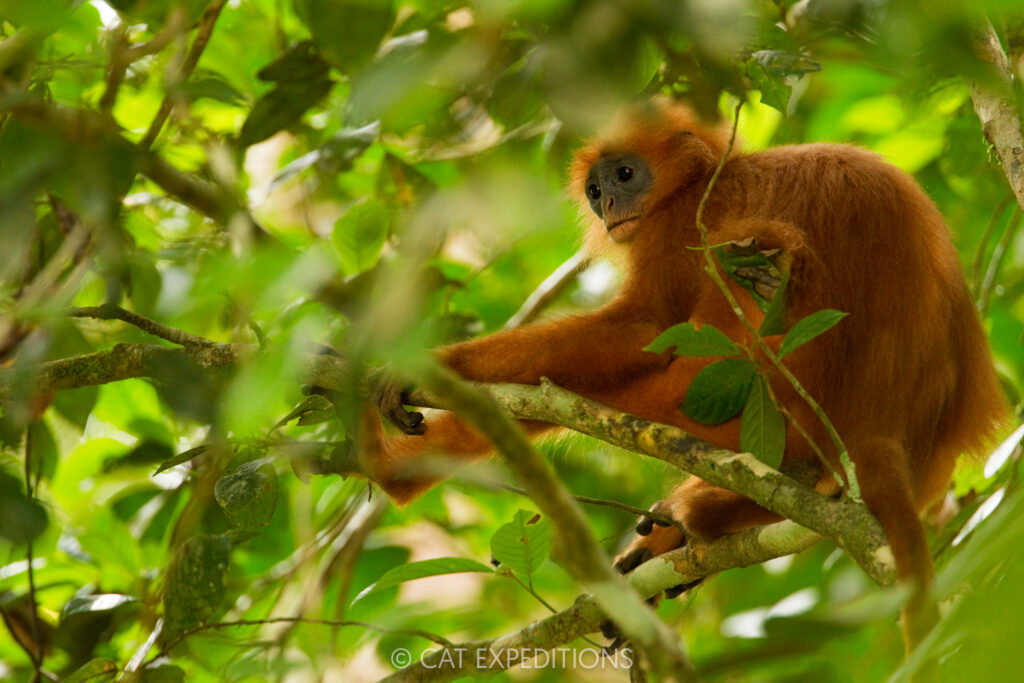
Day 14: Since we went longer than expected into the night, we slept in and skipped a morning safari. At lunch however we were treated to unexpected views of red leaf monkeys (or red leaf langurs) right outside the lodge, as they were feeding on fruit in the adjoining tree.
In the afternoon we hiked through the jungle (an experience that completely changes your understanding of the forest, since the density of the vegetation becomes so much more apparent). We had heard about an orangutan sighting so made our way that direction. These incredible apes seemed to always be one step ahead of us this trip however and we only found the female when was already done making her night time bed out of bent branches and leaves, allowing us only to see her dangling arm. It was a good reminder that wildlife isn’t there for our enjoyment, but that we are lucky enough to get to be in their space at all.
During the night drive we had more sightings of Western tarsier, malay civets, a bornean striped palm civet, and a slow loris. No more cats, but a rather impressive collection of nocturnal mammals for one night drive!
Day 15: As we left Danum Valley to catch our outbound flights, we were treated to one last sighting of Borneo Pygmy Elephants — nine of them in fact — as they were feeding along the road!
Cats of Borneo Photo Tour 2025 Species List
Mammals
| Malayan Colugo | Galeopterus variegatus |
| Large Flying Fox | Pteropus vampyrus |
| Trefoil Horseshoe Bat | Rhinolophus trifoliatus |
| Long-tongued Nectar Bat | Macroglossus minimus |
| Phillipine Slow Loris | Nycticebus menagensis |
| Western Tarsier | Cephalopachus bancanus |
| Proboscis Monkey | Nasalis larvatus |
| Long-tailed Macaque | Macaca fascicularis |
| Southern Pig-tailed Macaque | Macaca nemestrina |
| Müller’s Bornean Gibbon | Hylobates muelleri |
| Bornean Orangutan | Pongo pygmaeus |
| Pen-tailed Treeshrew | Ptilocercus lowii |
| Prevost’s Squirrel | Callosciurus prevosti |
| Least Pygmy Squirrel | Exilisciurus exilis |
| Hose’s Pygmy Flying Squirrel | Petaurillus hosei |
| Ear-spot Squirrel | Callosciurus adamsi |
| Black Flying Squirrel | Aeromys tephromelas |
| Thomas’s Flying Squirrel | Aeromys thomasi |
| Red Giant Flying Squirrel | Petaurista petaurista |
| Large Sunda Tree Mouse | Chiropodomys major |
| Malayan Porcupine | Hystrix brachyura |
| Sunda Leopard Cat | Prionailurus javanensis |
| Yellow-throated Marten | Martes flavigula |
| Sunda Skunk | Mydaus javanensis |
| Malay Civet | Viverra tangalunga |
| Island Palm Civet | Paradoxurus hermaphroditus |
| Binturong | Arctictis binturong |
| Borenan Striped Palm Civet | Arctogalidia trivirgata |
| Banded Palm Civet | Hemigalus derbyanus |
| Borneo Pygmy Elephants | Elephas maximus borneensis |
| Greater Mouse Deer | Tragulus napu |
| Sambar | Rusa unicolor |
| Banteng | Bos javanicus |
Birds
| Bornean Crested Fireback | Lophura ignita |
| Green Imperial Pigeon | Ducula aenea |
| Greater Coucal | Centropus sinensis |
| Silver-rumped Spinetail | Rhaphidura leucopygialis |
| Plume-toed Swiftlet | Collocalia affinis |
| Whiskered Treeswift | Hemiprocne comata |
| Storm’s Stork | Ciconia stormi |
| Lesser Adjutant | Leptoptilos javanicus |
| Oriental Darter | Anhinga melanogaster |
| Black-crowned Night Heron | Nycticorax nycticorax |
| Crested Serpent-Eagle | Spilornis cheela |
| Wallace’s Hawk-Eagle | Nisaetus nanus |
| Changeable Hawk-Eagle | Nisaetus cirrhatus |
| Bat Hawk | Macheiramphus alcinus |
| Sunda Scops-Owl | Otus lempiji |
| Buffy Fish-Owl | Ketupa ketupu |
| Barred Eagle-Owl | Ketupa sumatrana |
| Brown Wood-Owl | Strix leptogrammica |
| Brown Boobook | Ninox scutulata |
| Red-naped Trogon | Harpactes kasumba |
| White-crowned Hornbill | Berenicornis comatus |
| Rhinoceros Hornbill | Buceros rhinoceros |
| Black Hornbill | Anthracoceros malayanus |
| Oriental Pied-Hornbill | Anthracoceros albirostris |
| Wrinkled Hornbill | Rhabdotorrhinus corrugatus |
| Blue-throated Bee-eater | Merops viridis |
| Blue-eared Kingfisher | Alcedo meninting |
| Stork-billed Kingfisher | Pelargopsis capensis |
| Brown Barbet | Caloramphus fuliginosus |
| Buff-rumped Woodpecker | Meiglyptes grammithorax |
| Blue-crowned Hanging-Parrot | Loriculus galgulus |
| Blue-headed Pitta | Hydrornis baudii |
| Fiery Minivet | Pericrocotus igneus |
| Ventriloquial Oriole | Oriolus consobrinus |
| Common Iora | Aegithina tiphia |
| Malaysian Pied-Fantail | Rhipidura javanica |
| Greater Racket-tailed Drongo | Dicrurus paradiseus |
| Blyth’s Paradise-Flycatcher | Terpsiphone affinis |
| Ashy Tailorbird | Orthotomus ruficeps |
| Rufous-tailed Tailorbird | Orthotomus sericeus |
| Pacific Swallow | Hirundo javanica |
| Common Hill Myna | Gracula religiosa |
| Orange-bellied Flowerpecker | Dicaeum trigonostigma |
| Asian Fairy-Bluebird | Irena puella |
| Lesser Green Leafbird | Chloropsis cyanopogon |
| Dusky Munia | Lonchura fuscans |
Reptiles and Amphibians
| Seep Frog | Occidozyga baluensis |
| File-eared Tree Frog | Polypedates otilophus |
| Dark-eared Tree Frog | Polypedates macrotis |
| Harlequin Tree Frog | Rhacophorus pardalis |
| Saltwater Crocodile | Crocodylus porosus |
| Reticulated Python | Malayopython reticulatus |
| Sunbeam Snake | Xenopeltis unicolor |
| Gray-tailed Racer | Gonyosoma oxycephalum |
| White-bellied Rat Snake | Ptyas fusca |
| Bornean Pit Viper | Craspedocephalus borneensis |
| Bornean Keeled Green Pit Viper | Tropidolaemus subannulatus |