Desert Pampas Cat
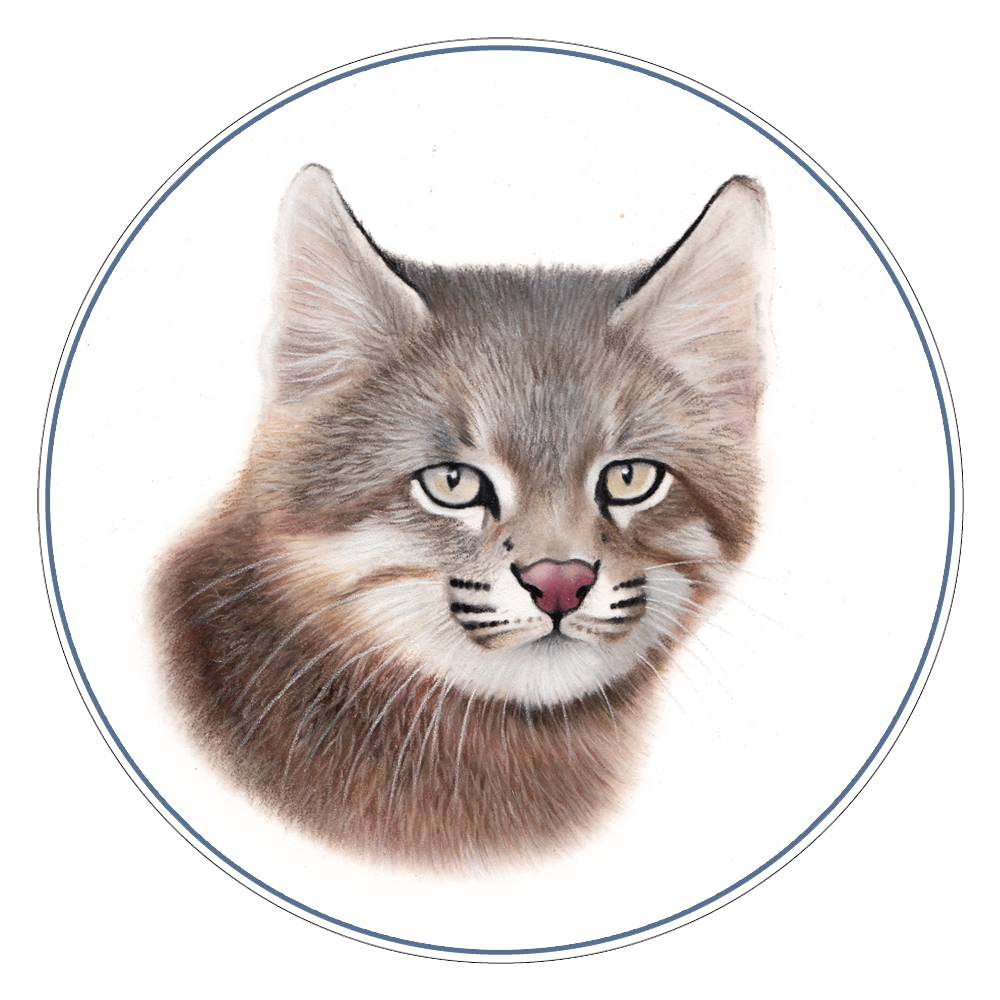
DESERT PAMPAS CAT (Leopardus colocolo garleppi)
The desert pampas cat is a small and remarkably adaptable South American wild cat found primarily along and around the Andes. It occupies environments ranging from the cold, barren Altiplano to dry forests, coastal deserts, wetlands, and grasslands. In the high Andes, desert pampas cats share their habitat with the much rarer Andean mountain cat and are considerably more common than their endangered neighbor. Despite their wide distribution, desert pampas cats remain poorly studied, and even their taxonomy continues to be debated.
Difficulty: Very Difficult
Desert Pampas Cat Photo Tour Statistics

1 ANDEAN MOUNTAIN CAT
TOUR RUN

1 AVG NUMBER OF CATS SEEN PER TOUR

20 MINUTE ON AVG
WITH EACH CAT
Desert Pampas Cat Description
The desert pampas cat is a small, stocky feline with a thick coat and relatively short tail. Because it occurs across such an extraordinary range of environments, its appearance can vary considerably between regions and individuals.
In the high Andes, desert pampas cats typically have long, dense fur that provides insulation against freezing nighttime temperatures. Their background coloration ranges from pale grey and yellowish-brown to warmer orange and reddish tones. The body can be marked with poorly defined spots, rosettes, or elongated reddish-brown markings, while the legs are usually much more boldly patterned with dark horizontal bands. The tail is relatively short and thin compared with that of the Andean mountain cat and is marked with narrow dark or reddish-brown rings.
This distinction becomes especially important in the high Andes, where the two cats occur together and can sometimes be confused. Andean mountain cats are generally larger and greyer, with a black nose and an exceptionally long, thick tail marked by broad dark bands. Desert pampas cats generally have a pink nose and a noticeably shorter and thinner tail.
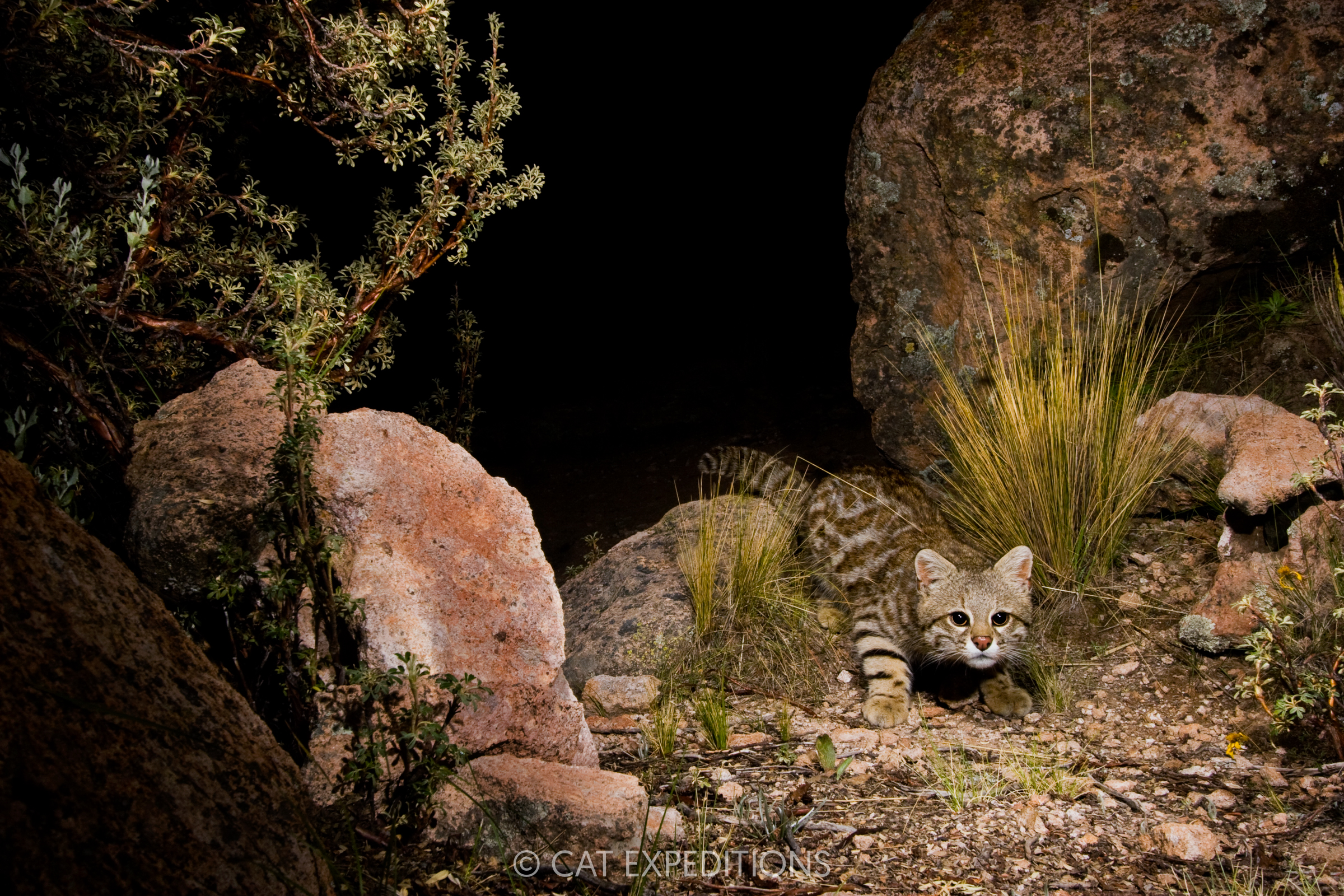
The pink nose and short, thinner tail give this cute away as the Desert Pampas Cat, compared to the Andean mountain cat which has a black nose, and a thicker, longer tail.
Desert Pampas Cat Distribution and Habitat
The desert pampas cat has an extraordinary distribution extending from southern Colombia through Ecuador, Peru, Bolivia, and Chile to northwestern Argentina. Few wild cats occupy such an extreme elevational range: the species has been recorded from sea level to approximately 5,704 meters (18,714 feet) above sea level.
This enormous range is matched by an impressive ability to occupy different habitats. Desert pampas cats have been recorded in coastal deserts, seasonally dry forests, agricultural areas, inter-Andean valleys, shrublands, high-elevation grasslands, and the puna and Altiplano of the Andes.
In the high Andes, they inhabit an especially harsh environment of rocky slopes, volcanic plateaus, sparse grasslands and shrublands, boulder fields, and high-altitude wetlands known as bofedales. Temperatures regularly fall below freezing at night, oxygen levels are low, and vegetation can be extremely sparse.
Desert pampas cats are much less dependent on rocky habitat than Andean mountain cats. This ecological flexibility probably helps explain why they are generally more common than Andean cats where the two occur together.
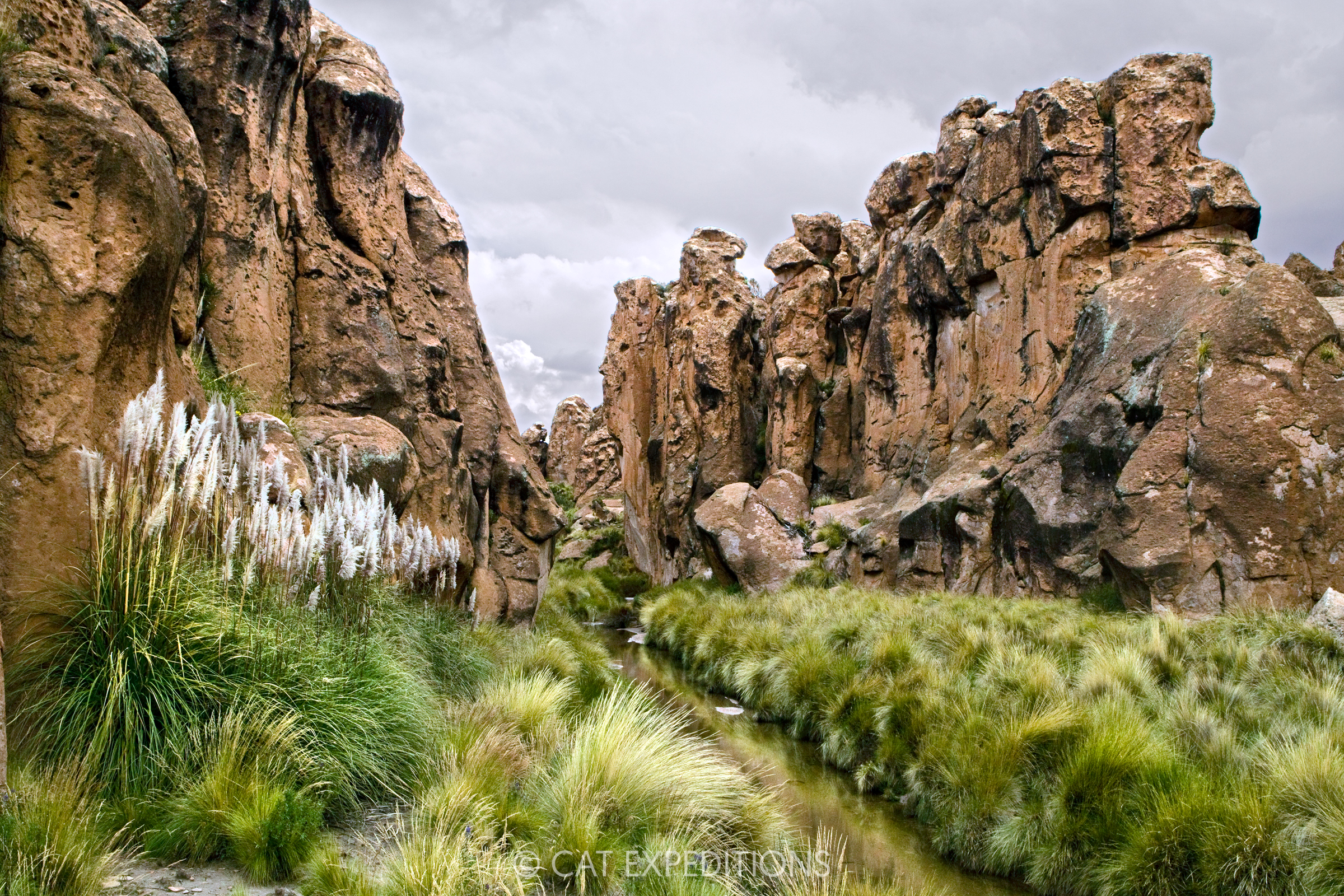
Canyons in the altiplano are just one of many different habitats the Desert Pampas Cat occupies.
Desert Pampas Cat Feeding Biology
Desert pampas cats are primarily predators of rodents and birds, although their diet changes depending on the prey available in a particular environment.
In the high Andes, rodents dominate their diet and mountain viscachas can be especially important. Research in northern Chile found considerable dietary overlap between desert pampas cats and Andean mountain cats. Mountain viscachas represented approximately 75% of the estimated prey biomass consumed by pampas cats in the study, demonstrating that these relatively large rodents can be extremely important to both felines.
Smaller rodents are also regularly consumed, and birds and reptiles supplement the diet. At the opposite end of their elevational range, recent research in coastal wetlands of northwestern Peru found a similarly flexible feeding strategy. Rodents again dominated the diet, but desert pampas cats also consumed a surprising variety of wetland birds, including rails, moorhens, ducks, and other species.
This dietary flexibility is probably one of the keys to the desert pampas cat's enormous geographic range. Rather than depending on a single prey species, these cats appear capable of exploiting whatever small vertebrates are most abundant in their local environment.
Desert pampas cats can be active at any time of day or night, although research suggests they are predominantly nocturnal and crepuscular in many parts of their range. Their activity appears to be flexible. Camera traps have photographed them during daylight hours as well as throughout the night, and local patterns probably change according to prey activity, temperature, season, habitat, and human disturbance.
This flexibility is especially useful in the high Andes, where environmental conditions change dramatically over a 24-hour period. Temperatures can plunge below freezing at night but become surprisingly warm under the intense high-altitude sun during the day.
Desert pampas cats are primarily terrestrial hunters, but they are capable climbers and have been observed climbing trees when threatened. In Andean landscapes, they frequently use rocky caves and crevices for shelter, while cats living in desert and dry-forest environments may rely more heavily on dense vegetation for cover.
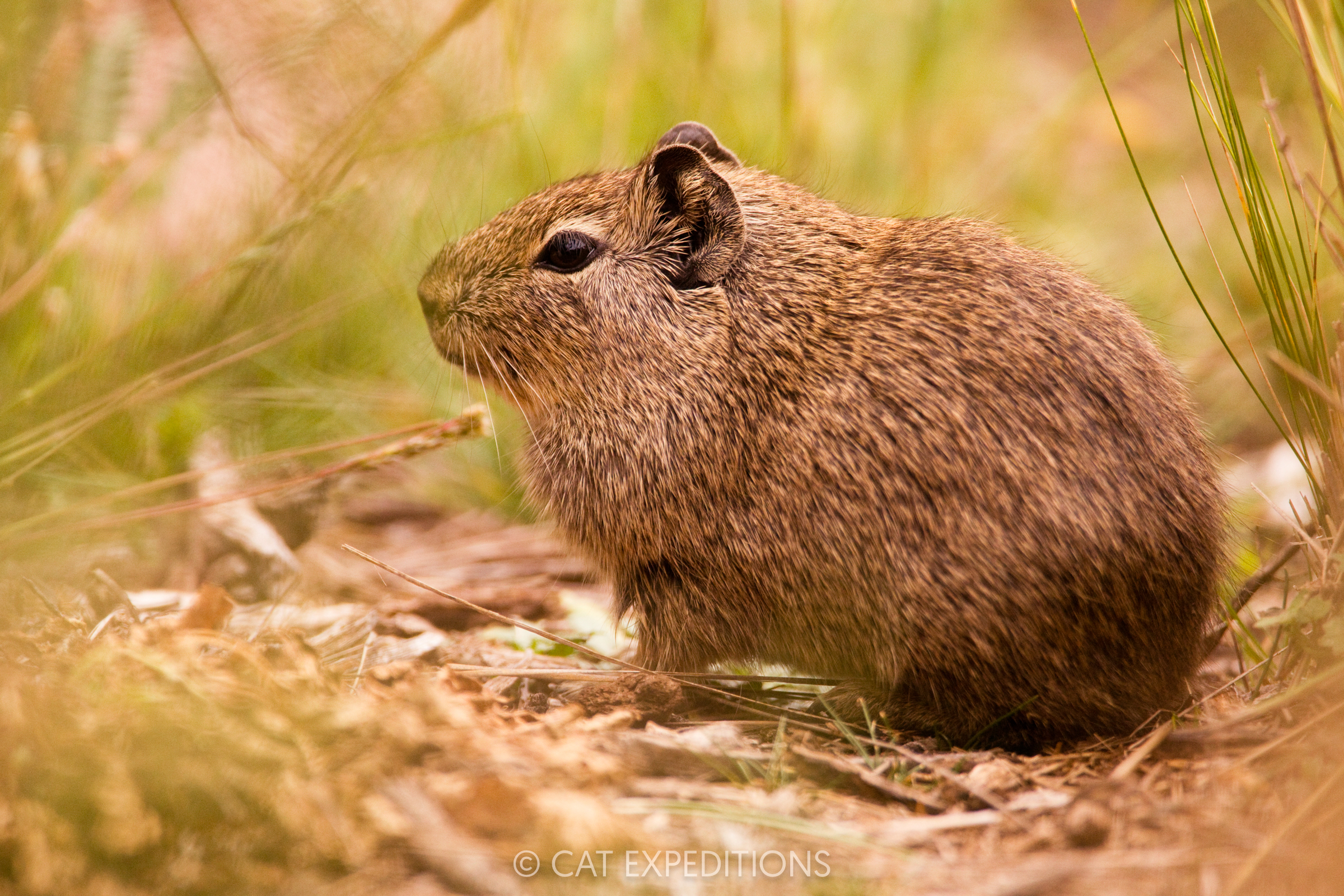
Rodents like this Yellow-toothed Cavity are an important food source for Desert Pampas Cats. Their prey varies considerably more than the Andean Mountain Cat, especially across their extensive range.
Desert Pampas Cat Social Organization
Desert pampas cats are believed to be solitary and territorial, with adults generally traveling and hunting alone except during mating and when females are accompanied by kittens.
One of the most interesting aspects of their behavior is the use of latrines. Scats are frequently deposited repeatedly at particular locations, including small depressions in the ground and sheltered sites within rocky caves. These latrines may play an important role in scent communication between individuals.
The amount of space required by an individual varies dramatically between habitats. Studies cited by the Pampas Cat Working Group have documented home ranges as small as approximately 3.3 square kilometers (1.3 square miles) in the desert of northern Peru and as large as 43.4 square kilometers (16.8 square miles) in the northern Argentine Andes.
That difference illustrates just how dramatically the species' ecology can change across its range. Productive low-elevation habitats can support prey within relatively small areas, while cats living in the sparse, resource-poor high Andes may need to travel across much larger landscapes to find enough food.
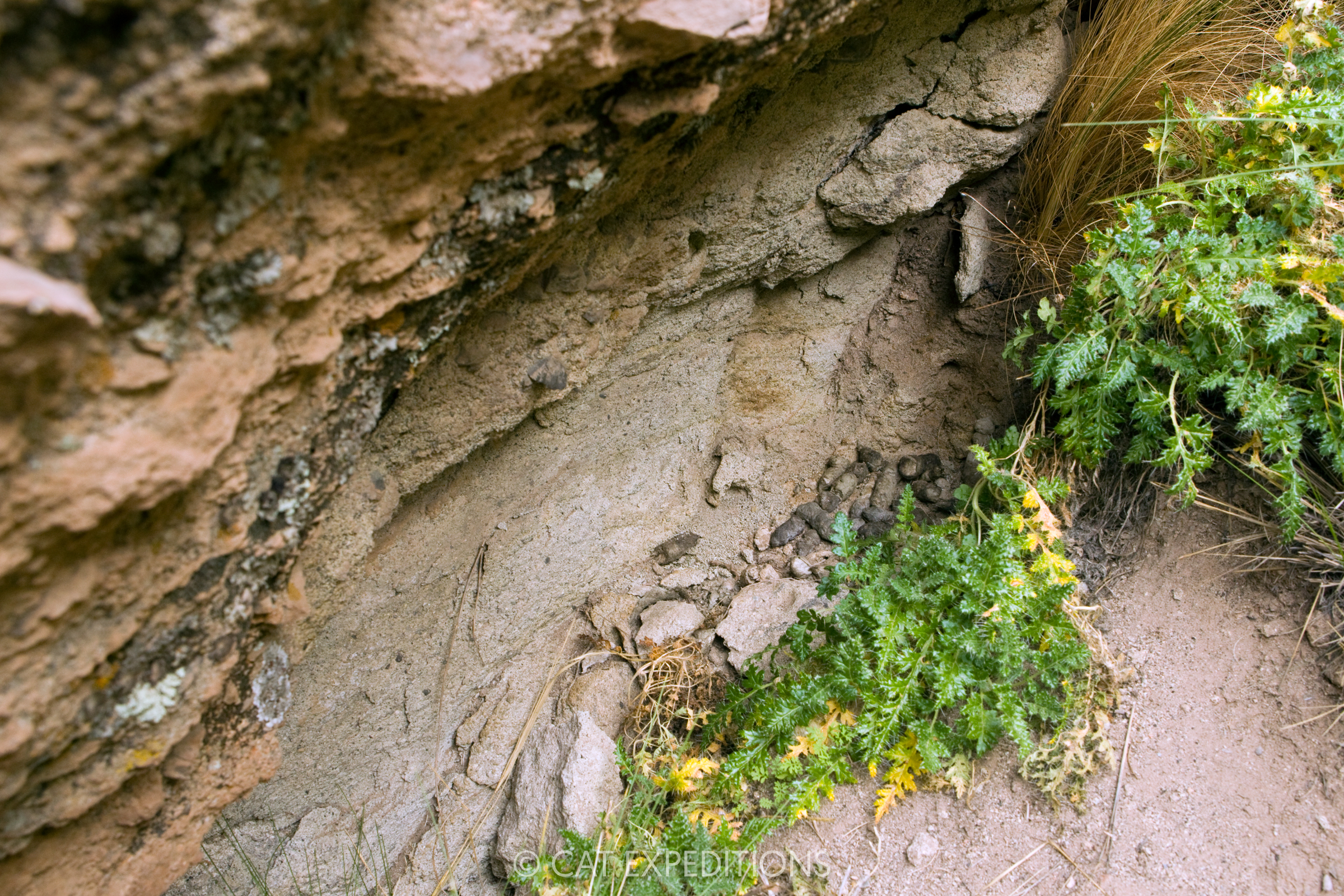
Desert Pampas Cats, like Andean mountain cats latrine. This means they go to the bathroom in the same spot over and over again. Why they do this still remains a mystery.
Desert Pampas Cat Reproduction
Reproduction remains one of the least understood aspects of desert pampas cat biology.
The Pampas Cat Working Group reports that females are believed to become reproductively mature at approximately two years of age, with a gestation period of around 80–85 days and litters containing as many as four kittens.
However, these figures should be treated cautiously. Much of what has historically been published about Pampas cat reproduction comes from captive animals or from literature produced when the various forms now proposed as separate Pampas cat species were considered a single species. Detailed information specifically documenting reproduction in wild Leopardus garleppi remains extremely limited.
Fundamental questions—including breeding seasonality, den-site selection, kitten development, dispersal, and reproductive success—remain largely unanswered. For such a widely distributed cat, remarkably little is still known about how it reproduces in the wild.
Desert Pampas Cat Conservation
Determining the conservation status of the desert pampas cat is complicated by its unsettled taxonomy.
The IUCN Cat Specialist Group currently recognizes a single Pampas cat species, Leopardus colocola, with garleppi treated as one of several subspecies. Under this broader classification, the Pampas cat is listed as Near Threatened. However, more recent taxonomic research has proposed dividing the Pampas cat complex into five separate species, including the desert pampas cat, Leopardus garleppi.
The Pampas Cat Working Group follows this newer five-species classification and highlights how conservation status varies considerably across the desert pampas cat's range. Leopardus garleppi is considered Endangered in Ecuador and Data Deficient in Peru, while several other countries continue to assess their Pampas cats using the broader Leopardus colocola classification.
Threats also vary geographically. Habitat loss and fragmentation, agriculture, mining, roads, urban development, hunting, retaliatory killing, and wildfires can all affect populations. Domestic animals are another significant concern. Free-ranging dogs can chase and kill small wild cats, while both domestic dogs and cats can potentially transmit diseases to wild populations.
These threats are particularly concerning because we still know remarkably little about desert pampas cat population sizes or trends. Conservation organizations such as the Pampas Cat Working Group are therefore combining ecological research with practical conservation measures, including vaccination and sterilization programs for domestic animals, improvements to livestock and poultry enclosures, roadkill mitigation, habitat protection, and environmental education.

Mining is a consistent threat for both the Desert Pampas Cat, as well as the Andean mountain cat across their range in the Andes.