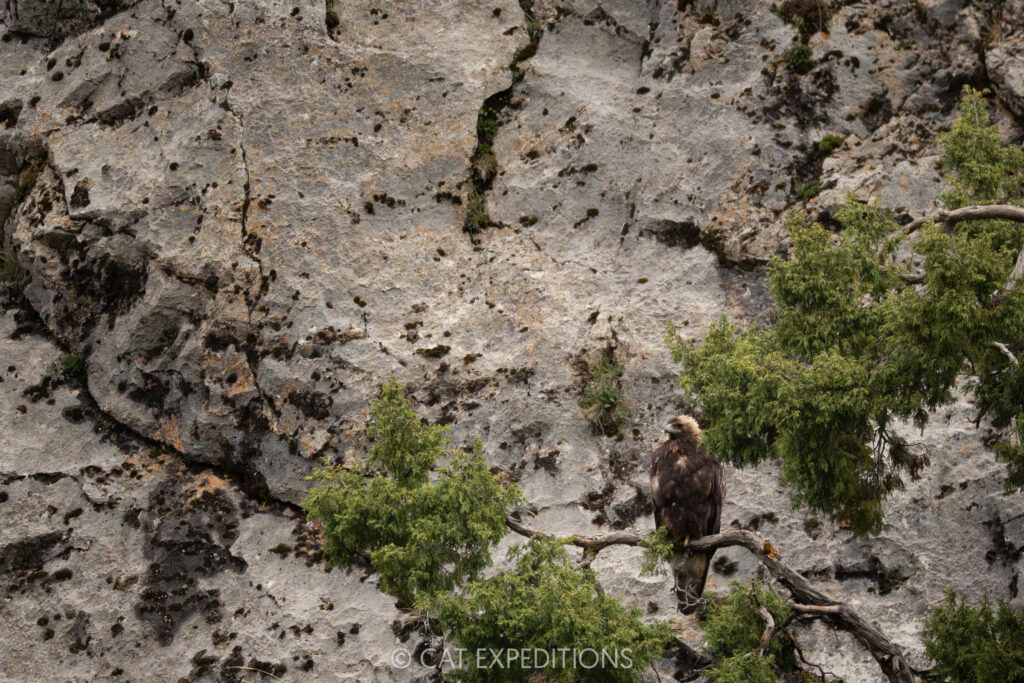
Early last year we visited the high altitude Tibetan plateau of Sichuan province in China. This trip served as our exploratory trip to see if we could find the cat, and if enough infrastructure was in place for us to run a Chinese Mountain Cat tour — good news is that we can! This Chinese Mountain Cats of Sichuan 2025 exploratory trip report features photos from our trip, which was in the end only seven days long, a few days shorter than our current Chinese Mountain cat photo tour!
Highlights of the 2025 Chinese Mountain Cat Exploratory Trip
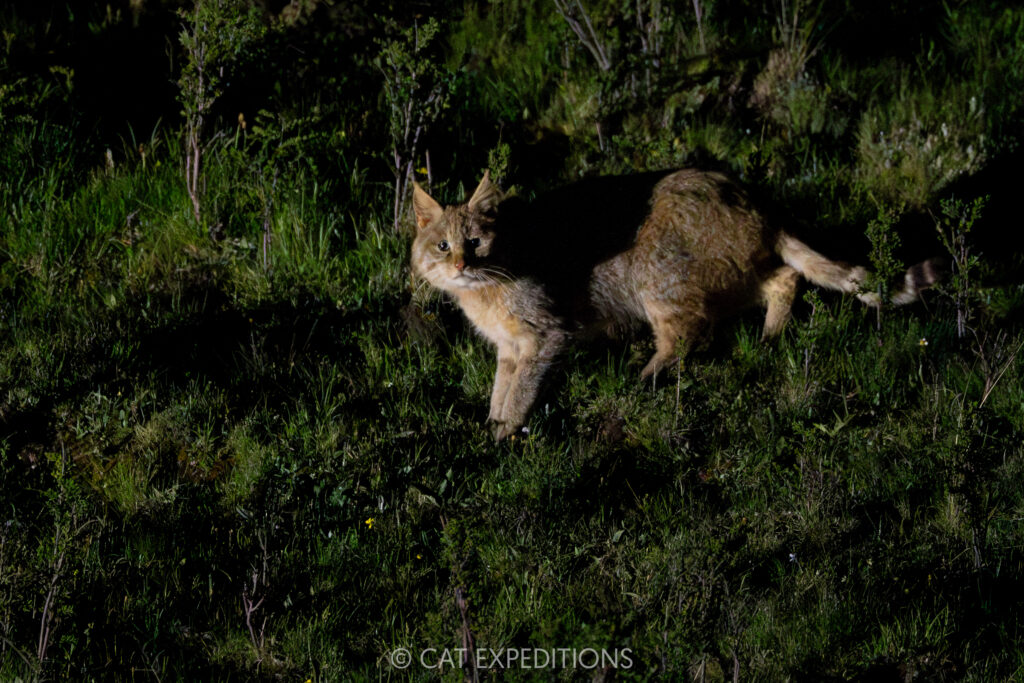
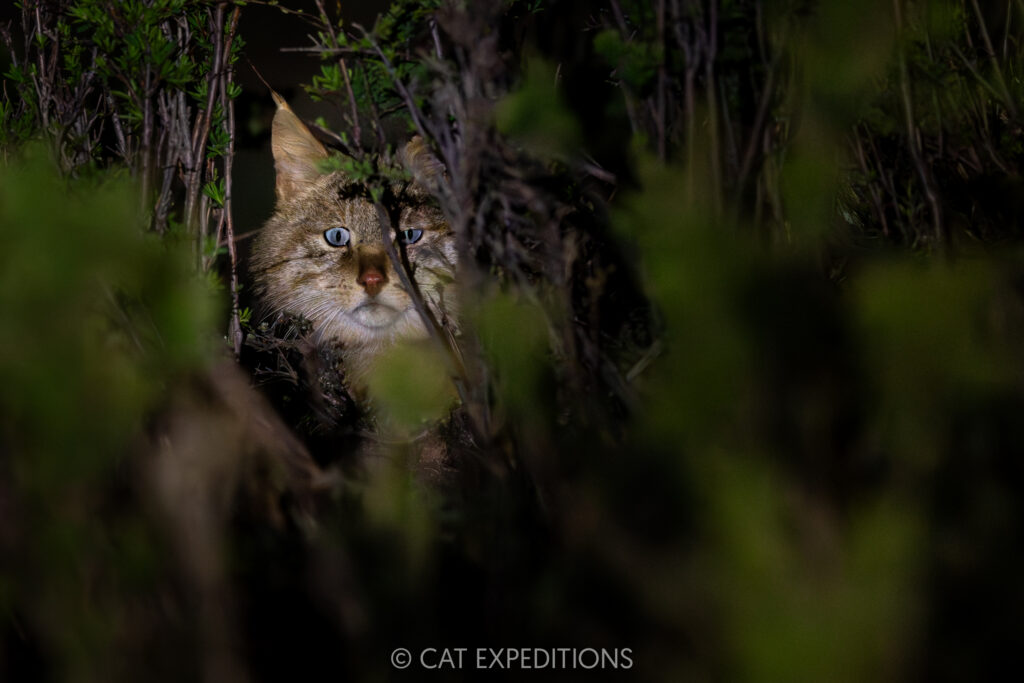
Chinese Mountain Cats: 2 Chinese Mountain Cat Sightings (1 individual) – We had two different sightings of a beautiful male Chinese Mountain Cat. Both sightings occurred at night, due partially due to the timing of our tour. We are have since then shifted the tour dates to allow for a greater chance for daytime sightings a well. Our two sightings with the male were both prolonged, at least thirty minutes long, and during each sighting we had multiple fantastic moments for photographs. For our closest Chinese mountain cat encounter, we had the cat at just four meters!
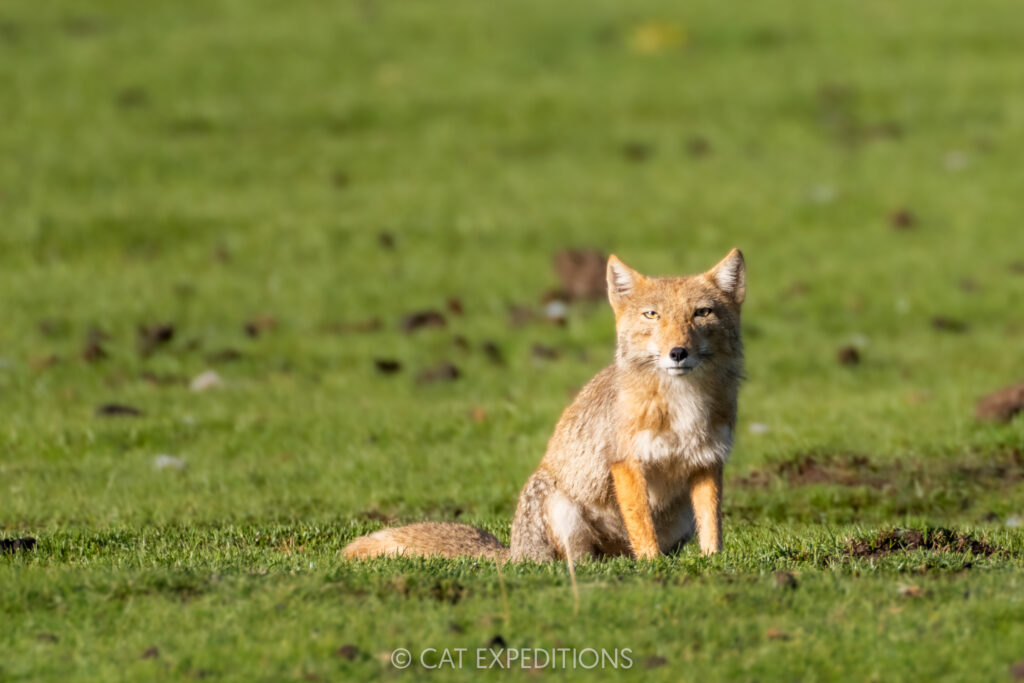
Tibetan Fox: We had four different sightings of Tibetan Fox, including seeing a distant den where pups were playing around their mom. Our best sighting was of a fox hunting pikas in the plateau, at just fifteen meters away. Most fox sightings were of skittish individuals, but that particular fox didn’t care much about our presence at all.
Tibetan Wildlife: In total we saw nice different mammal species on the Tibetan Plateau and twenty eight different bird species. Comically enough, the highlight for us were the smaller animals, like the Himalayan marmots and the plateau pikas.
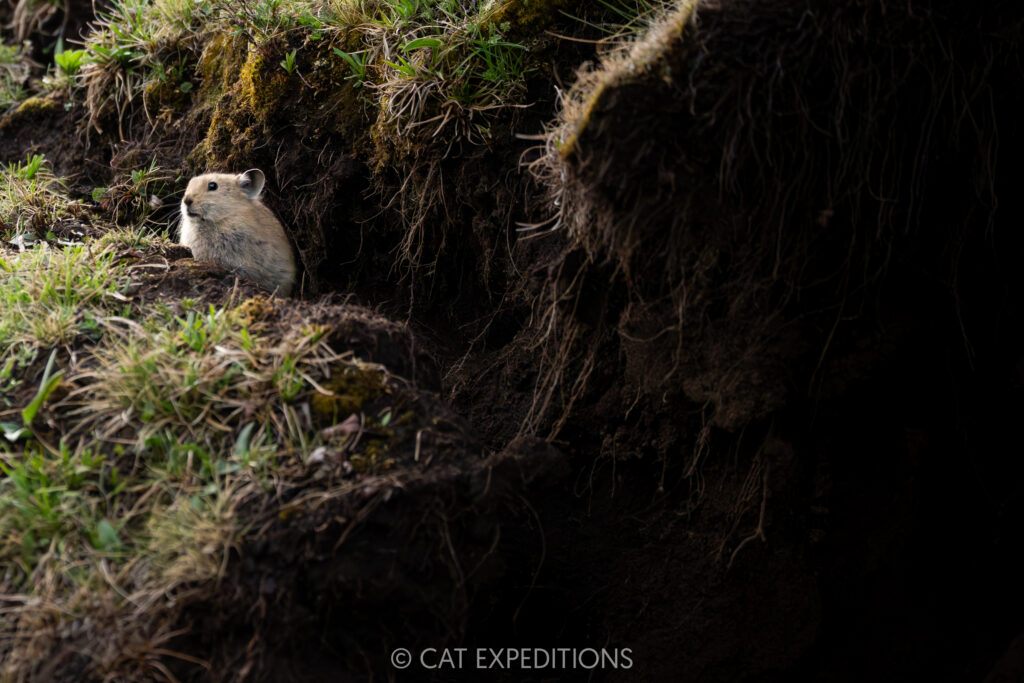
Detailed Chinese Mountain Cat Exploratory Trip Summary 2025
Day 1: We landed quite late in Changdu, made our way to the hotel and quickly fell into bed, with that typical excitement of knowing that tomorrow we would be making our way to the Tibetan Plateau.
Day 2: Today was, on paper, a travel day—but in reality, it felt like a slow, unfolding transition into an entirely different world.
We left behind the energy and industry of Chengdu and began our long, nine-hour journey up toward the Tibetan Plateau. Not long into the drive, we stopped for lunch and had our first proper introduction to Sichuan cooking—bold, complex, and unforgettable. Within a few bites, we all started laughing as that unmistakable sensation kicked in… the slow, electric numbness from the Sichuan pepper. Apparently, that’s exactly what it’s supposed to do. Consider us initiated.
As the hours passed, the landscape transformed in a way that felt almost cinematic. We climbed steadily through layers of habitat—lush tropical forest giving way to temperate woodland, then to alpine forest, and eventually opening into vast alpine steppe. With each shift, the air thinned, the light sharpened, and the feeling of remoteness deepened. This is the realm of the Chinese Mountain Cat.
And then, a moment that snapped everyone to full attention—a distant Tibetan fox family. A mother, alert and poised, with three small pups scattered around her. It was brief and far off, but unmistakable. That flicker of life out on the steppe was enough to send a surge of excitement through the vehicle. Still, with many hours ahead, we had to keep moving—but not without that feeling that we had truly arrived in wild country.
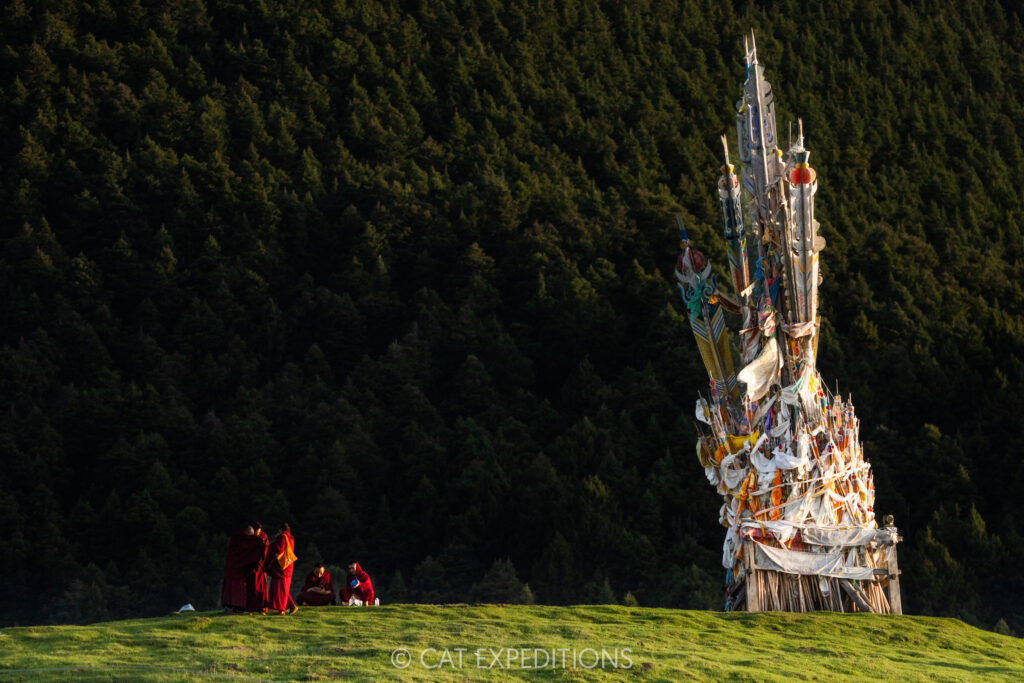
Reaching the plateau brought more than just altitude—it brought a cultural shift that was just as striking. Prayer flags stretched between rooftops, catching the wind, and Buddhist monasteries appeared across the hillsides, grounding the landscape in a deep sense of place and tradition.
By the time we reached our hotel, the light was softening over the mountains. We took a quiet walk to a nearby monastery, cameras in hand, letting the atmosphere sink in. The journey here had already delivered so much—and tomorrow, we begin searching in earnest.
Day 3: We slipped out into the steppe before sunrise, arriving in exactly the kind of habitat you dream about when thinking of Chinese Mountain Cats—wide, open, quiet, and full of possibility. That crisp, high-altitude air had that feeling to it… like anything could happen.
Our first mammal of the trip came almost immediately—a Wild Pig, methodically foraging along the hillside, completely absorbed in its morning routine. Not long after, we spotted a Eurasian Badger, moving with purpose through the grass, a species that always feels like a bit of a bonus out here.
And then—everywhere you looked—movement.
Plateau pikas.
Hundreds of them. No, thousands. Scattered across the landscape like little sentinels, popping up from burrows, squeaking, feeding, disappearing, reappearing. These tiny, rabbit relatives completely stole the show. There’s something about them—their curiosity, their constant motion, those perfectly rounded ears—that makes them impossible not to love. Honestly, they may have been the unofficial stars of the trip.
As the light slowly crept across the plateau, illuminating pika after pika, it felt like the entire ecosystem was waking up around us.
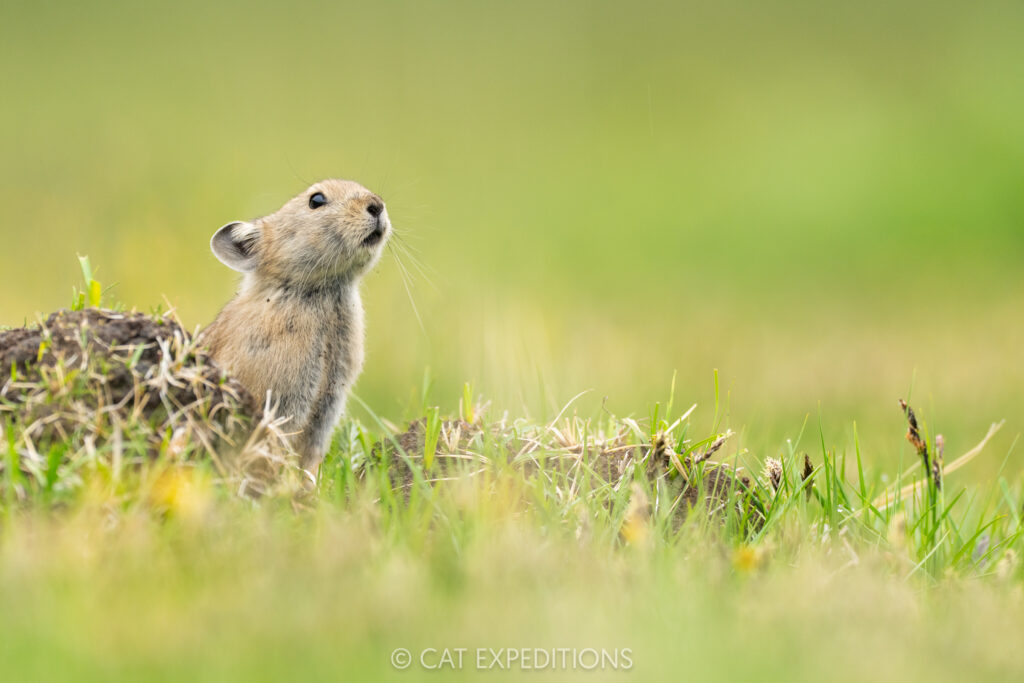
The afternoon was quite, besides loads of pikas, and so was our first night on the plateau.
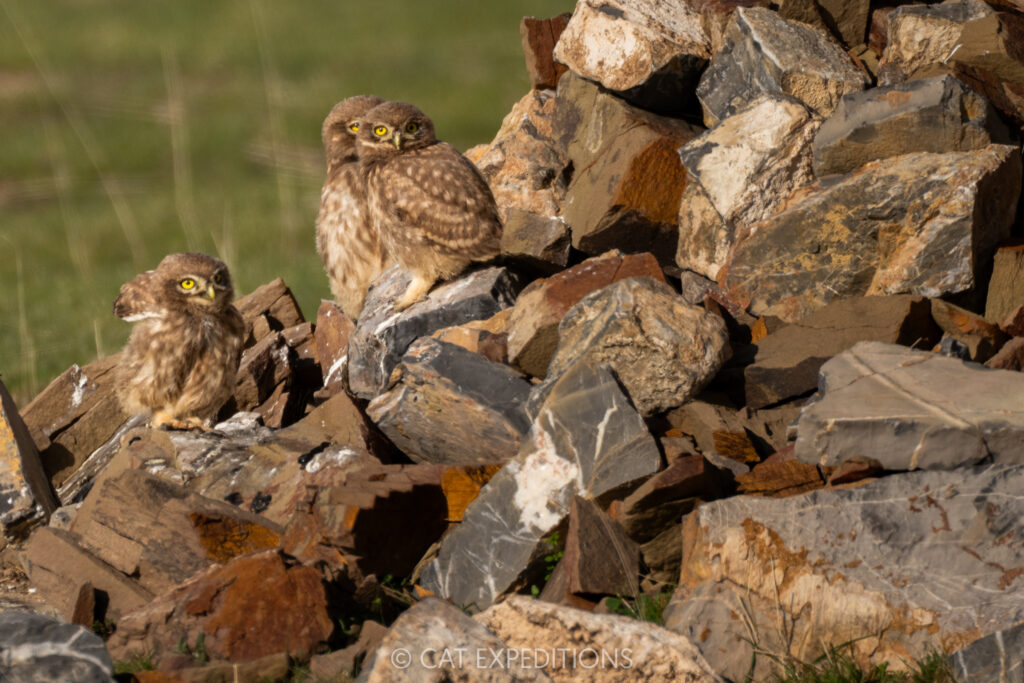
Day 4: The morning began with the most tolerant Tibetan fox of the trip, engaged in hunting the pikas in the early morning. We never saw him be successful, but it was exhilarating to get to watch him so closely. Soon after we found a pile of rocks set up by villagers, but seemingly soon taken over by little owls that nested there. We got to see the fledglings as they looked at the world, figuring out what’s what.
The afternoon was filled with a few different, and interesting birds, like Common Cuckoo, Gray-backed Shrike, and White-rumped Snowfinch.
As the afternoon slowly gave way to night, we found ourselves drawn back into a place we had quickly grown fond of—the Valley of the Pikas. It was just as beautiful in the fading light as it had been the day before, a wide, quiet basin alive with subtle movement and possibility.
Darkness settled in, and soon the only light came from a sky absolutely filled with stars. Out here, on the plateau, it felt close enough to touch.
We were moving slowly, scanning, when Rachel suddenly asked us to stop. She had caught something—just a shape, a feeling—that didn’t quite match the marmots we had been seeing all day. We all leaned in, hearts already starting to race.
The spotlight came up.
And there he was.
A Chinese Mountain Cat. Blue eyes glowing back at us, low in the vegetation, completely still, completely aware. For a moment, everything else disappeared—the cold, the altitude, the long days of travel. It was just us and him, sharing that thin slice of night.
It’s hard to describe what that first moment feels like. After all the buildup, all the searching, all the anticipation… to finally lock eyes with one of the most elusive cats in the world, out here in its wild home.
The valley had given us something extraordinary.
What a beautiful cat he was.
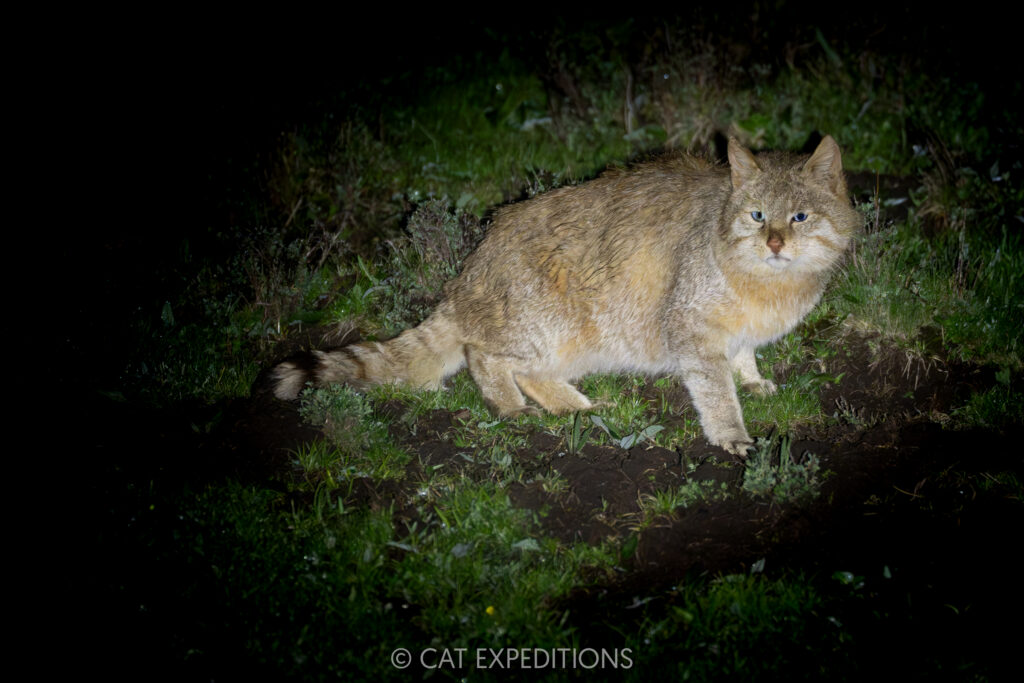
To most people, he might have passed as nothing more than a slightly oversized house cat, but standing there in that cold, thin air, there was no mistaking him. His sturdy, powerful frame, those piercing blue eyes, and that thick, perfectly adapted tail… every detail felt purposeful, refined by life on this plateau. It was the kind of presence that makes your heart pound a little harder without you even realizing it.
He watched us for a few long moments, completely still, clearly weighing who—or what—we were. And then, almost imperceptibly, he made his decision. With quiet confidence, he turned and began to move along the hillside. Back to hunting.
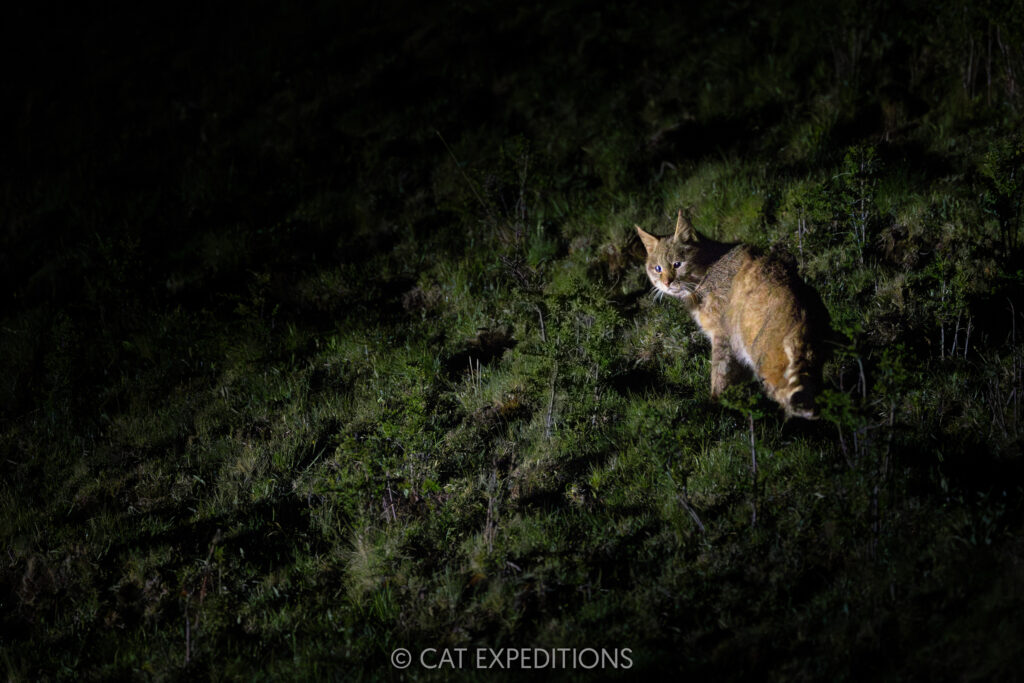
There was something mesmerizing about the way he moved—slow, deliberate, every step placed with intention. He would pause, listen, scan, and then continue, slipping through the low vegetation like he belonged to it… because he does. We watched from a respectful distance, completely absorbed in the moment.
Forty-five minutes.
Forty-five minutes of watching one of the world’s least-seen cats do exactly what it evolved to do—hunt in the darkness of the Tibetan Plateau. It didn’t feel real. It felt like we had been allowed into something we weren’t supposed to see. And it was absolutely incredible.
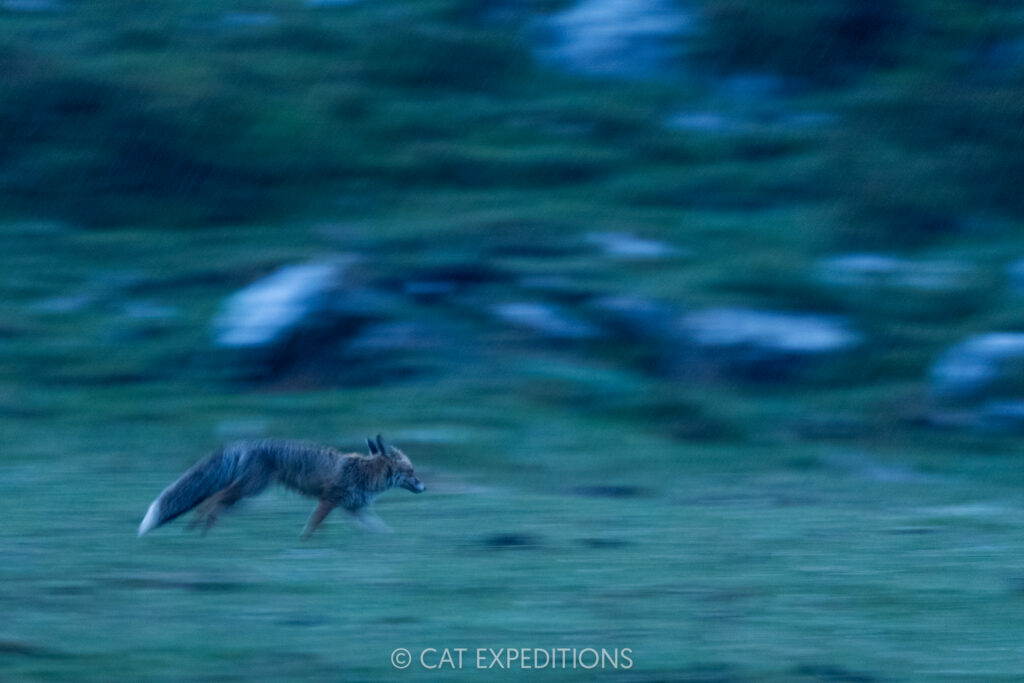
Day 5: At the very first hint of light, we stepped back out onto the steppe for day five, the landscape still holding onto that quiet, blue pre-dawn calm. Almost immediately, a flash of movement cut across the open ground—a red fox, moving quickly and purposefully through the grass before melting back into the vastness.
It was brief, just a fleeting glimpse, but enough to remind us how alive this place is.
What struck us most was the idea of it—that out here, in this harsh, high-altitude world, not just one but two fox species manage to survive and thrive. It’s a testament to how rich and complex this ecosystem really is, even when it first appears so sparse.
We didn’t get long to watch him, but that hardly mattered. Out here, even the shortest encounters feel meaningful.
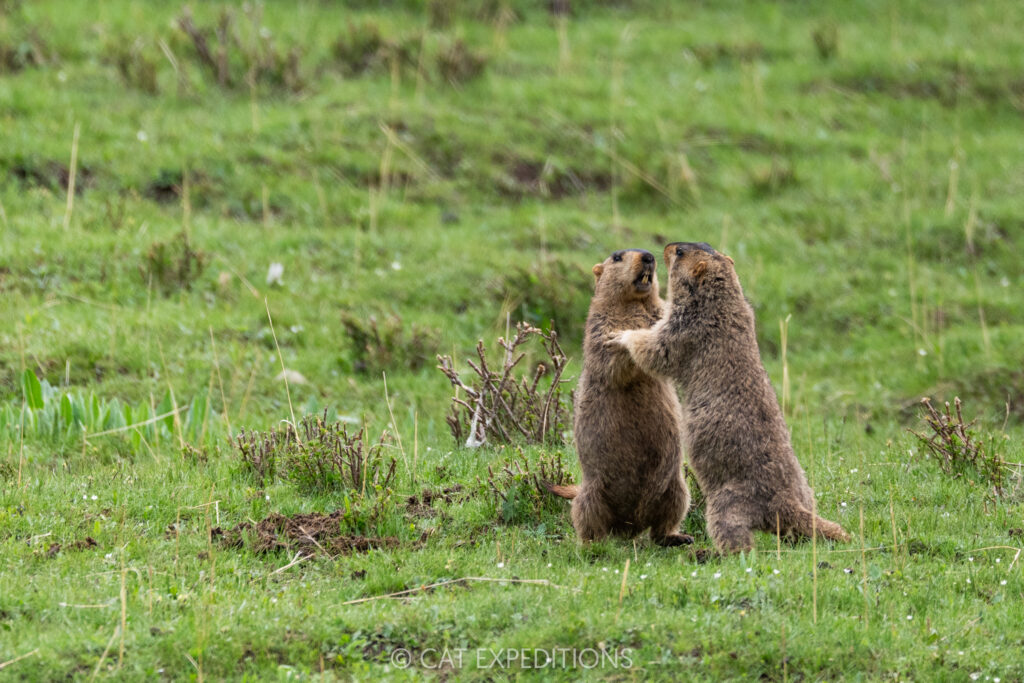
Later that morning, the steppe delivered one of those moments that just makes you smile.
We came across two Himalayan marmots who had clearly reached some sort of disagreement—and the only logical solution, apparently, was to stand up on their hind legs and sort it out. What followed was less of a serious fight and more of a slightly awkward, almost comical sparring match. A bit of shoving, a bit of posturing… and then it was over as quickly as it began.
It wasn’t dramatic, it wasn’t intense—but it was fun. One of those small, unexpected behavioral moments that brings personality into the landscape and reminds you that even out here, life isn’t always so serious.
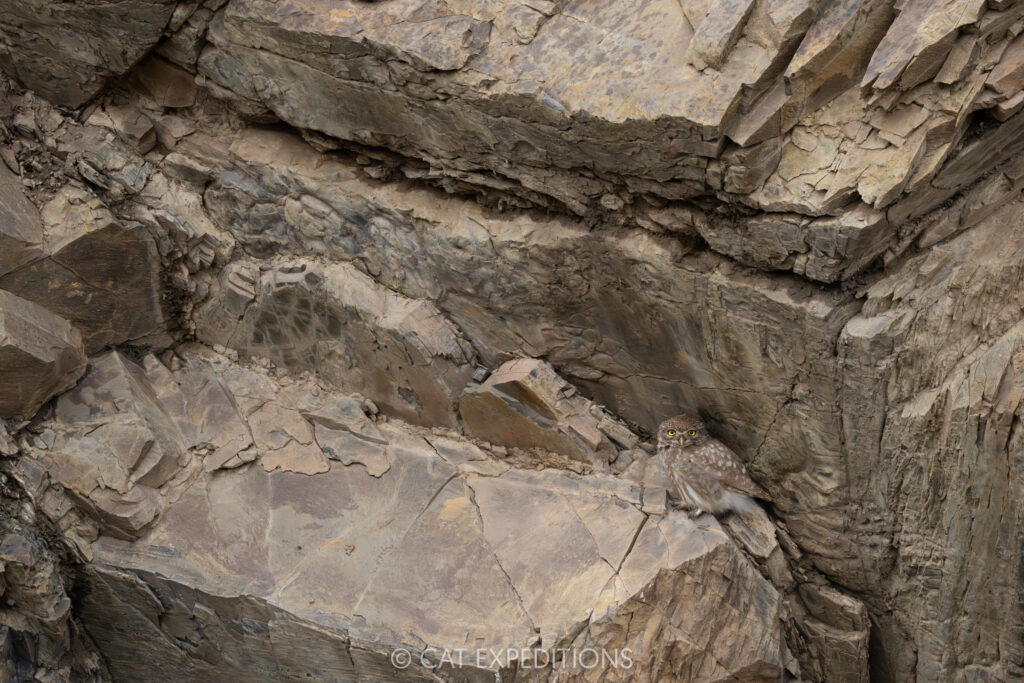
The remainder of the day was fairly quiet, though we did find a little owl perfectly camouflaged into the rocks in the valley of the pikas.
Day 6: The morning treated us to some really nice bird sightings, but on the mammal front things felt a bit quieter. That said, the plateau always finds a way to give you something—we were happy to come across another Eurasian badger, a species that never gets old out here.
But the real magic of day six belonged to the night.
As darkness fell, we made our way back to our now beloved Valley of the Pikas, that place that had already given us so much. There’s always that mix of hope and uncertainty on these returns—will lightning strike twice?
This time, it didn’t take long.
Just minutes after arriving, Rachel picked up a shape on the hillside. We brought the light up carefully… and there he was. The same male from two nights before, sitting distantly, completely composed, like he owned the entire valley.
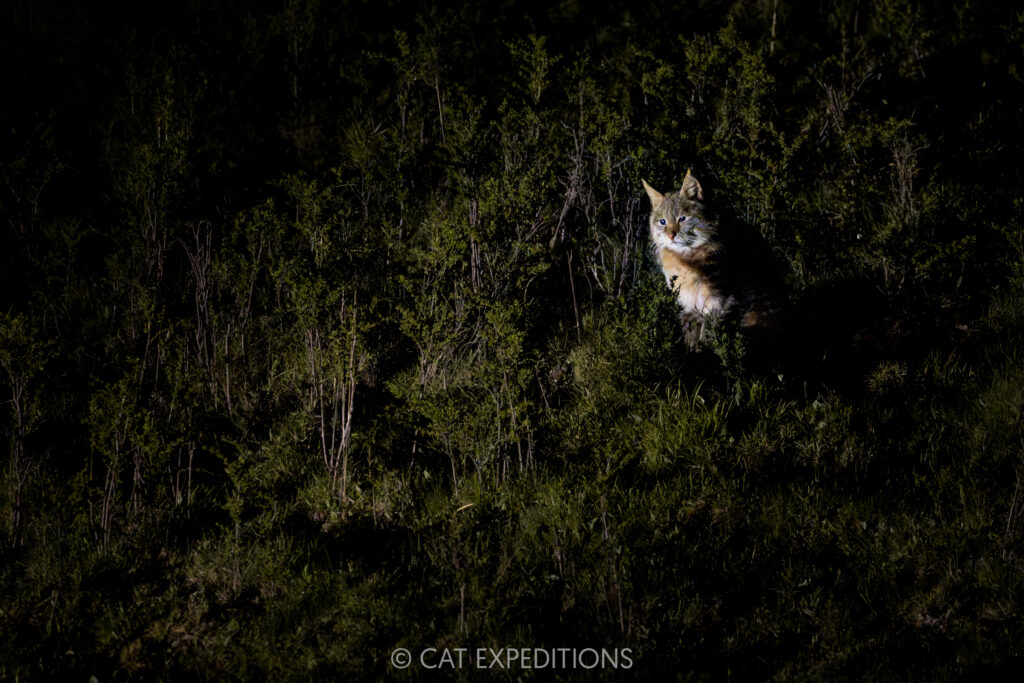
Once again, we found ourselves going through that now familiar ritual—he watching us, we watching him—each side quietly assessing the other. And once again, he allowed it. Accepted us.
He began to move down the hillside, slowly, deliberately… toward us. Not because of us, but because of the hunt. We just happened to be there, folded into his world for a brief moment.
Step by step, he closed the distance. And then suddenly, he was right there—no more than fifteen feet away.
It’s hard to put into words what that feels like. This incredibly elusive cat, one of the least-seen in the world, moving silently through the darkness, completely focused, completely wild. He kept his body low, almost melting into the contours of the land, using every fold of the gully to stay hidden from whatever he was stalking.
We barely moved. Barely breathed.
For those twenty minutes, time seemed to stretch and compress all at once. Every small movement, every pause, every glance felt magnified.
We weren’t just watching him anymore. We were inside the hunt.
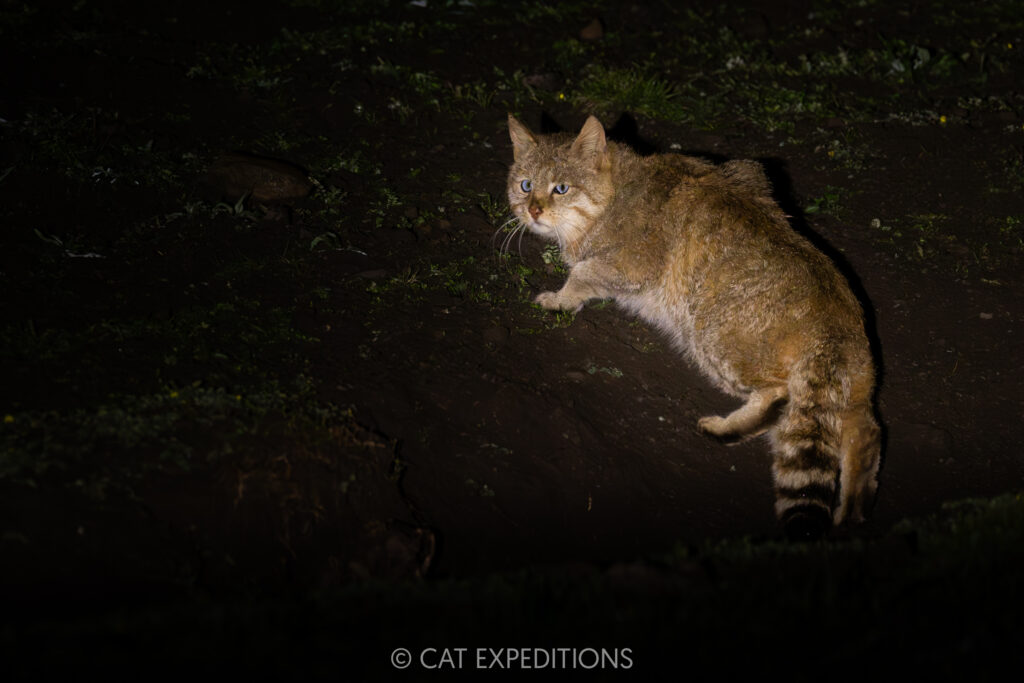
It turned out that our now seemingly best friend… wasn’t exactly a master hunter.
We stayed with him for over an hour, completely absorbed, watching every movement, every pause, every subtle shift in posture. Each hunting attempt came up empty. It was a quiet reminder of just how hard life is out here, even for a predator so perfectly adapted to this landscape.
Eventually, he began to drift farther away, melting back into the vastness of the steppe.
And so we let him go.
There was no need to push it. What he had already given us felt like more than enough. We sat there for a moment longer, letting it all sink in—the proximity, the trust, the privilege of sharing that space with him.
That night, sleep came easily.
We drifted off with images of him still fresh in our minds, replaying those moments over and over again… knowing we had just experienced something truly special.
Day 7: Our final day of the journey.
We headed back out in the morning light for one last attempt at a Chinese Mountain Cat. The plateau felt just as alive as it had all week—but this time, the cat stayed hidden. That’s the nature of this place. You never take a sighting for granted, and you never expect one on demand.
But the steppe still had a parting gift for us.
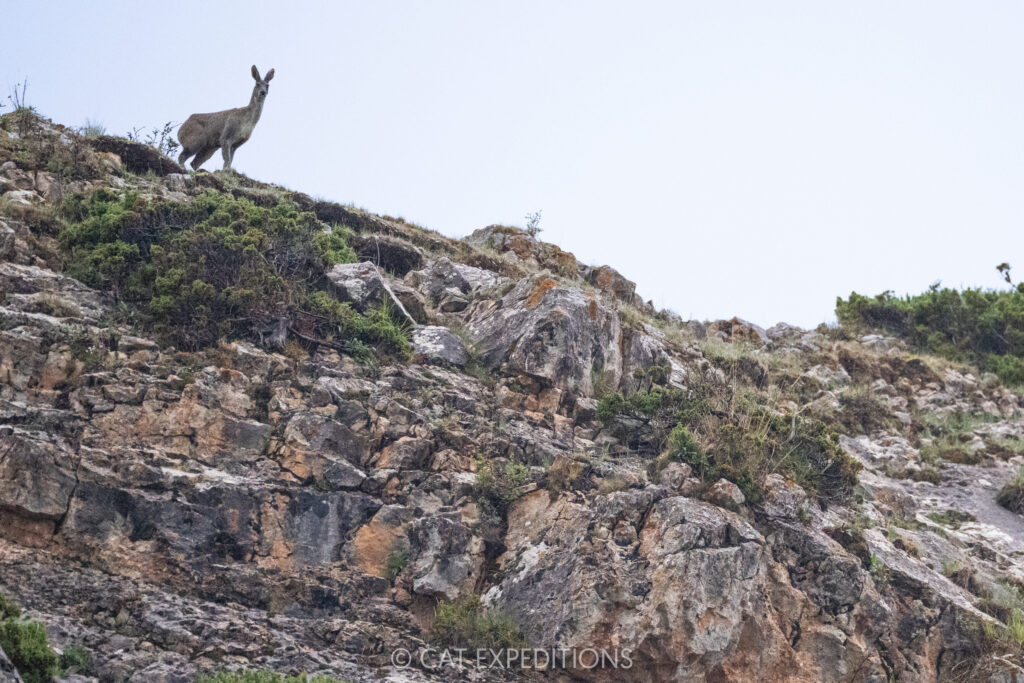
Up on a ridge, silhouetted against the sky, stood a Alpine Musk Deer—regal, alert, and just a little uneasy. It held its ground, scanning the landscape, as if fully aware that something could appear at any moment from the other side. It was a beautiful, quiet moment, and a perfect reminder of just how unique the mammals are out here. Species we had come to know, appreciate, and genuinely love over the course of the trip.
The drive down from the plateau felt like a reverse unfolding of everything we had experienced. Those vast, wild spaces slowly gave way to more human-shaped landscapes—the reality of the Anthropocene easing back in.
We celebrated the journey the best way we knew how—over an absolutely delicious meal, sharing stories and laughter with our local guide, who had become a true friend over the course of the trip. There’s something special about those final meals, when everything is still fresh and no one quite wants it to end.
We left with full hearts.
China gave us so much on this trip—wild cats, incredible landscapes, unforgettable moments—and we can’t wait to return.
Chinese Mountain Cats of Sichuan 2025 Species List
Mammals
| Himalayan Marmot | Marmota himalayana |
| Plateau Pika | Ochotona curzoniae |
| Whoolly Hare | Lepus oiostolus |
| Chinese Mountain Cat | Felis bieti |
| Tibetan Fox | Vulpes ferrilata |
| Red Fox | Vulpes vulpes |
| Asian Badger | Meles leucurus |
| Alpine Musk Deer | Moschus chrysogaster |
| Wild Boar | Sus scrofa |
Birds
| Greylag Goose | Anser anser |
| Ruddy Shelduck | Tadorna ferruginea |
| Tibetan Partridge | Perdix hodgsoniae |
| Hill Pigeon | Columba rupestris |
| Common Cuckoo | Cuculus canorus |
| Eurasian Coot | Fulica atra |
| Black-necked Crane | Grus nigricollis |
| Common Redshank | Tringa totanus |
| Black-headed Gull | Chroicocephalus ridibundus |
| Brown-headed Gull | Chroicocephalus brunnicephalus |
| Common Tern | Sterna hirundo |
| Great Crested Grebe | Podiceps cristatus |
| Himalayan Griffon | Gyps himalayensis |
| Golden Eagle | Aquila chrysaetos |
| Upland Buzzard | Buteo hemilasius |
| Little Owl | Athene noctua |
| Gray-backed Shrike | Lanius tephronotus |
| Azure-winged Magpie | Cyanopica cyanus |
| Red-billed Chough | Pyrrhocorax pyrrhocorax |
| Large-billed Crow | Corvus macrorhynchos |
| Oriental Skylark | Alauda gulgula |
| White-backed Thrush | Turdus kessleri |
| Black Redstart | Phoenicurus ochruros |
| White-rumped Snowfinch | Onychostruthus taczanowskii |
| White Wagtail | Motacilla alba |
| Twite | Linaria flavirostris |
| Godlewski’s Bunting | Emberiza godlewskii |