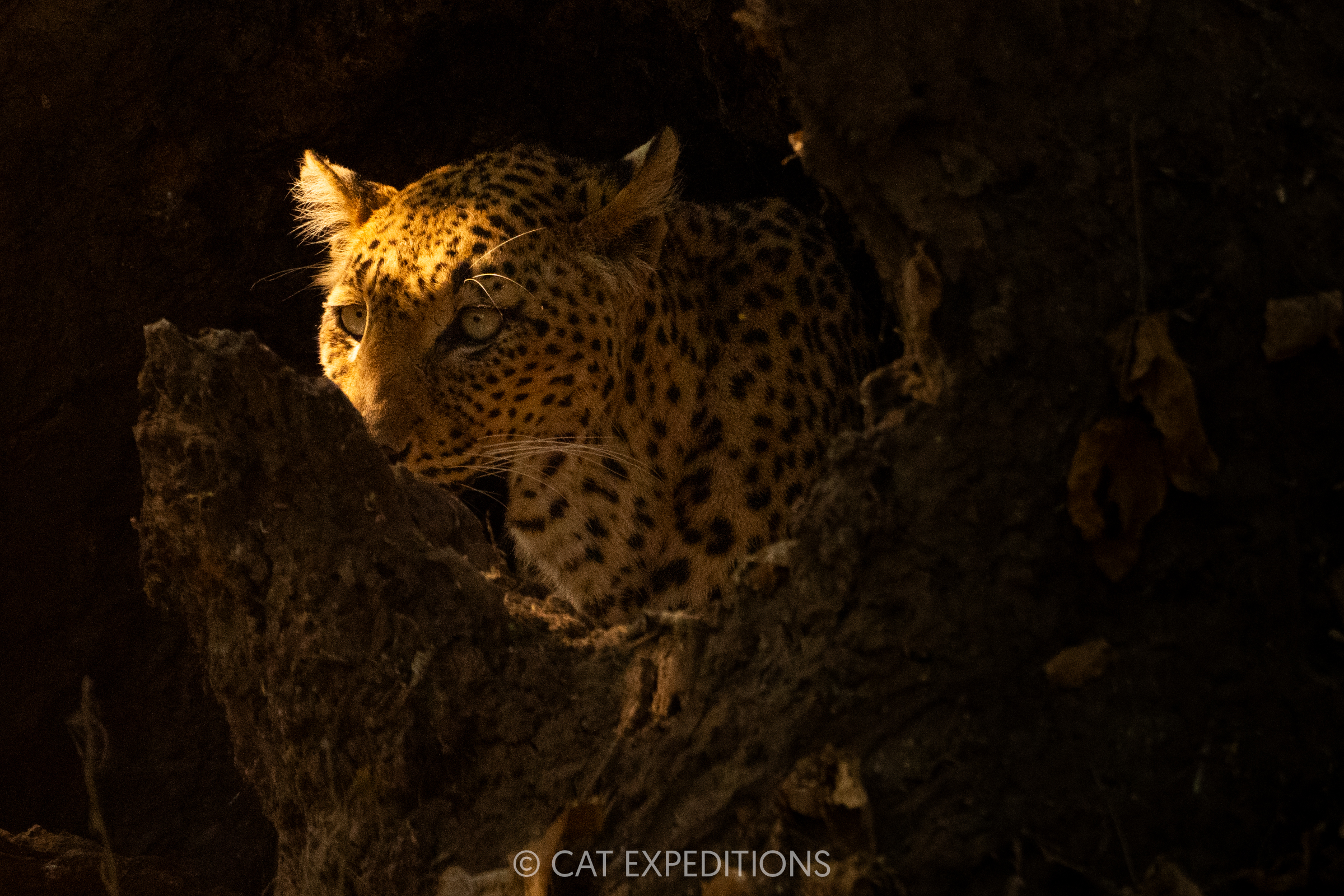
There is something special about experiencing Africa on safari for the first time, and Zambia is one of our favorite places to do it. For our 2025 Classic Safari in Zambia, we spent ten days exploring the wild landscapes of Lower Zambezi National Park and Kafue National Park, searching for everything from elephants and antelope to primates, birds, and, of course, wild cats.
Unlike our other trips, this safari isn’t centered entirely around felines. It is designed to give first-time safari-goers the chance to slow down, take in the full diversity of African wildlife, and enjoy whatever the bush presents each day. And as always in Zambia, there were plenty of memorable encounters along the way. Read on to see what we experienced during our 2025 Classic Safari in Zambia.
Highlights of the 2025 Classic Safari in Zambia
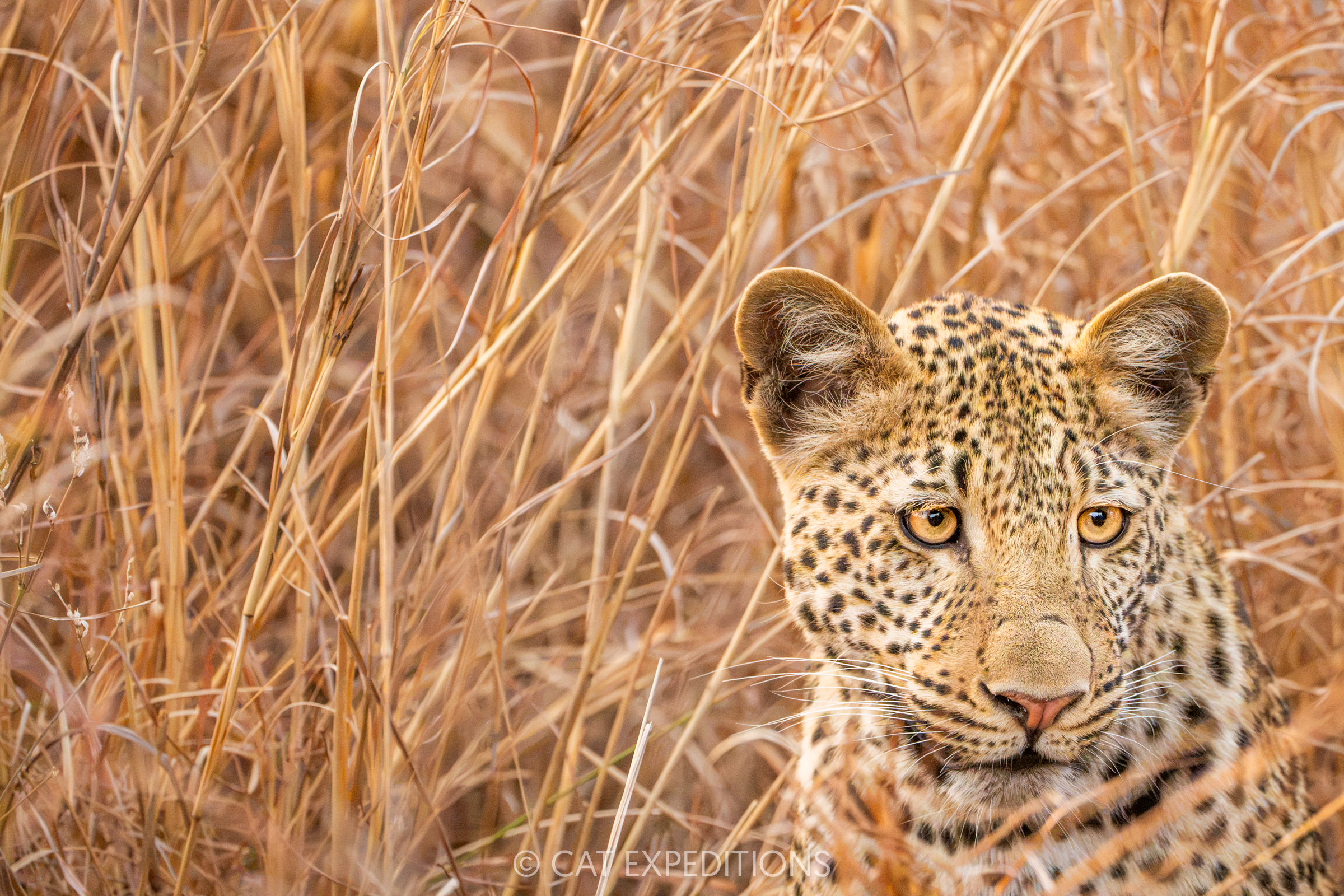
Leopards: We photographed five different leopards across the trip. The biggest highlight was watching a female successfully hunt right in front of our vehicle. It was an insanely fast encounter we just happened to chance upon, but it was extremely special to see!
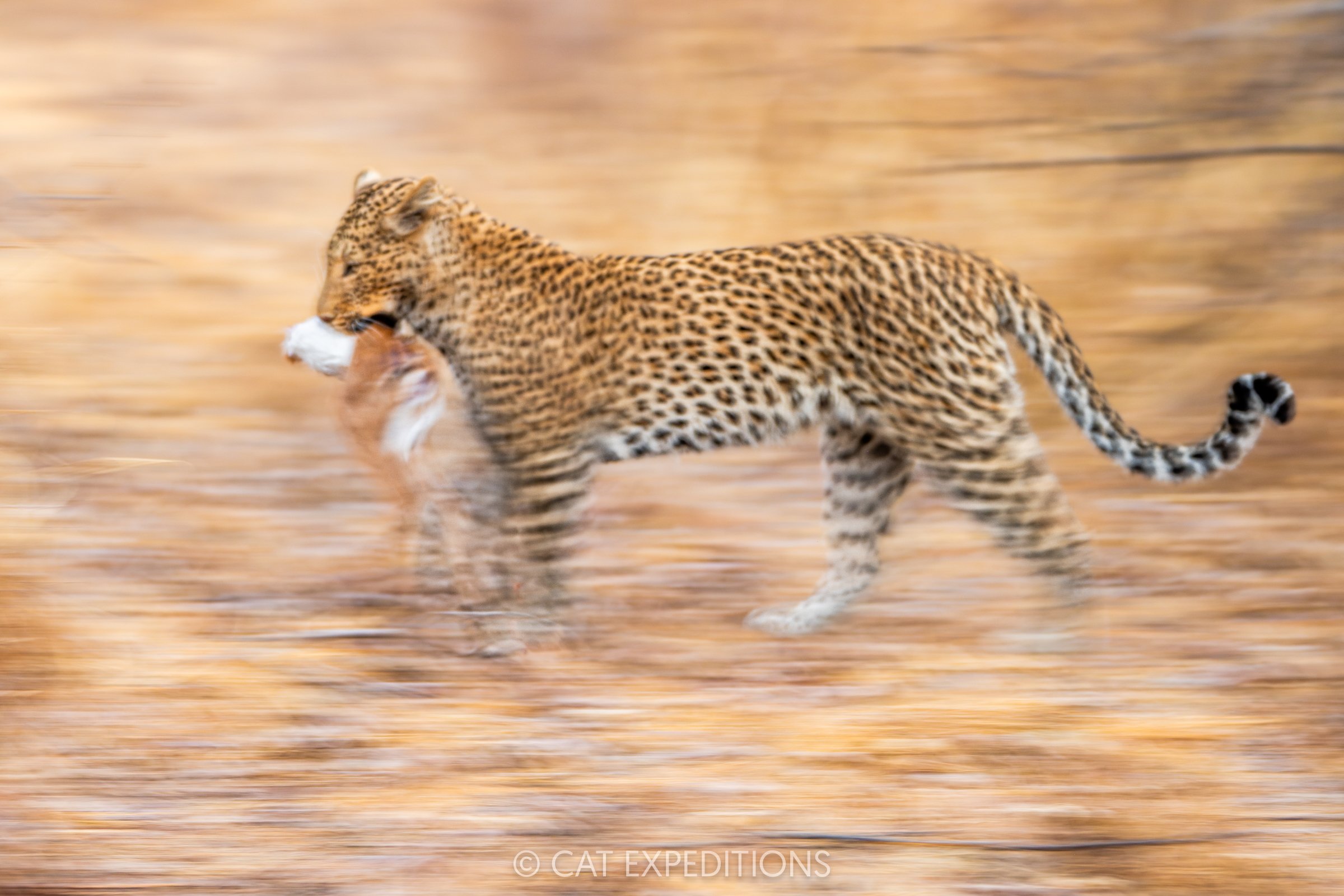
Lions: We saw three different prides of lions. We spent more time with the lions in Lower Zambezi but had some incredible encounters with the lions in Kafue, including some very close walk byes with our guests taking the front seat of the vehicle, providing them the most intimate of encounters!
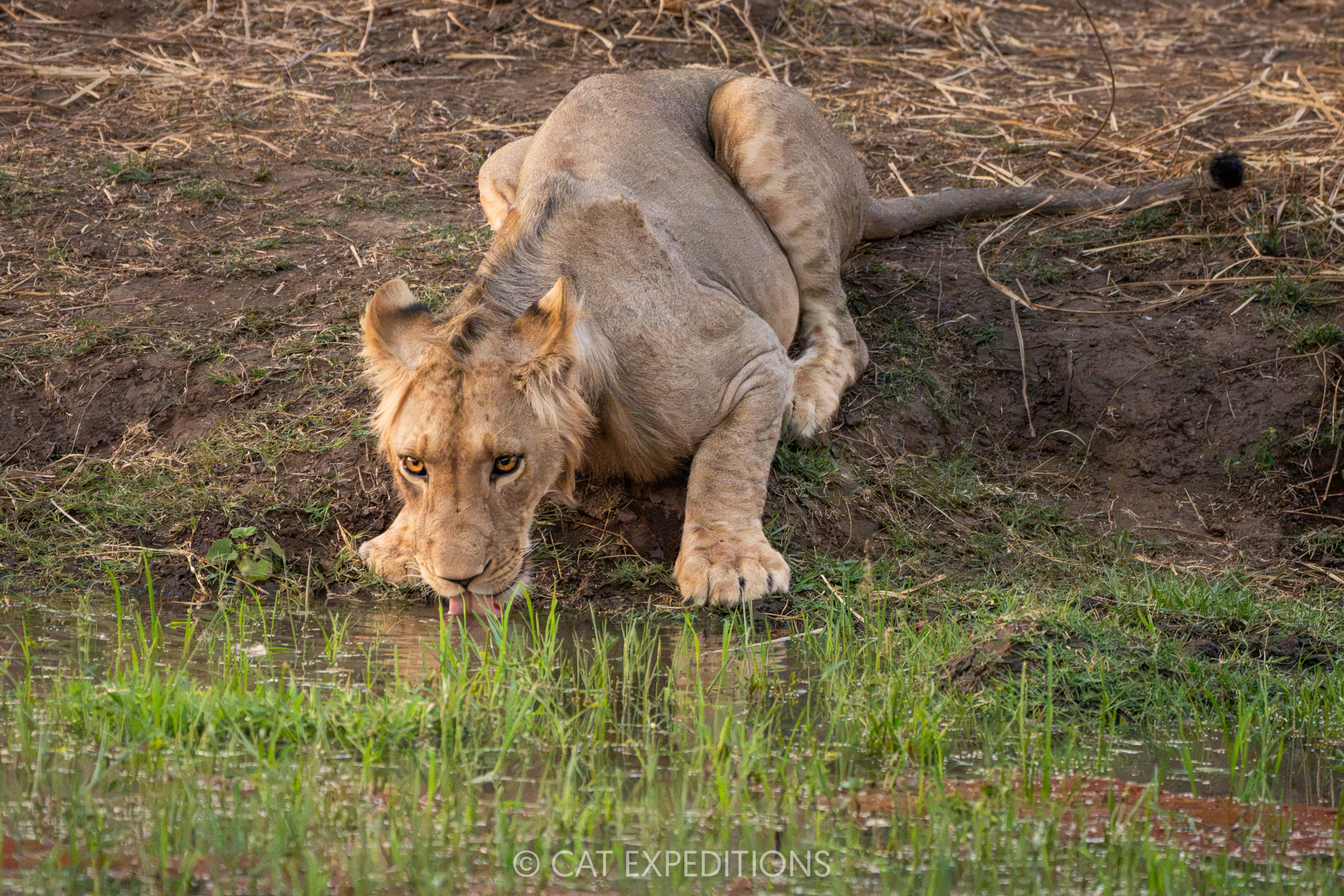
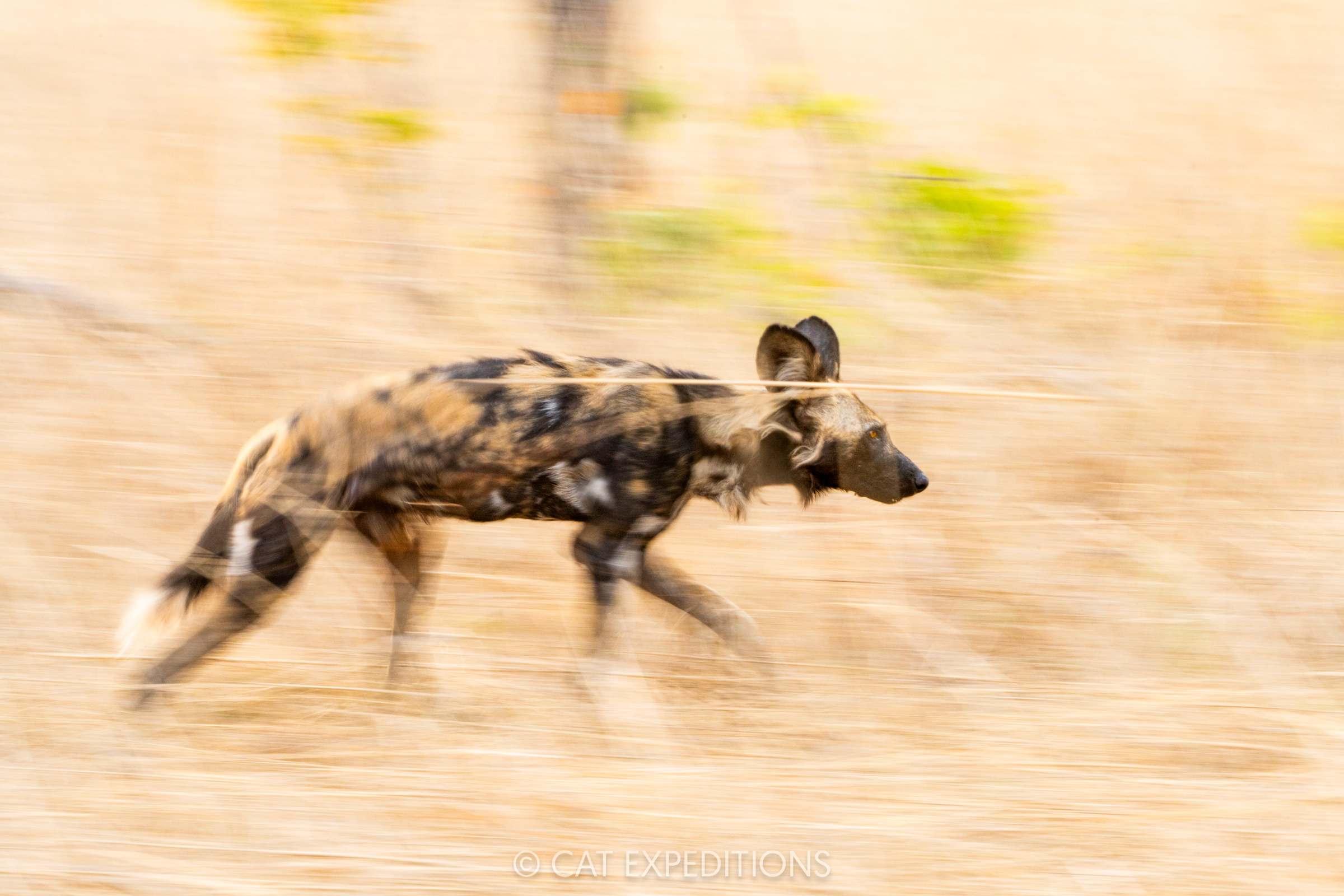
African Wild Dogs: We always hope to see African Wild Dogs on this tour, but with their tremendously huge territories, they are always hit and miss. We were lucky enough to find them in Kafue, where we even saw them successfully hunt a common duiker.
Detailed Classic Safari in Zambia Trip Summary 2025
Day 1: Everyone landed in Lusaka, the captial of Zambia, where we settled into the hotel for the night, after a fun dinner where we presented what will happen over the course of the trip.
Day 2: We arose bright and early to head back to the airport, to take a bush flight to Lower Zambezi National Park. The ride was quite bumpy (somehow our pilot didn’t think so), and we were all happy to touch solid ground in Lower Zambezi with our Kutali camp guides waiting for us at the airstrip.
This was all of our guests first time to Africa, so we took things nice and slow, stopping for a nice herd of zebra, and observing the large herds of impala. The highlight of the game drive to camp was spotting a nice herd of elephants with a calf less than a year old. It’s always such a privilege seeing these tiny ones amongst the herd. The group also got their first cat sighting when we found a very sleepy pride of thirteen lions. Sure, during the middle of the day, that is what lions do best, but it was great seeing them nontheless.
While settling in to camp and having a wonderful lunch, we received our usual safety briefing, something quite important considering the ever present elephants in camp. Its always such an incredible treat to respectfully share the landscape with these giants.
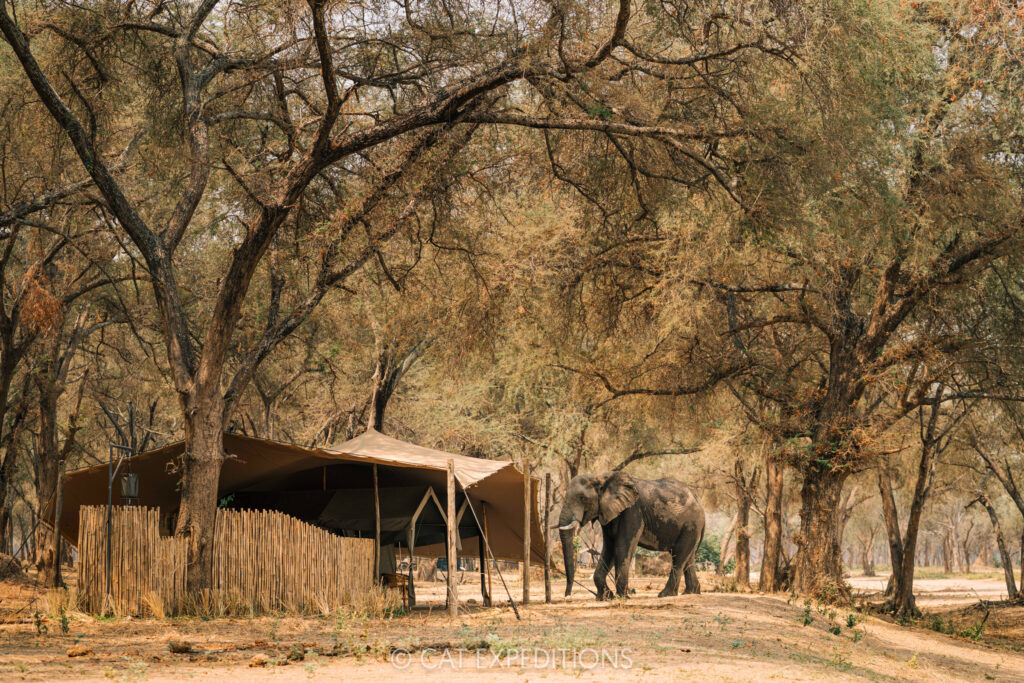
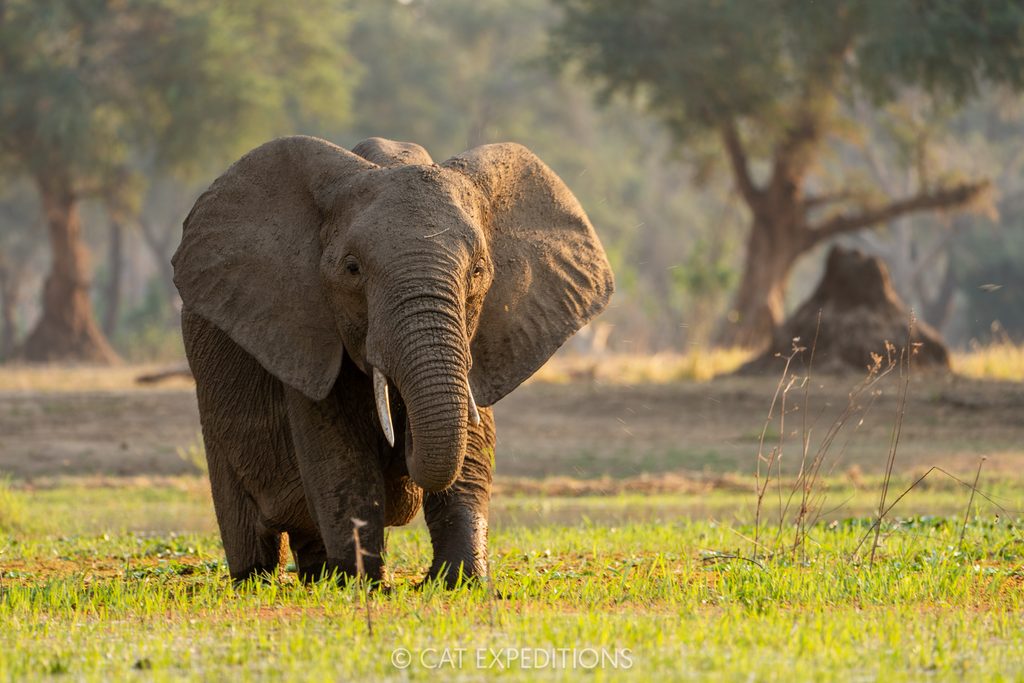
In the afternoon we encountered several herds of elephants, including one individual stripping bark from a tree, and later watched more elephants feeding among the lilies. A warthog was resting comfortably in the mud, while vervet monkeys and a saddle-billed stork added to the day’s variety.
Towards the end of the afternoon we also found the pride of lions that were so peacfully sleeping earlier….and they were still sleeping when we rejoined them. We knew, that with the light getting lower, and the temperatures dropping, they would probably get up. What they did next surprised as a bit as the sub-adult male within the pride climbed a fallen tree to have a look out from the elevated position. We knew it was a possibility, but an unlikely one, and were happily surprised!

As we drove back to camp the nocturnal sightings continued with two large-spotted genets and an African civet.
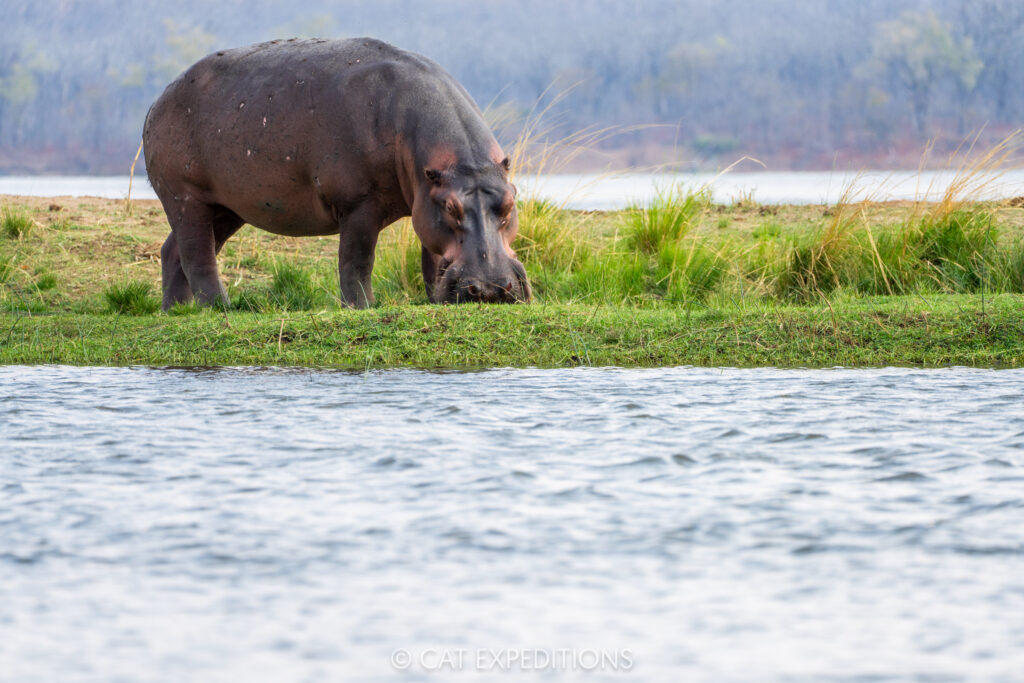
Day 3: We started the morning searching for leopard, slowly working our way through promising habitat and checking the riverbanks and thicker vegetation, but despite our efforts, the cat remained elusive. We did, however, come across a nice hippo grazing on land, as well as a lively family of banded mongooses moving through the bush.
At one point, a troop of baboons suddenly began alarm calling, instantly putting us on alert. We searched the area carefully, hoping they had spotted the leopard we had been looking for, but whatever had disturbed them stayed hidden.
Later, we found a lioness with two cubs, both less than a year old. They were different individuals from the pride we had seen the day before, making the sighting even more exciting. The rest of the drive brought a large herd of Cape buffalo, several beautiful female kudus close to the road before they quickly melted back into the bush, and a bushbuck that bounded away almost as soon as we caught sight of it.
The afternoon drive started with an African fish eagle perched beautifully on a termite mound, clutching a fish in its talons and giving us a fantastic photographic opportunity. Not long after, we found a Verreaux’s eagle-owl and were able to enjoy unusually good views of this impressive nocturnal species in broad daylight.
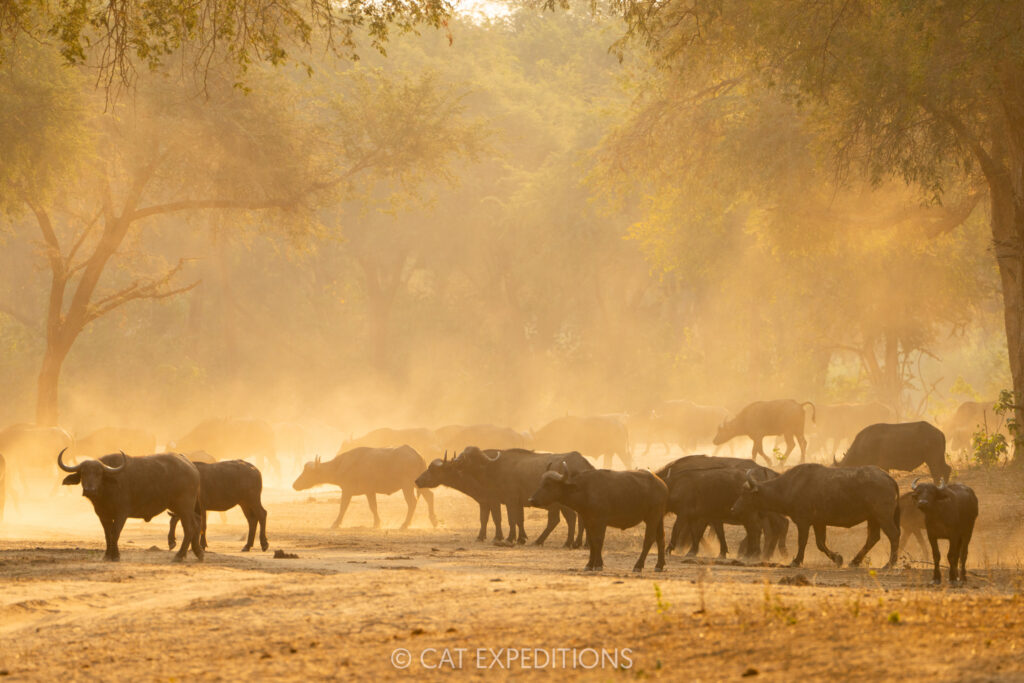
We also had a lovely waterbuck encounter before coming across a large herd of Cape buffalo moving through the landscape in a cloud of dust, beautifully backlit by the low sun.
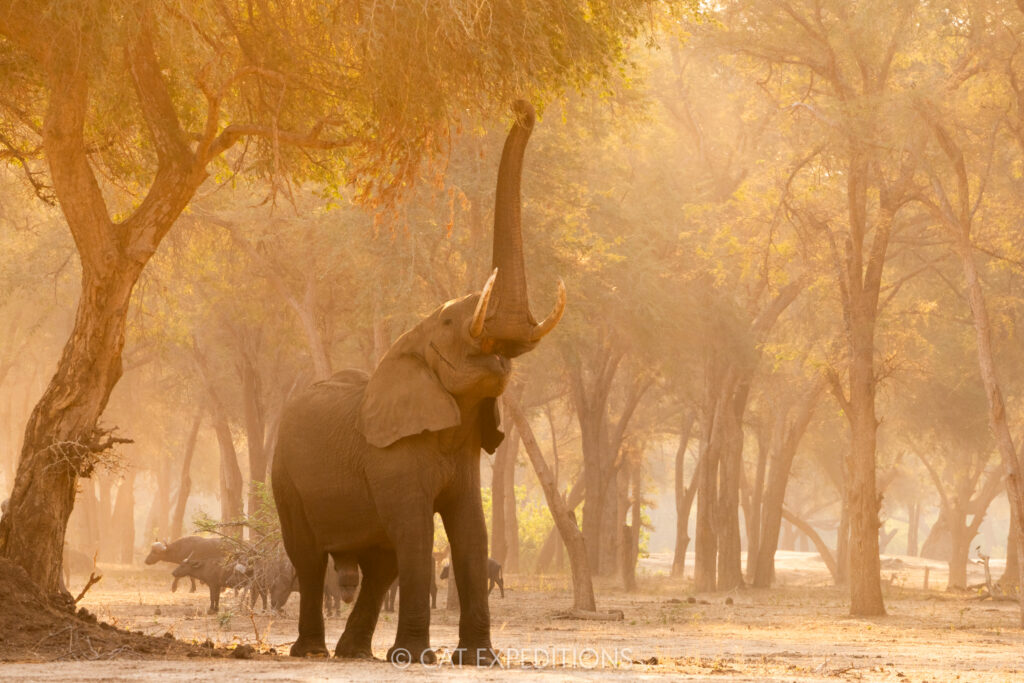
An elephant bull gave us another classic scene as he stretched high into the branches to feed, using his trunk to pull down vegetation well above his head.
Much of the afternoon was spent searching for leopard, though once again the cat managed to stay hidden. As the day drew to a close, the sun dropped toward the horizon as a perfect glowing orange ball, and we decided it was the ideal moment to stop for a sundowner and simply enjoy the scene. After dark, the wildlife kept coming, with two large-spotted genets rounding out the evening.
Day 4: We began the morning with two male lions, the fathers of the large pride we had been following, stretched out and sleeping in the open. Nearby, a dwarf mongoose stood alert outside its den, giving us a great look before disappearing back into cover. When we returned to the lions a little later, they had barely moved, shifting only far enough to settle into the shade as the day began to warm.
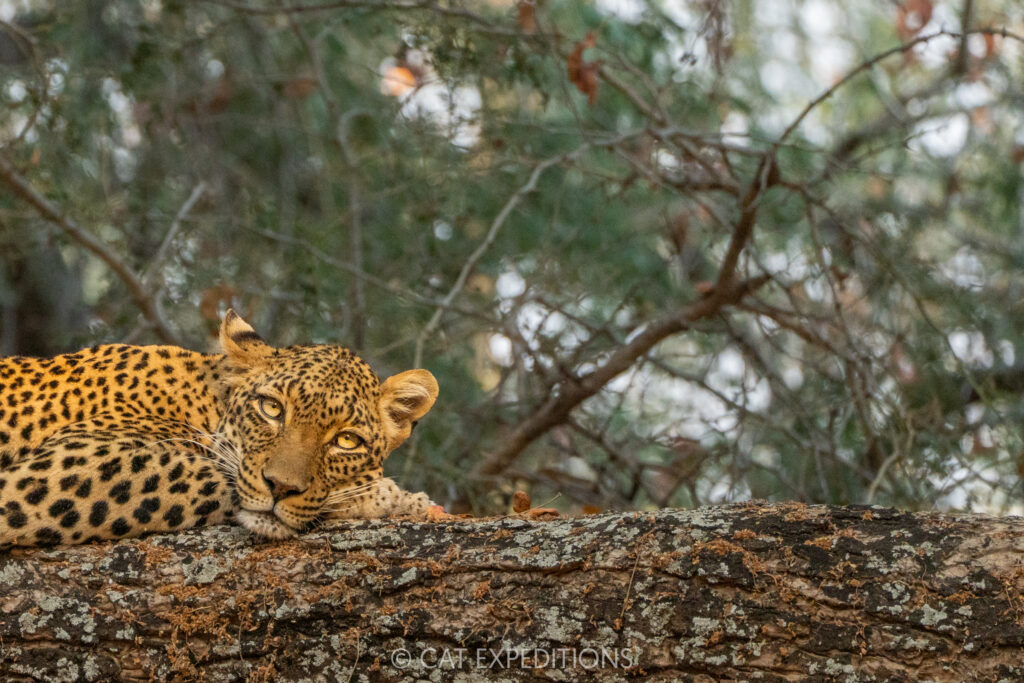
Then the radio crackled with the call we had been hoping for: leopard. We raced over and found Pafupe, a female leopard resting high in a tree. Draped across the branches behind her was the remains of a baboon she had killed. For much of the sighting she slept peacefully, occasionally getting up to reposition herself before settling back down again, seemingly completely unfazed by the grisly prize hanging beside her.
We continued exploring, finding an elephant standing in the water and pulling up aquatic vegetation to feed, as well as a beautifully positioned kudu that gave us another nice photographic opportunity. Then another radio call came through—our other vehicle had found a second leopard, Kwala, actively hunting. They initially missed the action, but they relocated her and watched as she successfully brought down a small waterbuck.
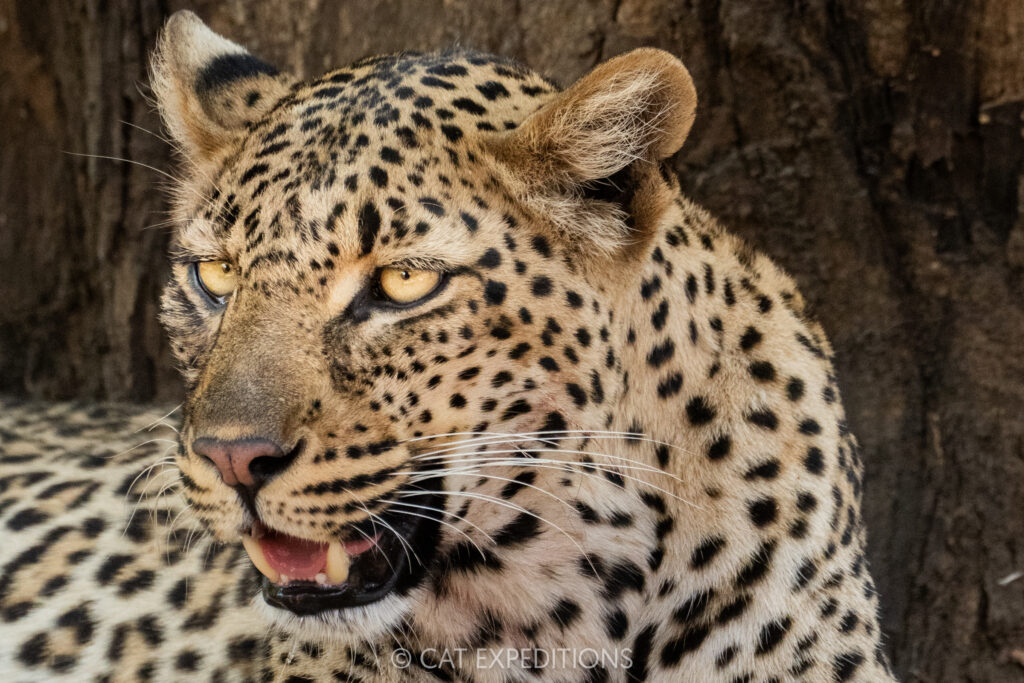
Her success was short-lived. Hyenas appeared almost immediately, forcing Kwala up a tree before taking over her kill. We arrived to the unmistakable sounds of the hyena crunching through the waterbuck below. Later in the morning we returned to the area, by which point the kill had been completely finished. Kwala had come back down from the tree and, now with the commotion over, allowed us to spend some wonderfully close time with her.
The drive ended with a bit more adventure than planned when their vehicle became stuck in the sand—a very African way to finish an already eventful morning.
In the afternoon we traded the vehicle for a boat and spent part of the day exploring the river, which gave us a completely different perspective on the wildlife. Hippos were everywhere, surfacing around us and lounging in the quieter stretches of water, while Nile crocodiles rested motionless along the banks, soaking up the sun.
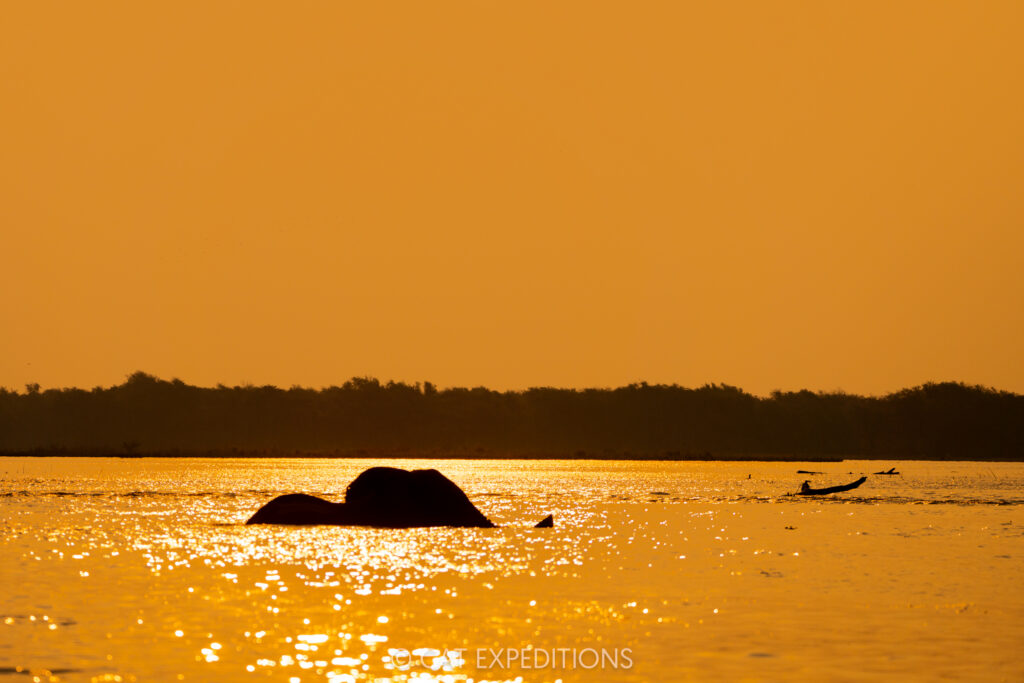
One of the highlights was a busy colony of southern carmine bee-eaters, their brilliant colors standing out against the riverbank as birds constantly came and went. We also watched an elephant make its way across the river, wading steadily, submerged to its shoulders, through the water before climbing out on the far side—a classic Zambian scene and a wonderful way to experience the landscape from the water.
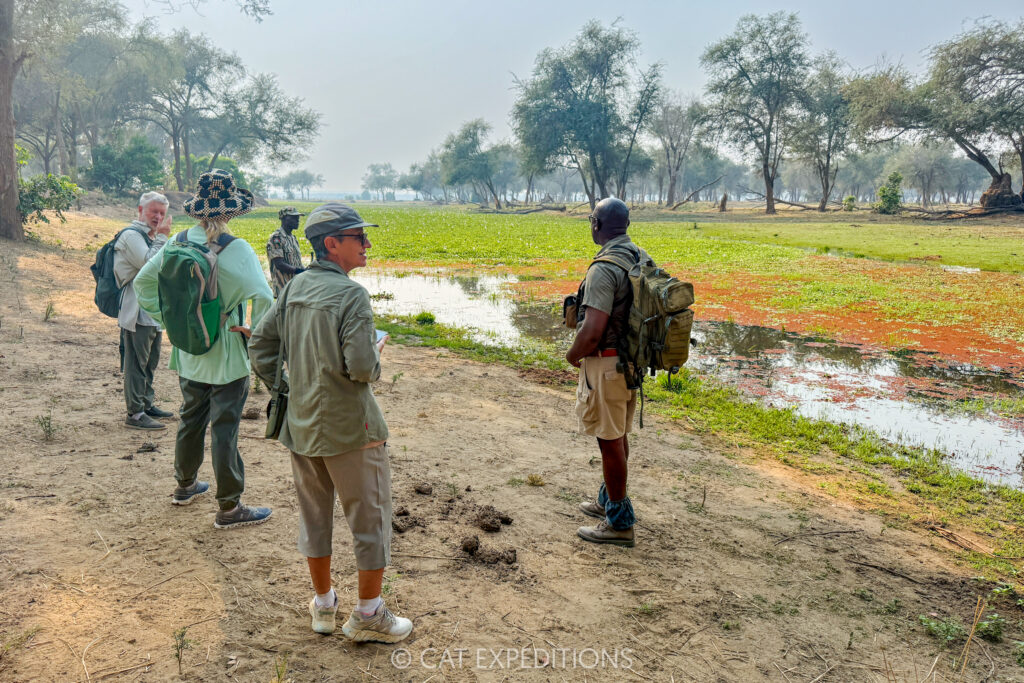
Day 5: The group had an early start for a walking safari, leaving camp at 5:30 a.m. and taking a boat across to an island before setting out on foot. Over the next two and a half hours, the focus shifted from big-game sightings to the smaller details of the bush—the tracks, signs, and interactions that are so easy to miss from a vehicle.
One of the most fascinating observations was an antlion capturing an ant. Our guide explained that these ants are largely avoided by other predators because of an unpleasant chemical secretion, allowing their colonies to remain relatively exposed. Birds, however, sometimes make use of the ants in a very different way, lying on or near their nests and letting the insects spray them with their toxins, a behavior thought to help control parasites on the bird.
We also found the beautiful blue egg of a double-banded sandgrouse and watched elephants shaking trees to dislodge seed pods. Buffalo, kudu, and impala were all around, although they were much more skittish with us approaching on foot than they typically are around a vehicle.
Much of the walk was about reading the signs animals had left behind. We found drag marks believed to be from the leopard that had killed the baboon a day or two earlier, as well as the flattened spot where a hippo had slept, complete with impressions left by its whiskers. There were snake tracks, possibly from a python or puff adder, along with hyena and lion sign, elephant and hippo tracks, and plenty of dung. It was a completely different way to experience the landscape and a great reminder of just how much is happening in the bush even when the animals themselves are out of sight.
The afternoon proved quiet, despite our best efforts to find predators. So we stopped for an actual sundowner (normally we wait until after the sun has gone down, to maximize good photography light). A spotted hyena popped out of nowhere and gave as a bit of a scare, which we all laughed off after the fact. On the drive back to camp we found a white-tailed mongoose, a new species for the trip!
Day 6: Our normal game-drive routine meant another early start: awake at 4:30 a.m., breakfast at 5:00, and out of camp by 5:30. The morning began with a huge bull elephant shaking a tree for food as he slowly made his way toward us, giving us a fantastic close encounter in the soft early light. Nearby, a troop of baboons was particularly photogenic as they drank and moved around in the warm morning glow.
We also came across two southern ground hornbills working around a cavity in a tree, where they appeared to be preparing a nest. It was a wonderful opportunity to watch these impressive birds interacting with the nesting site rather than simply encountering them out foraging.
By 8:00 a.m. we were at the airstrip and on our way to the next stage of the safari, Kafue National Park, and our bush camp, Musekese. From the airstrip in Kafue, it was just a five-minute drive to the water, followed by a short boat ride and another brief drive to camp. Even the transfer produced a memorable wildlife moment when we spotted an impossibly tiny baby hippo alongside its mother—a great welcome to our new area.
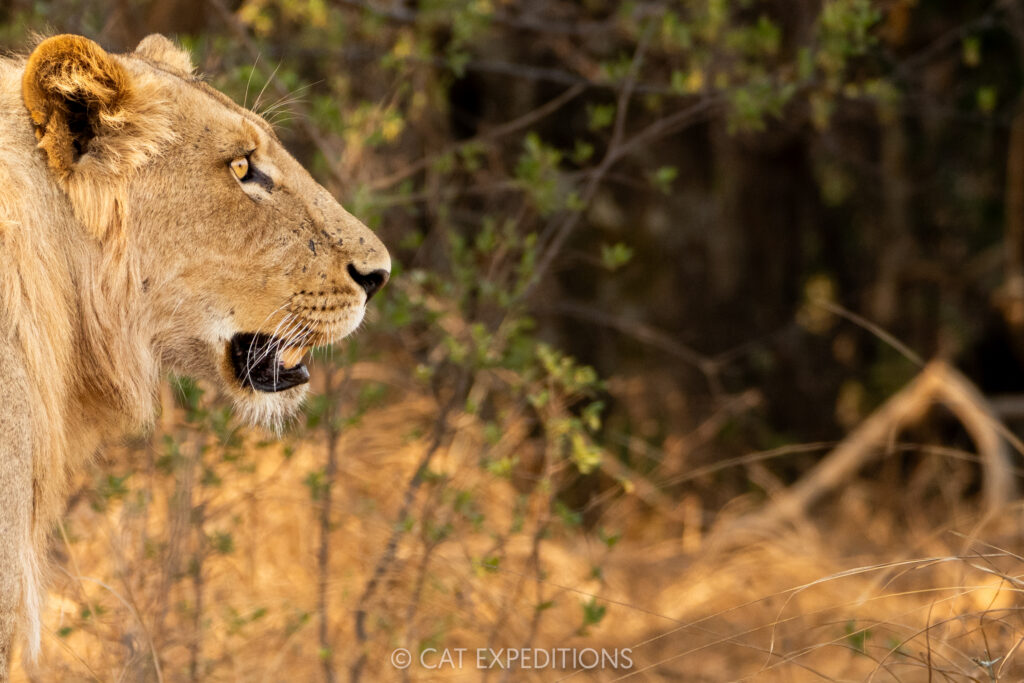
The afternoon quickly turned into one of the most exciting drives of the trip. We first found a lioness with her subadult cub and followed them as they made their way down toward the river. We were just about to get into the boat to try to photograph them from the water when a young male lion suddenly appeared. It quickly became clear that the female and her cub had been trying to avoid him, and they slipped into the thick vegetation before we lost sight of them.
We continued on, and before long our guide, Ason, spotted Kinky Tail, a female leopard, walking through the bush. She was moving slowly and sniffing the ground, and at first we couldn’t quite tell what had caught her attention. She briefly began stalking an impala but never committed to the hunt. Then the reason for all the sniffing became clear: she picked up a baby impala she had already killed and carried it away into cover.
Later, we found another lioness, who turned out to be the mother of the young male we had seen earlier. But the biggest surprise came at sundowner. We had gotten out of the vehicle when Evelin suddenly asked, “What’s that?” Just beyond us was a lion. We all scrambled back into the vehicle as seven lions emerged and walked right past us at close range. They belonged to the same pride as the lioness and subadult we had seen at the start of the afternoon.
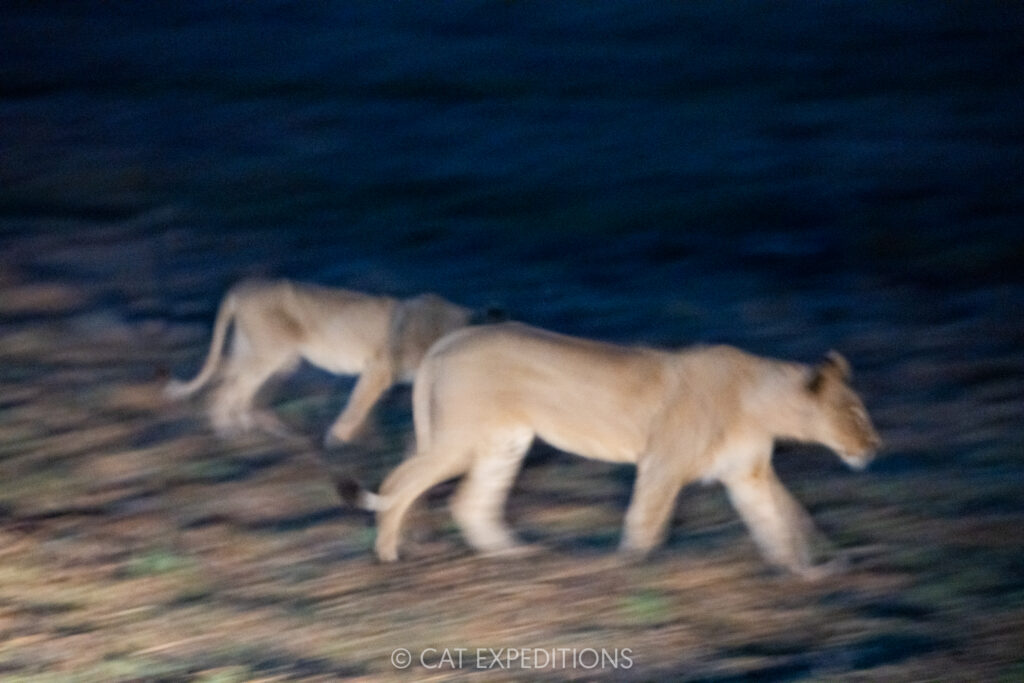
By the end of the day, we had seen 11 lions—an incredible afternoon in Kafue and one of those safari days that just kept getting better.
Day 7: We decided to make a concerted effort to find the wild dogs, driving a long way through the miombo woodland in search of them. The dogs stayed elusive, but it turned into an excellent morning for antelope.
The highlight was a beautiful sable antelope that gave us a particularly good look. We also encountered a pair of oribi, a reedbuck, hartebeest, bushbuck, and a common duiker, giving us a wonderful cross-section of the antelope species found in this part of Kafue.
Later, we found a spotted hyena sitting quietly several meters from a den. We waited in hopes that the pups might emerge, but they stayed tucked away out of sight. Even without the wild dogs, it had been a rewarding morning, especially for some of Kafue’s less commonly seen antelope.
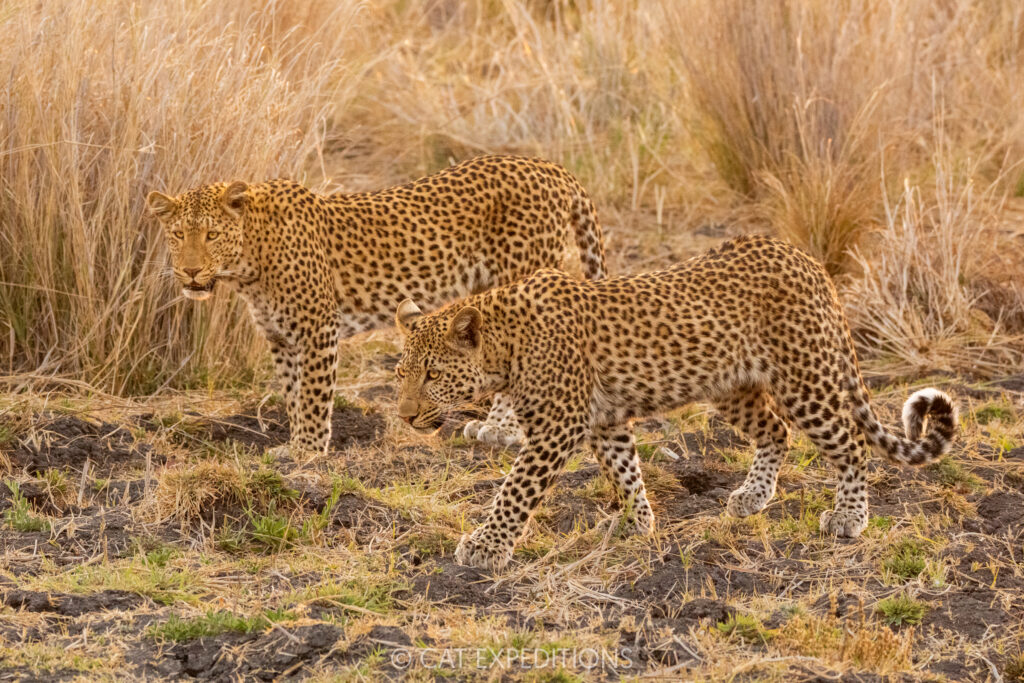
With no recent reports of wild dogs, we decided to focus our efforts closer to camp—and it turned into one of the most memorable leopard sightings of the trip. Driving down the road, we suddenly came across Kinky Tail, the female leopard, walking straight toward us with a tiny baby baboon in her mouth. The infant was still alive and crying, a raw reminder of just how intense and immediate life in the bush can be.
We followed her as she moved off the road, with some excellent off-roading from our guide keeping us in position. Eventually she lay down and began calling softly for her cub. By this point, the baboon had died, and Kinky Tail waited for 30 to 45 minutes, clearly expecting the cub to appear and claim the meal. When it didn’t, she finally began eating the baboon herself before getting up again and continuing on, calling from the top of a small hill. Soon after, we lost sight of her.
We drove back down the road to check the area and, to our surprise, found the cub there. The young male seemed a little nervous and quickly moved off toward the road. When we repositioned, we were rewarded with the reunion: the cub found Kinky Tail again, and the two of them began walking out across the lagoon together. We followed as best we could over the uneven ground, enjoying repeated close views of both leopards in beautiful light as they walked toward us—an extraordinary end to the sighting.
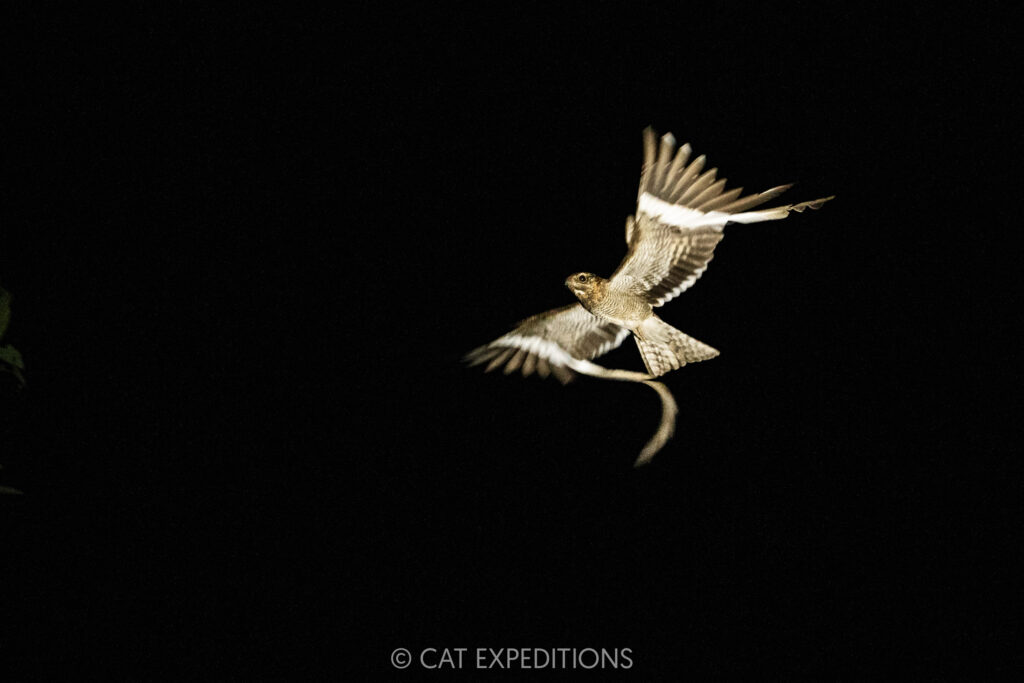
Day 8: To try something different, we opted for the newly constructed blind at Musekese. To get there with good light we had an especially early start, leaving camp at 4:30 a.m. to make our way to the blind. Even before sunrise there was plenty happening, including a small-spotted genet and two pennant-winged nightjars sweeping through the darkness around us—an especially exciting species to see in flight.
Once settled into the blind, the morning became much quieter and more patient. A steady stream of birds came in, including grey-headed parrots and African paradise flycatchers, while a pair of nervous reedbuck cautiously approached the water to drink.
On the drive back, everything suddenly changed. Musekese Conservation radioed to say they had located the wild dogs. They were about an hour away in completely the opposite direction, but the group had been hoping to see them all trip, so there was no hesitation—we turned around and went for it.
The final search took us roughly 400 meters off-road as we followed the research team, who were using telemetry to home in on the signal from a collared dog. At one point, their vehicle dropped into an aardvark hole and became stuck, so we stopped to help pull them free before continuing the search. Eventually, all the effort paid off.
Deep in the shade, we finally found the pack: five adults and six puppies resting together. They were mostly asleep and tucked into cover, but after so much searching, simply seeing them was incredibly rewarding. It felt like a fitting payoff to one of the biggest searches of the trip.
During lunch we were given a presentation about Musekese Conservation, a very important NGO working on protecting Kafue National Park and its surrounding buffer areas. It also allows for our guests to understand the larger picture, especially as there are real threats to the park and its wildlife, and its important to understand the bigger picture.
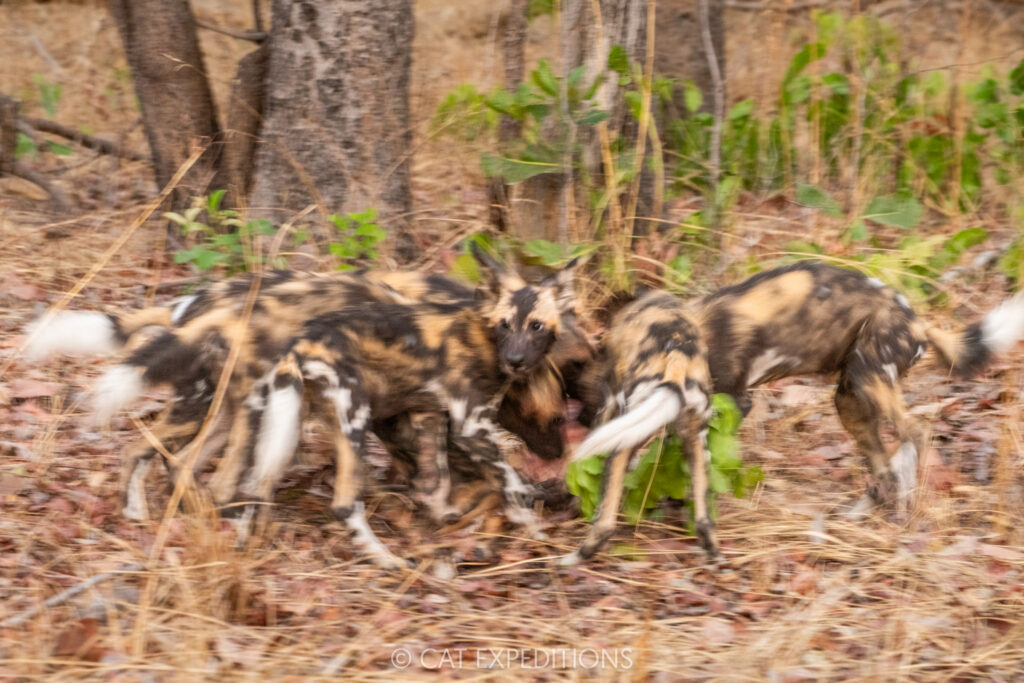
When we arrived, the dogs were still there, scattered through the shade and largely inactive. We settled in to wait. Around 6:00 p.m., everything suddenly changed when four of the adults came racing back toward the pups. Their arrival triggered an explosion of excitement as the whole pack sprang to life, squealing, playing, and greeting one another.
We watched the puppies mouth at the adults, the begging behavior they use to encourage them to regurgitate food. Then all six pups came right up to the vehicle, full of curiosity, before eventually trotting off with the rest of the pack.
We thought the show might be over, especially since several of the dogs looked like they already had full bellies, but they quickly proved us wrong. Soon we spotted them running flat out, and by the time we caught up again, they had killed a common duiker. The scene was fast and chaotic as the pack tore into the carcass, different dogs carrying pieces away and then trying to steal them back from one another. One section, still with the head attached, became the focus of the entire group of puppies as they fed together.
As darkness finally forced us to leave, the day still had one more surprise. On the drive back, we again found the pennant-winged nightjars in the same area as the morning and watched them sweeping through the dusk—a perfect ending to an extraordinary day with the dogs.
Day 9: We began the morning with the recently collared lioness, who was just starting to wake up as we arrived. The Zambian Carnivore Programme team was still nearby after spending the night monitoring her. She had a significant wound on one of her paws, so she was understandably slow and careful as she got to her feet.
Nearby, two hippos were grazing out in the open, an unusual and always entertaining sight, and we also had good looks at a pair of wattled cranes.
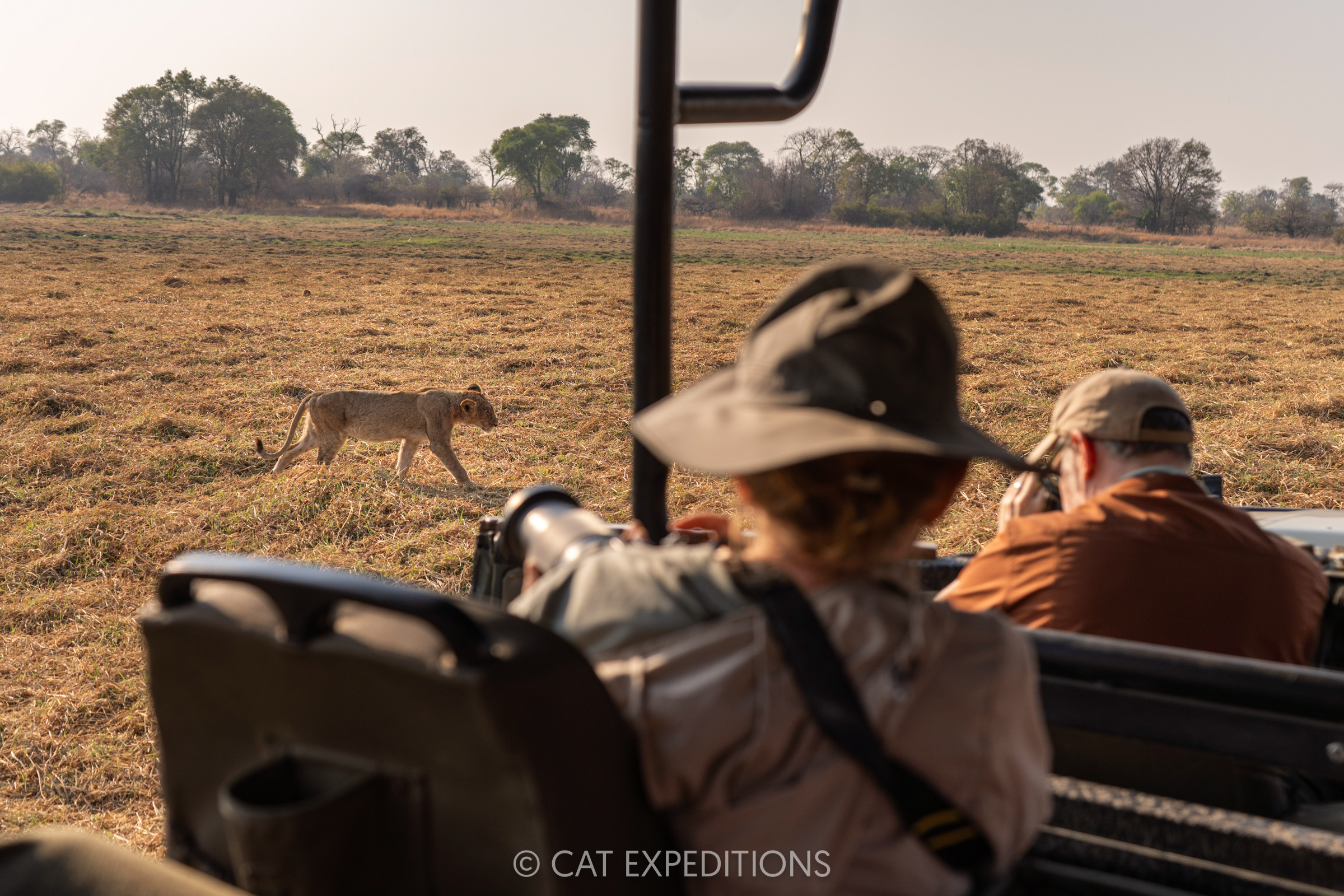
Later, scanning down the lagoon with binoculars, we picked out the SCZ pride in the distance—the same pride associated with the collared female. Reaching them meant a long, bumpy journey across the black-cotton soil, but the effort paid off. We positioned ourselves near a patch of shade and waited as, one by one, the lions walked straight toward us before passing directly in front of the vehicle.
Matt had the front seat with his door open, which made the encounter feel especially immersive as the lions moved past at close range. It was an incredible way to spend time with the pride and another reminder of how rewarding patience can be on safari.
Instead of our normal lunch routine, we were surprised by lunch on the river, where we enjoyed hippos, elephants, and even a sleeping leopard close to the water, all while eating delicious food!
In the afternoon we went for an extended boat safari, were we enjoyed hippos and birds. It was the perfect way to reflect upon all the sightings of the trip while enjoying the beautiful river scenery. We already can’t wait until the next tour, in 2028!
Day 10: Rachel and I woke up at 2:30am to try and get photographs of the pennant-winged nightjars…for some reason no one else wanted to join us. Rachel got an extraordinary photograph of one, and it was such a special way to end the trip. As a group we drove from Musekese camp back to Lusaka.
Classic Safari in Zambia Photo Tour 2025 Species List
Mammals
| African Elephant | Loxodonta africana |
| Brown Greater Galago | Otolemur crassicaudatus |
| Vervet Monkey | Cercopithecus pygerythrus |
| Yellow Baboon | Papio cynocephalus |
| Chacma Baboon | Papio ursinus |
| Cape Porcupine | Hystrix africaeaustralis |
| Lion | Panthera leo |
| Leopard | Panthera pardus |
| African Civet | Civettictis civetta |
| Common Genet | Genetta genetta |
| Angolan Genet | Genetta angolensis |
| Common Dwarf Mongoose | Helogale parvula |
| White-tailed Mongoose | Ichneumia albicauda |
| Banded Mongoose | Mungos mungo |
| Spotted Hyena | Crocuta crocuta |
| Side-striped Jackal | Lupulella adusta |
| African Wild Dog | Lycaon pictus |
| Plains Zebra | Equus quagga |
| Common Warthog | Phacochoerus africanus |
| Hippopotamus | Hippopotamus amphibius |
| Lichtenstein’s Hartebeest | Alcelaphus lichtensteinii |
| Sharpe’s Grysbok | Raphicerus sharpei |
| Cape Bufallo | Syncerus caffer |
| Common Eland | Tragelaphus oryx |
| Bushbuck | Tragelaphus scriptus |
| Greater Kudu | Tragelaphus strepsiceros |
| Common Duiker | Sylvicapra grimmia |
| Impala | Aepyceros melampus |
| Waterbuck | Kobus ellipsiprymnus |
| Puku | Kobus vardonii |
| Southern Reedbuck | Redunca arundinum |
Birds
| Egyptian Goose | Alopochen aegyptiaca |
| Spur-winged Goose | Plectropterus gambensis |
| Helmeted Guineafowl | Numida meleagris |
| Southern Crested Guineafowl | Guttera edouardi |
| Crested Francolin | Ortygornis sephaena |
| Coqui Francolin | Campocolinus coqui |
| Natal Spurfowl | Pternistis natalensis |
| Swainson’s Spurfowl | Pternistis swainsonii |
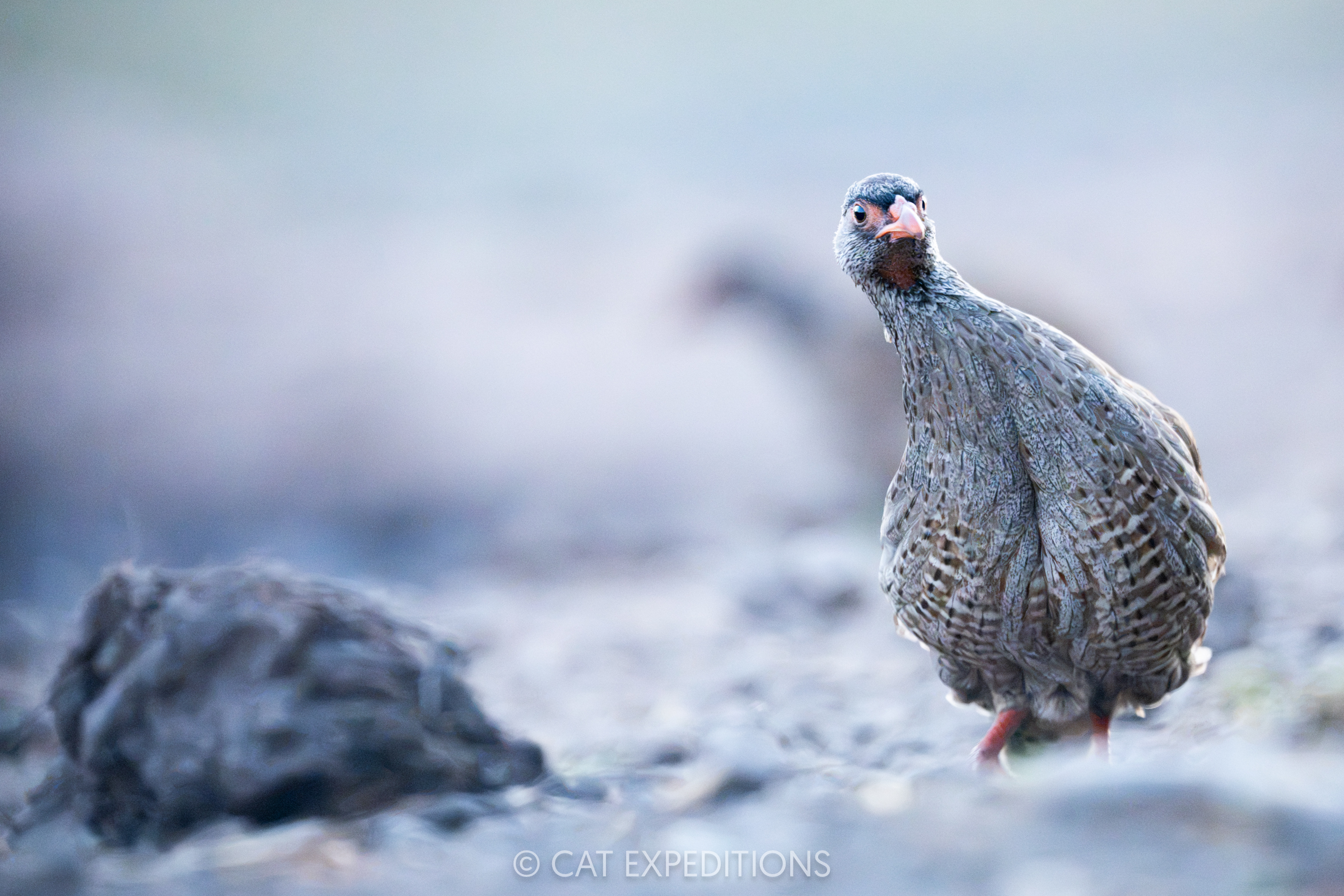
| Red-necked Spurfowl | Pternistis afer |
| Ring-necked Dove | Streptopelia capicola |
| Emerald-spotted Wood-Dove | Turtur chalcospilos |
| African Green-Pigeon | Treron calvus |
| Black-bellied Bustard | Lissotis melanogaster |
| Gray Go-away-bird | Crinifer concolor |
| Schalow’s Turaco | Tauraco schalowi |
| Senegal Coucal | Centropus senegalensis |
| Klaas’s Cuckoo | Chrysococcyx klaas |
| Fiery-necked Nightjar | Caprimulgus pectoralis |
| Square-tailed Nightjar | Caprimulgus fossii |
| Pennant-winged Nightjar | Caprimulgus vexillarius |
| Black Crake | Zapornia flavirostra |
| African Finfoot | Podica senegalensis |
| Gray Crowned-Crane | Balearica regulorum |
| Water Thick-knee | Burhinus vermiculatus |
| Black-winged Stilt | Himantopus himantopus |
| Long-toed Lapwing | Vanellus crassirostris |
| Blacksmith Lapwing | Vanellus armatus |
| White-crowned Lapwing | Vanellus albiceps |
| Wattled Lapwing | Vanellus senegallus |
| African Jacana | Actophilornis africanus |
| Common Sandpiper | Actitis hypoleucos |
| Wood Sandpiper | Tringa glareola |
| Common Greenshank | Tringa nebularia |
| Collared Pratincole | Glareola pratincola |
| African Openbill | Anastomus lamelligerus |
| Saddle-billed Stork | Ephippiorhynchus senegalensis |
| Marabou Stork | Leptoptilos crumenifer |
| Yellow-billed Stork | Mycteria ibis |
| African Darter | Anhinga rufa |
| Reed Cormorant | Microcarbo africanus |
| Glossy Ibis | Plegadis falcinellus |
| African Sacred Ibis | Threskiornis aethiopicus |
| Hadada Ibis | Bostrychia hagedash |
| Striated Heron | Butorides striata |
| Squacco Heron | Ardeola ralloides |
| Western Cattle-Egret | Ardea ibis |
| Great Egret | Ardea alba |
| Yellow-billed Egret | Ardea brachyrhyncha |
| Gray Heron | Ardea cinerea |
| Black-headed Heron | Ardea melanocephala |
| Goliath Heron | Ardea goliath |
| Hamerkop | Scopus umbretta |
| Pink-backed Pelican | Pelecanus rufescens |
| Osprey | Pandion haliaetus |
| African Harrier-Hawk | Polyboroides typus |
| White-headed Vulture | Trigonoceps occipitalis |
| Lappet-faced Vulture | Torgos tracheliotos |
| Hooded Vulture | Necrosyrtes monachus |
| White-backed Vulture | Gyps africanus |
| Bateleur | Terathopius ecaudatus |
| Western Banded Snake-Eagle | Circaetus cinerascens |
| Brown Snake-Eagle | Circaetus cinereus |
| African Hawk-Eagle | Aquila spilogaster |
| African Goshawk | Aerospiza tachiro |
| African Fish-Eagle | Icthyophaga vocifer |
| Green Woodhoopoe | Phoeniculus purpureus |
| Southern Ground-Hornbill | Bucorvus leadbeateri |
| African Gray Hornbill | Lophoceros nasutus |
| Trumpeter Hornbill | Bycanistes bucinator |
| White-fronted Bee-eater | Merops bullockoides |
| Little Bee-eater | Merops pusillus |
| European Bee-eater | Merops apiaster |
| Southern Carmine Bee-eater | Merops nubicoides |
| Malachite Kingfisher | Corythornis cristatus |
| Pied Kingfisher | Ceryle rudis |
| Lilac-breasted Roller | Coracias caudatus |
| Broad-billed Roller | Eurystomus glaucurus |
| Black-collared Barbet | Lybius torquatus |
| Bearded Woodpecker | Chloropicus namaquus |
| Cardinal Woodpecker | Dendropicos fuscescens |
| Golden-tailed Woodpecker | Campethera abingoni |
| Lilian’s Lovebird | Agapornis lilianae |
| Brown-necked Parrot | Poicephalus fuscicollis |
| Meyer’s Parrot | Poicephalus meyeri |
| White-crested Helmetshrike | Prionops plumatus |
| Black-backed Puffback | Dryoscopus cubla |
| Fork-tailed Drongo | Dicrurus adsimilis |
| African Paradise-Flycatcher | Terpsiphone viridis |
| Southern Black-Tit | Melaniparus niger |
| Rattling Cisticola | Cisticola chiniana |
| Wire-tailed Swallow | Hirundo smithii |
| Yellow-bellied Greenbul | Chlorocichla flaviventris |
| Common Bulbul | Pycnonotus barbatus |
| Arrow-marked Babbler | Turdoides jardineii |
| Red-billed Oxpecker | Buphagus erythroryncha |
| Wattled Starling | Creatophora cinerea |
| Common Myna | Acridotheres tristis |
| Greater Blue-eared Starling | Lamprotornis chalybaeus |
| Meves’s Starling | Lamprotornis mevesii |
| Kurrichane Thrush | Turdus libonyana |
| White-browed Robin-Chat | Cossypha heuglini |
| African Stonechat | Saxicola torquatus |
| Arnot’s Chat | Myrmecocichla arnotti |
| White-browed Sparrow-Weaver | Plocepasser mahali |
| Red-headed Weaver | Anaplectes rubriceps |
| Spectacled Weaver | Ploceus ocularis |
| Lesser Masked-Weaver | Ploceus intermedius |
| Yellow-mantled Widowbird | Euplectes macroura |
| Southern Cordonbleu | Uraeginthus angolensis |
| Red-billed Firefinch | Lagonosticta senegala |
| African Pied Wagtail | Motacilla aguimp |